FIFA Calls Somalia Referee Case ‘Unfortunate’ As US Official Cites Alleged Terror Links Behind Entry Ban
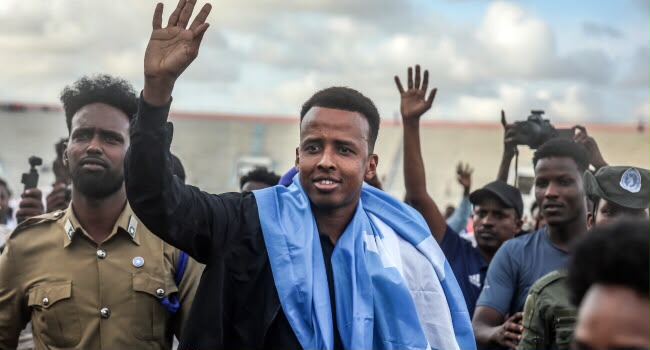
FIFA Calls Somalia Referee Case ‘Unfortunate’ as US Official Cites Alleged Terror LIink Behind Entry Ban FIFA President Gianni Infantino has described the denial of entry to Somali referee Omar Abdulkadir Artan as “unfortunate,” after United States authorities barred him from entering the country ahead of the 2026 FIFA World Cup over alleged security concerns. A senior United States State Department official said the referee was “associated with suspected members of terrorist organisations,” a claim that officials said rendered him ineligible for admission under U.S. immigration law. The statement was cited in reporting on the incident and forms part of the justification given for refusing the official entry into the country. The decision has sparked global debate after Artan, one of Africa’s top referees and a recipient of major continental officiating honours, was removed from the list of match officials for the tournament following the denial of his visa clearance. U.S. Customs and Border Protection previously stated that Artan was deemed inadmissible following additional vetting at Miami International Airport, despite holding valid documentation. Authorities maintained that immigration decisions are based on national security considerations and apply to all travelers, including sporting officials. FIFA has reiterated that it does not control visa or immigration decisions in host countries, stressing that final admission authority lies with national governments. The governing body confirmed that Artan would not participate in the tournament after U.S. authorities declined to alter his status.
Infantino, while acknowledging the controversy, said the situation was regrettable but emphasized FIFA’s limited jurisdiction in immigration matters, noting that such decisions fall under the sovereignty of host nations.The Somali Football Federation and government officials have expressed disappointment over the ruling, describing Artan as one of the country’s most accomplished sports figures and highlighting his international achievements, including officiating at major African competitions. The case has also drawn criticism from human rights observers and football stakeholders, who argue that the incident raises broader concerns about the intersection of international sport, politics and immigration policy ahead of one of the world’s largest sporting events. As the 2026 World Cup approaches, the controversy continues to generate debate over fairness, security vetting procedures and the independence of global sporting institutions.