FG MOVES TO STRENGTHEN REVENUE MONITORING ADVANCE FISCAL REFORMS
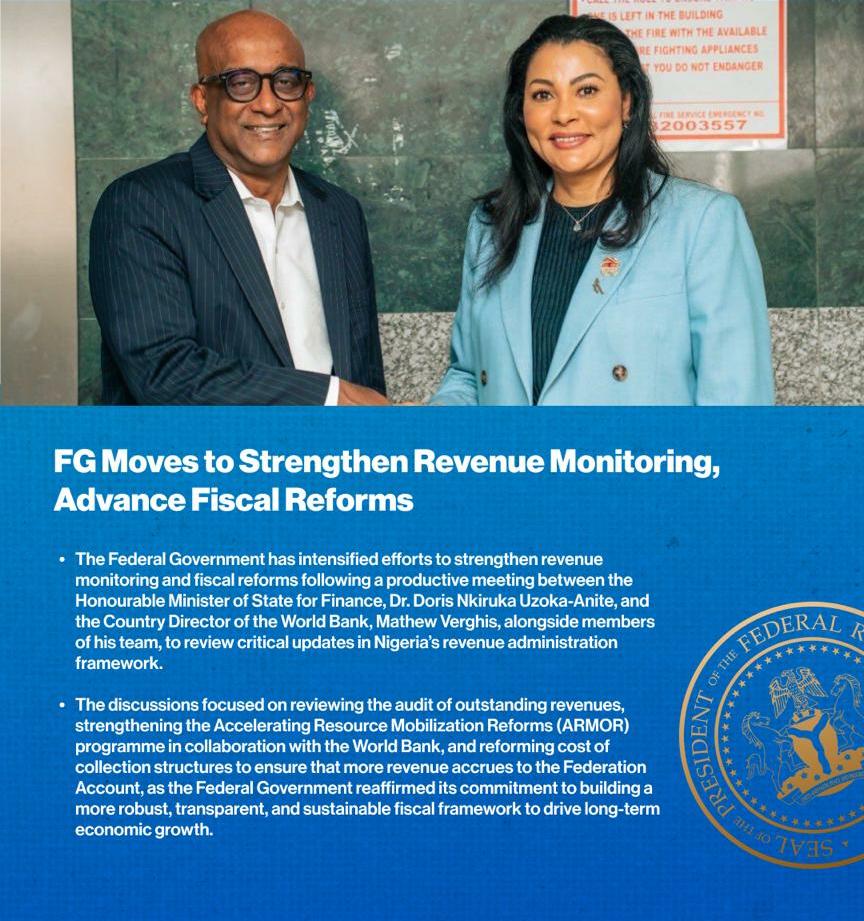
FG MOVES TO STRENGTHEN REVENUE MONITORING, ADVANCE FISCAL REFORMS Renewed Hope Agenda drives deeper fiscal governance, transparency and revenue mobilisation
Abuja, Nigeria The Federal Government has accelerated efforts to enhance revenue monitoring and advance broad fiscal reforms, part of a strategic push under PresidentTinubu and amplified across official platforms like StatehouseDigital. These steps aim to modernise revenue systems, unlock sustainable financing for development and improve fiscal transparency nationwide.
At the heart of the reforms is a comprehensive shift from short-term stabilisation towards accelerated, structural fiscal transformation The 2026 Federal Budget under the Renewed Hope Agenda reflects a prioritisation of revenue mobilisation, tax reforms, and prudent spending to finance infrastructure, security, and human capital development. Officials explain that effective revenue monitoring, compliance and broadening the tax base are essential to reduce dependence on borrowing and ensure sustainable economic growth. The government continues to push fiscal discipline and transparency, reinforcing how revenue meets social and economic needs, including poverty reduction and job creation. These moves align fiscal policy with national development priorities outlined in the Renewed Hope National Development Plan (2026–2030).
A series of fiscal overhaul measures have been introduced or strengthened to improve revenue generation and enforcement:
Landmark tax reform bills previously signed into law under President Tinubu have harmonised and modernised Nigeria’s taxation framework, simplifying structures and encouraging compliance. The Nigeria Revenue Service (NRS) restructured from the Federal Inland Revenue Service is expanding digital tax administration, enforcement and data integration to capture wider segments of the economy. Policies such as mandatory Taxpayer Identification Numbers (TINs) for individuals and corporations have been instituted to strengthen taxpayer tracking and revenue reporting. The government has also moved to build international cooperation on revenue administration, exemplified by partnerships to modernise digital tax systems and cross-border enforcement. These reforms aim to expand the tax net, reduce evasion, and enhance compliance boosting public funds for essential services.The federal government issued a key directive mandating direct remittance of oil and gas revenues into the Federation Account reforming previous revenue retention mechanisms by the Nigerian National Petroleum Company.
The move is expected to increase distributable revenue for federal, state and local governments.
It removes layered deductions and agency retentions that had historically limited transparency and fiscal predictability in the petroleum sector. This development reinforces fiscal accountability and strengthens state capacity to plan and execute budgets.The Federal Government, along with the FCT Administration, has begun unifying revenue collection systems to eliminate overlapping taxes and improve compliance at subnational levels. Fragmented systems with multiple informal levies are being addressed to reduce the cost of doing business and enhance taxpayer confidence. Coordinated frameworks between federal and state revenue authorities are expected to strengthen overall fiscal management and accountability.
Revenue reforms are complemented by broader fiscal governance initiatives Efforts to improve budget transparency, accountability and performance monitoring aim to align spending with citizen needs. Structural adjustments such as repositioning the national budget around investment budgeting are designed to mobilise private capital at scale and align public finance with economic outcomes. These reforms are central to building public confidence in government institutions and enhancing Nigeria’s attractiveness for investment