FG DISTRIBUTES FARM EQUIPMENT IN NASARAWA TO STRENGTHEN FOOD SECURITY AND AGRICULTURE VALUE CHAIN
by HEDNEWS on February 6, 2026
FG DISTRIBUTES FARM EQUIPMENT IN NASARAWA TO STRENGTHEN FOOD SECURITY AND AGRICULTURE VALUE CHAIN
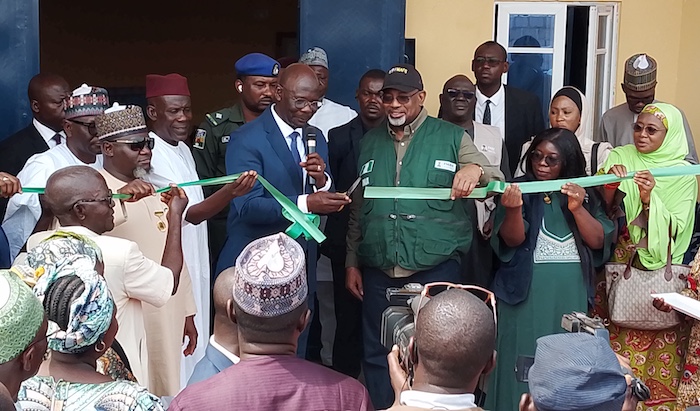
Abuja, Federal Republic of Nigeria The Federal Government has flagged off the distribution of 95 farm and processing equipment units in Nasarawa State under the Value Chain Development Programme (VCDP), a strategic intervention designed to boost food production, reduce post‑harvest losses, and strengthen the agriculture value chain across the state. The programme supported by the International Fund for Agricultural Development (IFAD) aims to enhance productivity, expand market access and improve livelihoods for farmers and agribusiness groups.
- The distribution ceremony was held in Lafia, the Nasarawa State capital, where Minister of Agriculture and Food Security, Senator Abubakar Kyari, flagged off the event, highlighting the government’s commitment to food security, rural transformation and agricultural resilience.
- A total of 95 farm and processing units including tricycles, rice and cassava processing machines, digital weighing scales, and hydraulic presser were handed over to smallholder farmers, agro‑processors, marketers and persons with disabilities. These tools are expected to boost production capacity, value addition, and profitability within key agricultural value chains such as rice and cassava.
- Participating equipment comprised:
46 tricycles for product transportation and aggregation;
16 rice steam parboiling machines;
18 rice milling machines;
10 rice de‑stoning machines;
3 rice colour sorting machines;
11 digital weighing scales;
2 rice dehusking machines;
4 cassava grating machines;
4 manual cassava fryers;
3 automated framers;
3 hydraulic pressers. - Enhanced Value Chain Focus:
Senator Kyari explained that the VCDP a cornerstone of the Federal Government’s food security strategy is targeted at addressing gaps in production, processing and market access, effectively linking smallholder farms to value addition opportunities and enterprise growth. - Reducing Post‑Harvest Losses:
Investment in processing and post‑harvest equipment aims to significantly reduce waste, improve product quality, and extend shelf life, thereby supporting farmers’ incomes and stabilizing food supplies. - Empowering Women and Youth:
The equipment distribution is also intended to empower women and youth farmers, deepen their participation in agricultural value chains, and create new employment opportunities in rural communities. - Aligning With National Policy:
Officials noted that the intervention aligns with broader agricultural reforms under the administration of President Bola Ahmed Tinubu, focusing on modernising Nigeria’s agricultural sector, expanding mechanisation, and driving sustainable food production nationwide. - Federal‑State Collaboration:
Governor Abdullahi Sule of Nasarawa State reaffirmed his government’s commitment to agricultural transformation and food security. He emphasised strong alignment between state agricultural programs and the federal Value Chain Development Programme, underscoring shared goals of boosting domestic food supply, stabilising prices, conserving foreign exchange, and creating jobs. - Producer Organisation Strengthening:
The programme also supports the formation and sustainability of producer organisations and innovation platforms, with beneficiaries pledging to protect and maintain the equipment to ensure increased production, processing and distribution activities. - Boosting Productivity:
By enhancing mechanisation and local processing capacity, the initiative is expected to improve yields, reduce reliance on manual and labour‑intensive practices, and build greater resilience within rural economies. - Value Addition & Market Access:
Improved access to processing and aggregation tools will enable farmers to add value locally to agricultural produce, leverage better pricing, and expand market participation beyond primary production. - Employment Generation:
Strengthened value chains and mechanisation are anticipated to expand rural employment opportunities, particularly for women and youth, contributing to inclusive economic growth and reduced poverty in agrarian communities.
The Federal Government’s effort in Nasarawa reflects wider national priorities to transform agriculture into a modern, market‑oriented and private‑sector‑driven sector capable of responding to Nigeria’s food security challenges. By integrating production with processing, infrastructure and market linkages, authorities aim to improve food availability, reduce waste, and enhance agricultural competitiveness.
The distribution of 95 farm and processing equipment units in Nasarawa State marks a significant government intervention to support food security, strengthen agricultural value chains, and empower rural producers. Through partnerships with IFAD and state governments, the programme underscores Nigeria’s ongoing commitment to rural transformation, value addition, and sustainable agribusiness growth.