Federal Judge Pauses Trump Administration’s Termination Of TPS For Haitians
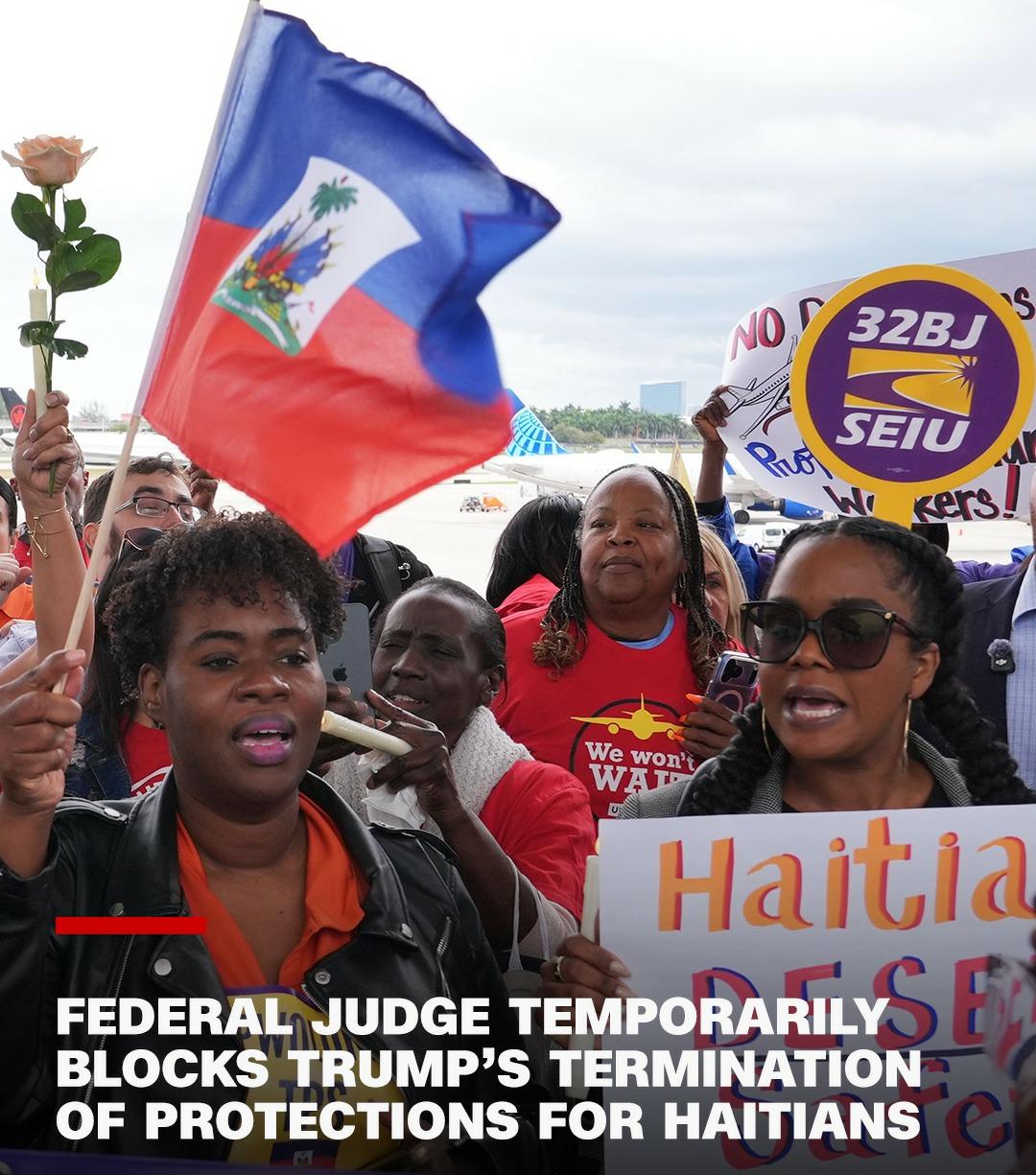
Federal Judge Pauses Trump Administration’s Termination of TPS for Haitians Washington, D.C., USA (Feb 3, 2026) A federal judge has temporarily halted the Trump administration’s plan to end Temporary Protected Status (TPS) for more than 350,000 Haitian migrants living in the United States, court documents and legal filings show. The ruling comes just days before protections under TPS were set to expire on Tuesday. District Judge Ana Reyes, sitting in the U.S. District Court for the District of Columbia, granted a stay on the termination while a lawsuit challenging the government’s decision proceeds through the courts. The order means that Haitian TPS holders can continue living and working in the U.S. without fear of deportation or removal for now.
In an 83-page opinion, Judge Reyes found that the plaintiffs a group of Haitian TPS recipients were likely to succeed on the merits of their claims that the Department of Homeland Security (DHS) failed to follow required legal procedures when ending TPS, and that the decision was arbitrary, capricious, and possibly influenced by animosity toward nonwhite immigrants.
Reyes sharply criticised statements made by DHS Secretary Kristi Noem, including remarks on social media characterising immigrants from Haiti and other countries as “killers, leeches, and entitlement junkies,” saying such rhetoric undercuts the objectivity required in deciding whether to terminate a humanitarian program such as TPS.
The judge also stated that Noem did not properly consult other U.S. government agencies such as the State Department as mandated by law when evaluating whether conditions in Haiti remain unsafe for return. During the stay period, the termination is “null, void, and of no legal effect,” meaning the protections provided under TPS remain intact for Haitian nationals. Temporary Protected Status is a humanitarian immigration designation that allows nationals from countries devastated by war, environmental disaster, or other extraordinary conditions to live and work legally in the United States without fear of removal. TPS does not provide a direct path to U.S. citizenship, but it shields beneficiaries from deportation and grants employment authorization. For Haitian immigrants many of whom first received TPS after the 2010 earthquake this status has been a crucial legal lifeline amid ongoing political instability, gang violence, and humanitarian crises in their homeland.
Trump Administration’s Attempted Termination
The Trump administration had moved to end Haiti’s TPS designation, arguing that the conditions which originally justified the status no longer prevailed and that TPS was not intended to be a permanent solution. DHS formally announced the termination policy in late 2025, with the status scheduled to lapse on Feb. 3, 2026.
The policy was part of a broader effort by the administration to curtail TPS for multiple nationalities, including Venezuelans and others, as part of an aggressive immigration agenda.
Immigrant advocates and plaintiffs celebrated the ruling as a critical reprieve that allows Haitian families to remain in the U.S. and continue their contributions to local communities. Many TPS holders had expressed deep anxiety about imminent deportations and family separations. The Department of Homeland Security responded that the decision will be appealed and defended the policy, arguing that TPS was always meant to be temporary and that conditions in Haiti have improved sufficiently to justify ending the designation.
The government’s appeal is expected to further prolong the legal battle, with outcomes uncertain as the case winds through the federal court system. The ruling offers temporary legal security to over 350,000 Haitian nationals in the U.S., shielding them from removal and preserving their ability to work and contribute to the economy.
It underscores the judicial checks on executive immigration policy, particularly regarding programs with humanitarian purposes and statutory conditions. The case highlights broader debates over the future of U.S. immigration policy, especially in the context of changing global crises and competing political priorities.