Extreme Heat Threatens Camel Survival Across Africa, Herders Warn
Extreme Heat Threatens Camel Survival Across Africa, Herders Warn
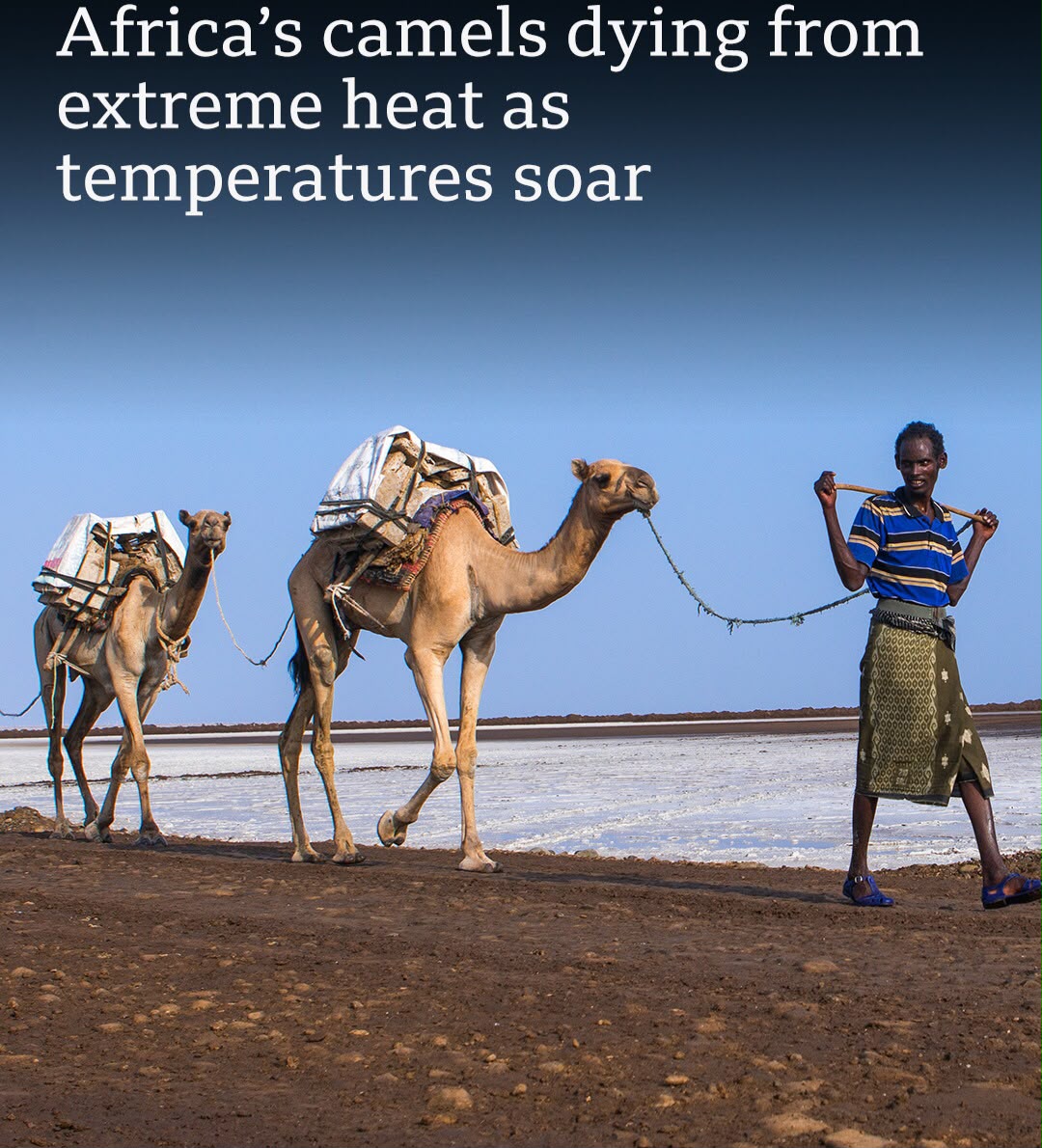
Rising temperatures across Africa are increasingly threatening camel populations, with herders reporting growing livestock losses as prolonged heatwaves and recurring droughts undermine the resilience of animals traditionally regarded as well adapted to harsh desert conditions. In Ethiopia’s Afar region, one of the hottest and driest places in the world, camel herder Ali Umer said the effects of extreme heat have become devastating for his herd. The 40-year-old, who owns about 500 camels, said the animals now suffer from blistered feet, watery eyes and skin damage caused by scorching desert sands. He added that winds which once brought relief now carry intense heat, making conditions increasingly difficult for both livestock and herders. Scientists say camels, long known as the “ships of the desert” for their ability to survive in arid environments, are increasingly becoming victims of climate change. Rising temperatures, shrinking grazing lands, declining water sources and reduced shade are placing unprecedented stress on the animals, leading to dehydration, disease, lower milk production and higher mortality rates. The Horn of Africa and North Africa account for about 80 per cent of the world’s dromedary camel population. In recent years, many pastoral communities shifted from cattle to camels because of their greater tolerance to drought. However, researchers say worsening climate conditions are eroding that advantage. Pastoral development researcher Daniel Gelan said some herders are permanently relocating from northern grazing areas because prolonged drought and rising temperatures have made camel rearing increasingly unsustainable. He noted that the movement is no longer seasonal but reflects a long-term response to changing environmental conditions. The crisis follows the Horn of Africa’s record drought between 2020 and 2023. Humanitarian organisations, including Oxfam, have warned that several countries in the region are again experiencing severe dry conditions, with water shortages driving up prices and threatening livelihoods dependent on livestock. Veterinary experts have also reported a rise in heat-related illnesses among camels. According to researchers, prolonged exposure to extreme temperatures weakens the animals’ immune systems, increases the risk of infections and reduces reproductive performance, posing serious challenges to pastoral communities whose livelihoods depend on camel herding.