DSS EXPLAINS SEIZURE OF EL‑RUFAI’S PASSPORT AT ABUJA AIRPORT
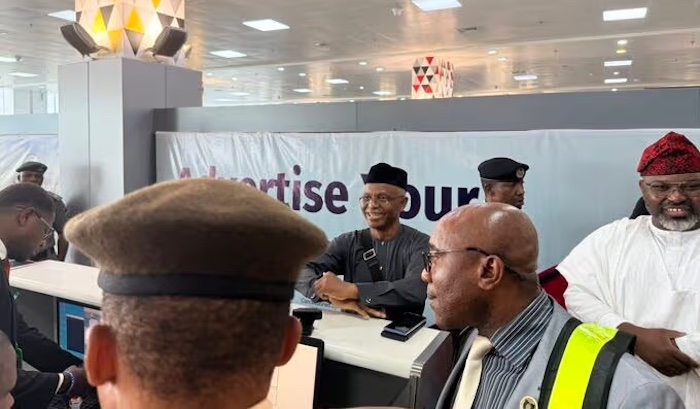
DSS EXPLAINS SEIZURE OF EL‑RUFAI’S PASSPORT AT ABUJA AIRPORT The Department of State Services (DSS) has issued a formal clarification regarding the seizure of the international passport of former Kaduna State Governor Nasir Ahmad El‑Rufai at the Nnamdi Azikiwe International Airport, Abuja, denying reports that security operatives attempted to arrest him upon his arrival from Cairo, Egypt. According to the DSS, the action taken by its officers was strictly limited to collecting El‑Rufai’s passport in compliance with a request from a state legislative body, and no arrest or detention attempt was initiated at the airport.
Earlier reports including posts attributed to El‑Rufai’s media aide claimed that security agents attempted to arrest the former governor shortly after he disembarked and seized his passport, alleging that the operatives did so without proper legal invitation or warrant. The aide stated that El‑Rufai refused to cooperate without due legal process. However, in its clarification, a DSS source dismissed those allegations as false and misleading, stressing that there was no plan to arrest El‑Rufai. Instead, the passport was taken in response to a formal request by the Kaduna State House of Assembly which is reportedly investigating the former governor to assist in obtaining the travel document so the legislative body could proceed with its inquiry.
The statement from the security agency stated that the DSS acted within its mandate and legal obligations, and that El‑Rufai was free to leave the airport after the brief interaction with operatives.
In contrast, El‑Rufai and his legal team strongly contested the DSS position: His counsel led by Ubong Esop Akpan described the airport encounter as an attempted unlawful arrest and a violation of constitutional rights, saying operatives acted without presenting a warrant or proper summons. Akpan characterised the passport seizure as the unlawful taking of personal property.
Legal arguments cited multiple provisions of the 1999 Constitution (as amended), maintaining that the alleged conduct infringed on rights including personal liberty, fair hearing, freedom of movement, dignity of the human person, and protection of property. Lawyers also pointed to formal communications with the Economic and Financial Crimes Commission (EFCC), which they said had issued an invitation to El‑Rufai while he was abroad. They noted that his camp had already agreed to appear voluntarily upon return specifically on Monday, February 16, 2026 undermining the rationale for any immediate arrest. El‑Rufai himself took to social media to denounce the incident, describing it as a troubling display of executive overreach and disregard for the rule of law. He emphasised his readiness to cooperate with legitimate law enforcement requests, stating that he would never evade lawful inquiry. Supporters and some bystanders at the airport were reported to have intervened during the initial confrontation, insisting that any arrest or detention comply with due process.
The incident has sparked debate over procedural integrity in law enforcement and raised questions about interactions between security agencies and public officials. Legal experts suggest that actions perceived to bypass due process could fuel concerns about executive authority and adherence to constitutional protections Meanwhile, the DSS’s assertion that it was responding to a lawful request from a legislative body highlights the complex interplay between security agencies and other arms of government in ongoing investigations.