DELAYED RESPONSE AMID DEADLY ATTACK IN KWARA STATE
DELAYED RESPONSE AMID DEADLY ATTACK IN KWARA STATE
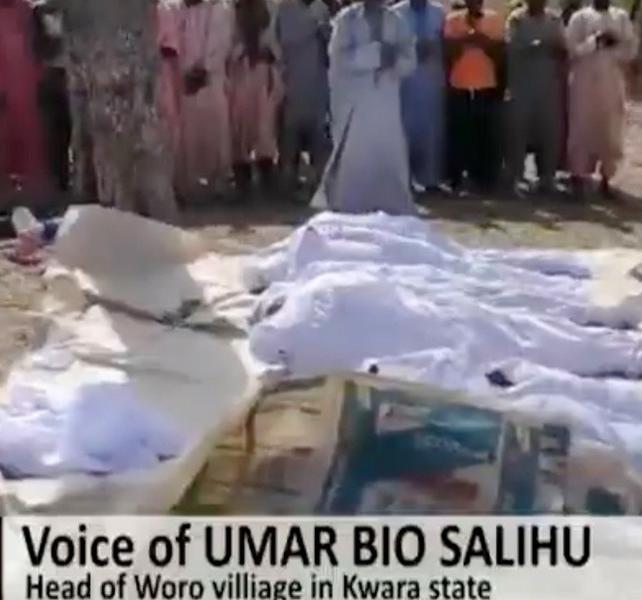
The head of Woro community in Kwara State, Umar Bio Salihu, has said that armed terrorists operated in the area for about 10 hours before Nigeria’s military arrived, allowing the assailants to carry out a massacre that left scores dead in the Woro and Nuku communities, Kaiama Local Government Area. Local authorities and eyewitnesses said the attackers began their assault in the late afternoon, but security forces only arrived in the early hours of the next day.
Salihu described the delay as a major security failure, noting that threat intelligence had been reported days before the attack but adequate preventive deployment was not made by security agencies. According to multiple local and international reports:
The assault began around 5 p.m., with gunmen surrounding the villages and firing indiscriminately, killing civilians, burning homes and shops, and causing residents to flee into bushla
Authorities and local sources reported at least 75 people killed mostly civilian residents although some assessments and rights groups suggest the death toll could be significantly higher.
The attack was described as one of the deadliest security incidents in the state in recent months, and remains under investigation.
The incident is part of a broader wave of insecurity affecting northern and north‑central Nigeria, where extremist armed groups have intensifed raids, abductions and killings.
Salihu said the community had reported credible warnings of an impending attack days in advance, including information shared with local government and state authorities. However, security patrols were sporadic and withdrawn before the assault took place, leaving villagers vulnerable. He emphasised that the lack of timely military engagement allowed the armed men to operate with impunity for hours, contributing to the high casualty figures and widespread destruction. Though military reinforcements eventually arrived, the delayed response has sparked criticism from community leaders and civil society observers regarding intelligence utilisation and rapid deployment protocols. Following the massacre, authorities have since established security operations in the affected areas to prevent further attacks and conduct search‑and‑rescue efforts alongside local security agencies.
State officials, including Governor AbdulRahman AbdulRazaq, condemned the massacre and described the killings as a cowardly act of terrorism, calling for coordinated action to safeguard vulnerable communities. President Bola Tinubu reportedly ordered the immediate deployment of an army battalion under a new security initiative to counter armed groups in the region and prevent a recurrence. Security analysts and rights groups say the Kwara incident exposes critical gaps in Nigeria’s intelligence, early warning systems and rapid response capacity, especially in rural and hard‑to‑reach areas. Former presidential candidate and activist Omoyele Sowore has publicly condemned what he describes as “gross negligence and complicity” by security agencies, alleging that warnings were ignored despite clear indicators of an imminent attack. Human rights organisations have also labelled the security lapses that allowed the attack as “unacceptable”, demanding accountability and reviews of deployment strategies across volatile regions.