Deadly Winter Storm Hits United States At Least Seven Dead
Deadly Winter Storm Hits United States At Least Seven Dead, Hundreds of Thousands Without Power
Headline: A powerful polar-vortex-driven winter storm sweeping across much of the United States has killed at least seven people, knocked out power to hundreds of thousands of homes and businesses, and disrupted travel and daily life from the South into the Northeast. The storm, part of the January 2026 North American winter system, is producing heavy snow, freezing rain, sleet and dangerously low temperatures across a nearly 2,000-mile swath of the country a spell of weather officials call life-threatening.
At least seven deaths have been confirmed in multiple states affected by the storm, including hypothermia and exposure-related fatalities reported in Louisiana, Texas and Tennessee.
- City officials in New York have said several residents were found dead outdoors, though some causes are still being investigated
More than 800,000 to over 847,000 homes and businesses have lost electricity due to ice-coated lines breaking and storm damage.
Outages centered in states such as Tennessee, Mississippi, Louisiana, Texas and others across the South and Midwest. - Some reports put total outages well above 900,000 and even over 1 million households, reflecting rapidly changing conditions.
The storm has caused a historic wave of flight cancellations, with over 11,000 flights grounded nationwide one of the worst single-day figures in recent U.S. aviation history. - Road travel has also been severely impeded by icy conditions and heavy snow accumulations across interstates and local highways
States unaccustomed to extreme cold including Texas, Louisiana, Mississippi and Tennessee have seen temperatures plunge far below seasonal averages, with ice accumulating on roads and infrastructure. - Emergency declarations have been issued in numerous states as officials mobilize resources.
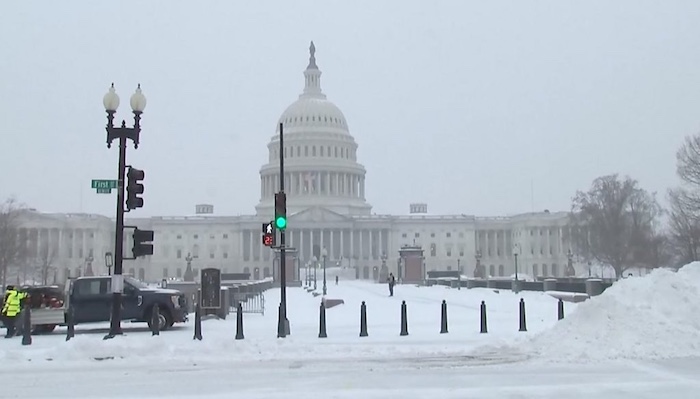
Snow and sleet have blanketed major cities like Washington, D.C. and New York, prompting school closures, remote work advisories and storm responses from local authorities. - Washington, D.C.’s mayor declared a state of emergency, noting one of the heaviest snowfalls the capital has seen in a decade.
The National Weather Service (NWS) warns that heavy snowfall, ice and dangerously low temperatures will linger for days, slowing recovery efforts and increasing hazards for residents and responders. - Meteorologists attribute the storm’s strength to a polar vortex dip a loop of frigid Arctic air that has plunged deep into the continental United States.
Governors and local leaders across affected regions are urging residents to stay off roads, conserve heat safely, and follow emergency-services guidance. - Federal and state aid efforts, including utility crews and disaster declarations, are being deployed to help restore power and respond to emergencies.