Daring Space Rescue Mission Launched To Save NASA Observatory From Uncontrolled Re-entry
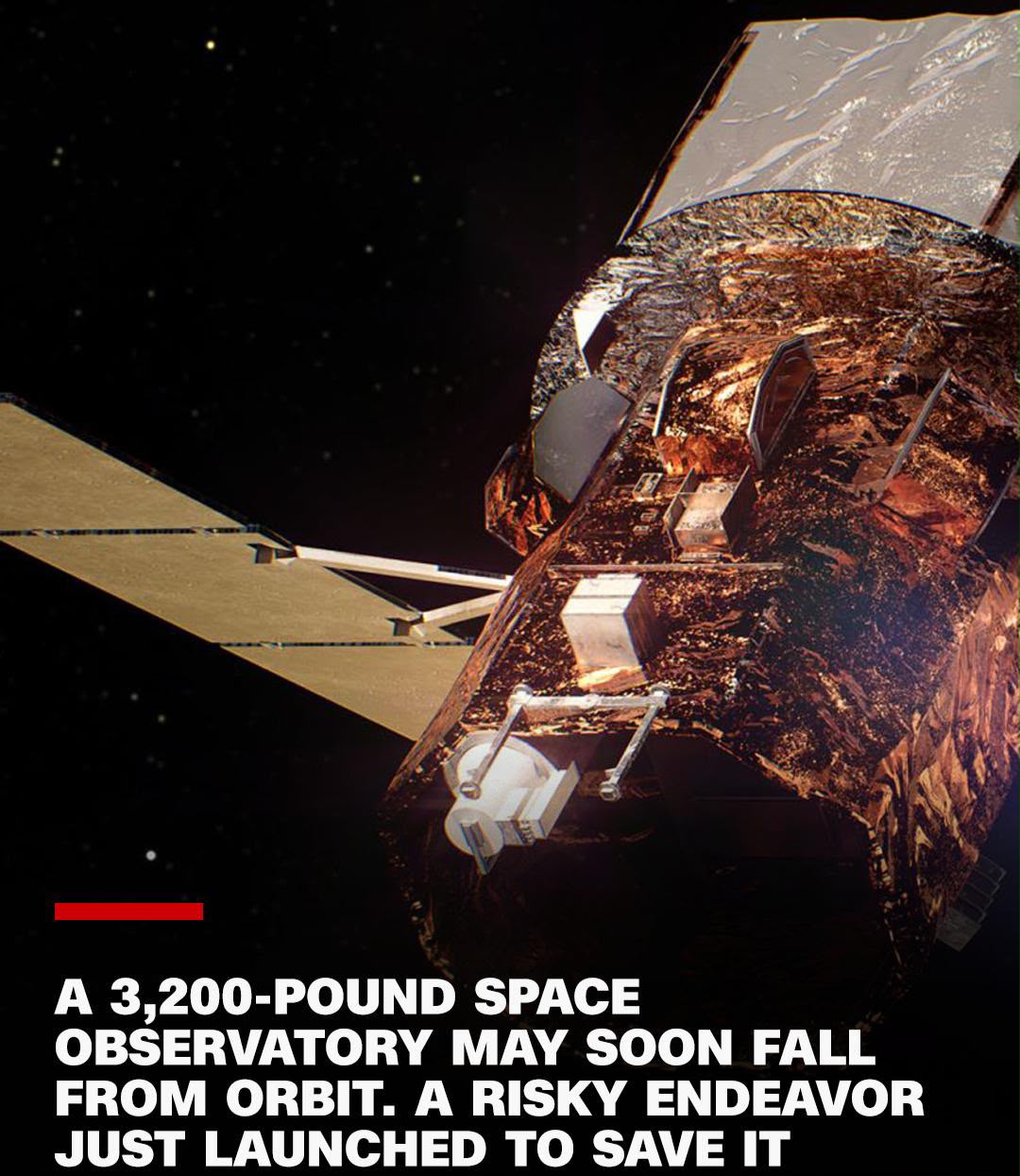
Daring space rescue mission launched to save NASA observatory from uncontrolled re-entry A groundbreaking mission has been launched to rescue one of NASA’s long-serving space observatories from eventually falling back to Earth, in what could become a historic first for commercial space operations. The mission involves a commercial robotic spacecraft attempting a complex rendezvous and capture operation on a NASA satellite that was never designed for in-orbit servicing, marking an unprecedented technical challenge in spaceflight history. If successful, it would be the first time a privately developed robotic system has captured and secured an uncrewed NASA spacecraft that was not built for maintenance or repair in space, according to the agency. The targeted observatory is described as one of NASA’s “storied” science missions, having contributed significantly to space research over its operational lifetime. However, like many ageing satellites, it is now gradually losing altitude and is expected to eventually re-enter Earth’s atmosphere if left unaddressed. Unlike traditional satellite servicing missions, which typically involve spacecraft designed with docking ports or maintenance compatibility, this operation requires a far more delicate approach. The robotic vehicle must autonomously locate, approach, and physically secure the drifting observatory without causing damage. NASA says the attempt represents a major step forward in commercial in-orbit servicing capabilities, potentially opening the door to extending the lives of valuable scientific assets in space. The operation is being closely monitored by mission controllers, who will guide the spacecraft through a series of carefully timed manoeuvres designed to align it with the target observatory. Space experts say the success of the mission could reshape how ageing satellites are managed, shifting the industry toward routine robotic maintenance and retrieval missions rather than allowing expensive spacecraft to simply burn up after retirement. However, the challenge remains significant due to the fact that the observatory was not built for capture, making every phase of the approach and docking sequence highly complex. NASA has increasingly partnered with private aerospace companies to expand its capabilities in orbit, including satellite servicing, debris mitigation, and deep-space exploration support. This latest mission is seen as one of the most ambitious examples yet of public-private collaboration in space, combining NASA’s scientific infrastructure with emerging commercial robotics technology. While the spacecraft has successfully launched, the capture phase remains the most critical and unpredictable part of the mission. Engineers will be watching closely as the robotic system attempts its first close interaction with the aging observatory. A successful capture would mark a milestone in space history and could redefine how future satellites are designed, maintained, and retired.