Dangote Unveils Pan-African Petroleum Distribution Network, Urges Protection Of Local Industries
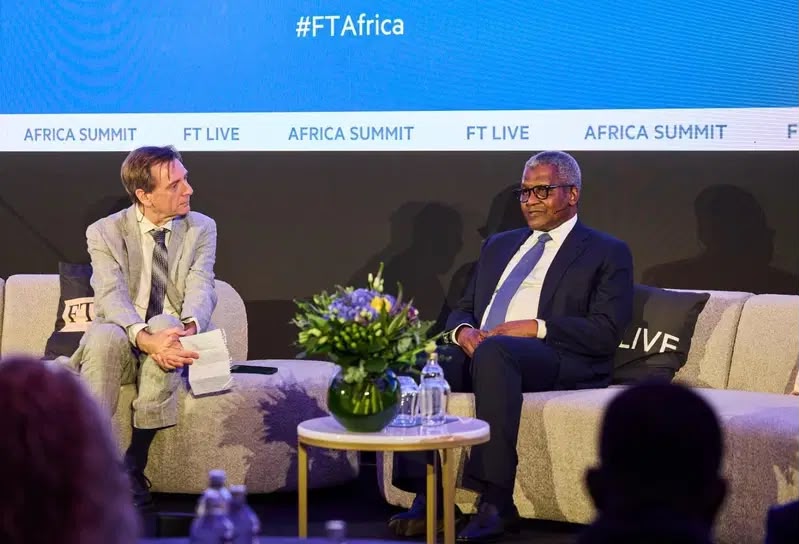
Dangote Unveils Pan-African Petroleum Distribution Network, Urges Protection of Local Industries President and Chief Executive of Dangote Industries Limited, Aliko Dangote, has unveiled plans to establish an extensive petroleum products distribution network across Africa, while urging governments on the continent to adopt policies that protect local industries and accelerate industrialisation.
The initiative will involve investments in pipelines, storage facilities and supply corridors across East, Central and Southern Africa, with the aim of improving the movement of refined petroleum products, strengthening energy security and addressing persistent supply bottlenecks. Dangote disclosed the plans during an interview with Financial Times journalist David Pilling, where he revealed that his group had acquired a 25 per cent stake in Kenya’s petroleum products pipeline network with the support of the Kenyan government. He said the investment formed part of a broader strategy to build an interconnected energy distribution system linking major refining centres with markets that have traditionally relied on imported petroleum products and fragmented supply channels. Beyond Kenya, Dangote said the group was pursuing projects involving petroleum distribution infrastructure in Djibouti, Ethiopia, Cameroon and Namibia. In East Africa, the group is developing a distribution corridor linking Djibouti with Addis Ababa, Ethiopia’s capital, alongside storage facilities and tank farms to support the movement of petroleum products. He also disclosed that a project in Cameroon was nearing completion, while Namibia had been identified as a strategic hub for supplying refined products to Southern African markets. According to Dangote, the plan is to transport petroleum products from the Dangote Petroleum Refinery in Lagos to Namibia and distribute them to other countries, including Botswana, South Africa, Zimbabwe and Zambia. “From our refinery to Namibia is just about four days of steaming,” he said, explaining the proposed route’s potential to support regional distribution.
The group is also considering plans to establish a refinery in Lamu, Kenya, with a proposed capacity of 700,000 barrels per day. Dangote said the facility would serve the energy needs of East Africa’s industrial and mining sectors. He added that the proposed refinery would source crude oil from different markets rather than depend exclusively on supplies from Kenya or Uganda. Beyond petroleum infrastructure, the industrialist called on African governments to protect domestic manufacturers against unfair competition and create policies that encourage local production. He argued that excessive dependence on imported finished goods undermines local industries, weakens productive capacity and limits employment opportunities for Africans. “Allowing imports to displace local production means we are exporting our jobs out of the continent and importing poverty into the continent,” Dangote said. He questioned why African countries should expose their emerging industries to foreign competition without appropriate safeguards, particularly as major economies increasingly adopt policies to support their domestic manufacturing sectors. “If America is now saying, no, we are going to protect our industries, who are we in Africa not to protect our own industries he asked.Dangote maintained that infrastructure investment must be accompanied by industrial policies that promote local manufacturing, strengthen domestic businesses and enable African countries to add value to their natural resources. Dangote also disclosed that the group had earmarked $50 billion for investments between 2026 and 2030 as part of its broader ambition to expand industrial activity and support economic transformation across the continent. He said Africa’s development would require stronger financial institutions, effective agricultural and industrial policies, improved infrastructure and reliable electricity supply. The industrialist identified inadequate power supply as a major constraint on manufacturing and mineral processing, noting that the absence of dependable electricity limits the ability of African economies to process raw materials locally.He said the continent needed to move beyond exporting raw materials and importing finished products if it was to create sustainable jobs and build a stronger industrial base. Dangote described the group’s expansion as part of a wider effort to demonstrate Africa’s capacity to develop large-scale industrial projects and build stronger regional economic connections. The planned petroleum distribution network is expected to connect refining, storage and transportation infrastructure across multiple markets, potentially improving access to fuel and supporting trade in refined petroleum products.