DANGOTE REFINERY DENIES IMPORTING FINISHED PETROLEUM PRODUCTS
DANGOTE REFINERY DENIES IMPORTING FINISHED PETROLEUM PRODUCTS Dangote Petroleum Refinery and Petrochemicals (DPRP) has categorically rejected recent claims that the facility imports finished petroleum products such as petrol, diesel or jet fuel for sale in Nigeria. Instead, the company insists it operates as a merchant refinery, importing and processing intermediate feedstocks into finished fuels a standard practice in global refining.
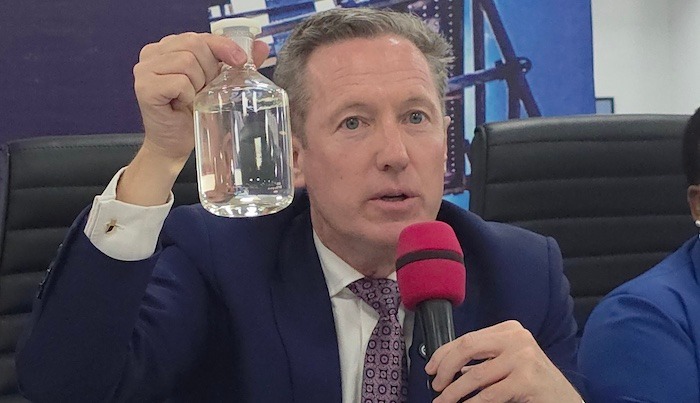
At a media briefing in Lagos, DPRP’s Chief Executive Officer and Managing Director, David Bird, explained that the refinery’s imports consist mainly of semi‑processed materials like cracked gasoline, vacuum gas oils (VGO), reformate, naphtha, alkylate and isomerate. These intermediate feedstocks are essential raw inputs in the refinery’s advanced conversion units and are not finished fuels ready for consumer use. According to Bird, Dangote Refinery follows a European and Asian merchant refinery model, which differs from traditional refineries that rely solely on domestic crude delivered via pipeline. Instead, DPRP’s design enables it to:
Import a diverse range of intermediate feedstocks by sea;
Process those materials along with crude to produce high‑quality finished fuels; Blend, refine and trade products in local and export markets. Bird emphasised: “I can guarantee you, we are not importing finished product. I am a refinery. I have no interest in importing finished product.” He noted that importing intermediate feedstocks is typical in modern refining, especially for plants of Dangote’s scale and flexibility. DPRP highlighted that its finished products including lead‑free petrol with 50 ppm sulphur and ultra‑low sulphur diesel meet or exceed global environmental and health standards. The refinery ships these products into the Nigerian market and also exports to stringent regulatory markets in the United States and Europe, underscoring the quality of its output.
Bird reiterated that semi‑finished feedstocks are unsuitable for engine use and are always processed further within the refinery before they enter the market. Product samples shown during the briefing included both feedstocks and completed fuels to demonstrate the difference. The refinery’s statement comes amid widespread rumours and misinterpretations in media and industry circles contending that DPRP’s imports constituted finished petroleum products for sale in Nigeria a claim the company says stems from misunderstandings about global refining operations. Dangote’s management described such narratives as false, misleading, and based on technical misconceptions. Industry analysts note that importing intermediate feedstocks is a globally accepted part of refinery economics, especially for merchant facilities that blend crude with varied inputs to optimise output quality and operational efficiency. Dangote Refinery was built to end Nigeria’s dependence on imported refined fuels and reduce exposure to substandard products a chronic problem before its commissioning. The facility’s ability to process a wide spectrum of feedstocks enhances flexibility and product yield, allowing it to respond to global crude market shifts. DPRP exports fuel products, signifying commercial viability beyond Nigeria’s domestic market.