CAF Reverses Four-Year AFCON Plan, Restores Biennial Tournament
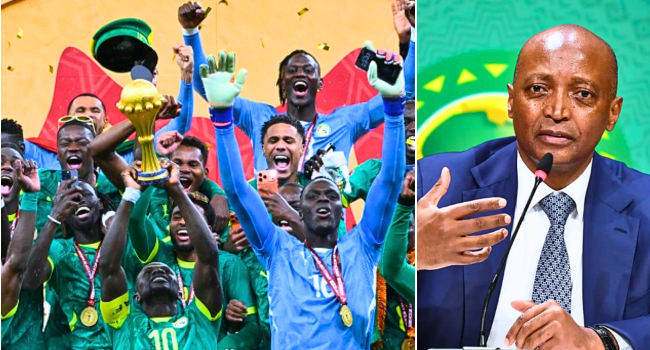
CAF Reverses Four-Year AFCON Plan, Restores Biennial Tournament
The Confederation of African Football (CAF) has reversed its decision to stage the Africa Cup of Nations (AFCON) every four years, restoring the competition’s traditional two-year cycle. The decision was unanimously adopted by the CAF Executive Committee, according to a statement by the continental football governing body.Under the revised schedule, the next AFCON will take place in 2027 in Kenya, Tanzania and Uganda, followed by tournaments in 2028, 2031 and 2033. The reversal brings an end to CAF’s earlier plan to move the competition to a four-year cycle, with a proposed Africa Nations League expected to take its place as the continent’s major biennial national-team competition. CAF President, Patrice Motsepe, had announced at the organisation’s Strategy Conference in Cabo Verde, held from October 7 to 9, 2026, that the Executive Committee would reconsider the earlier decision. The review followed concerns that the proposed Africa Nations League would require several years to generate the financial resources needed to support CAF competitions and strengthen football development across the continent. Motsepe said the decision to restore the two-year AFCON cycle was intended to protect the interests of African football, the confederation’s 54 member associations and African players employed by clubs outside the continent. He explained that the proposed Nations League was expected to provide financial and developmental benefits similar to those generated by AFCON, but would take time to become financially sustainable. In December 2025, CAF announced plans to move AFCON from its traditional two-year schedule to a four-year cycle. The proposed restructuring was part of a wider plan to introduce the Africa Nations League as a regular continental competition, providing national teams with another major tournament while creating additional commercial opportunities. However, CAF has now concluded that the proposed competition would not immediately generate sufficient revenue to support the development and financial sustainability of African football. The governing body consequently decided to retain AFCON as its principal biennial competition. The revised calendar will skip 2030 because the FIFA World Cup is scheduled to take place that year. Motsepe said CAF would maintain the tradition of not holding the final tournament of AFCON or other confederation national-team competitions during a FIFA World Cup year. The next edition in 2027 will be jointly hosted by Kenya, Tanzania and Uganda, marking a major opportunity for East African football and the three host countries. CAF expressed confidence that the tournament would be successful and contribute to the growth of the game across the continent. Motsepe also described AFCON as an important platform for celebrating Africa’s football, cultures and traditions, while bringing together people from the continent, the African diaspora and other parts of the world.The return to a biennial schedule is expected to preserve AFCON’s regular place in the international football calendar while allowing CAF to reconsider the future of its proposed Africa Nations League.