Archaeologists Uncover 400,000-Year-Old Prehistoric Cave In Israel
Archaeologists Uncover 400,000-Year-Old Prehistoric Cave in Israel
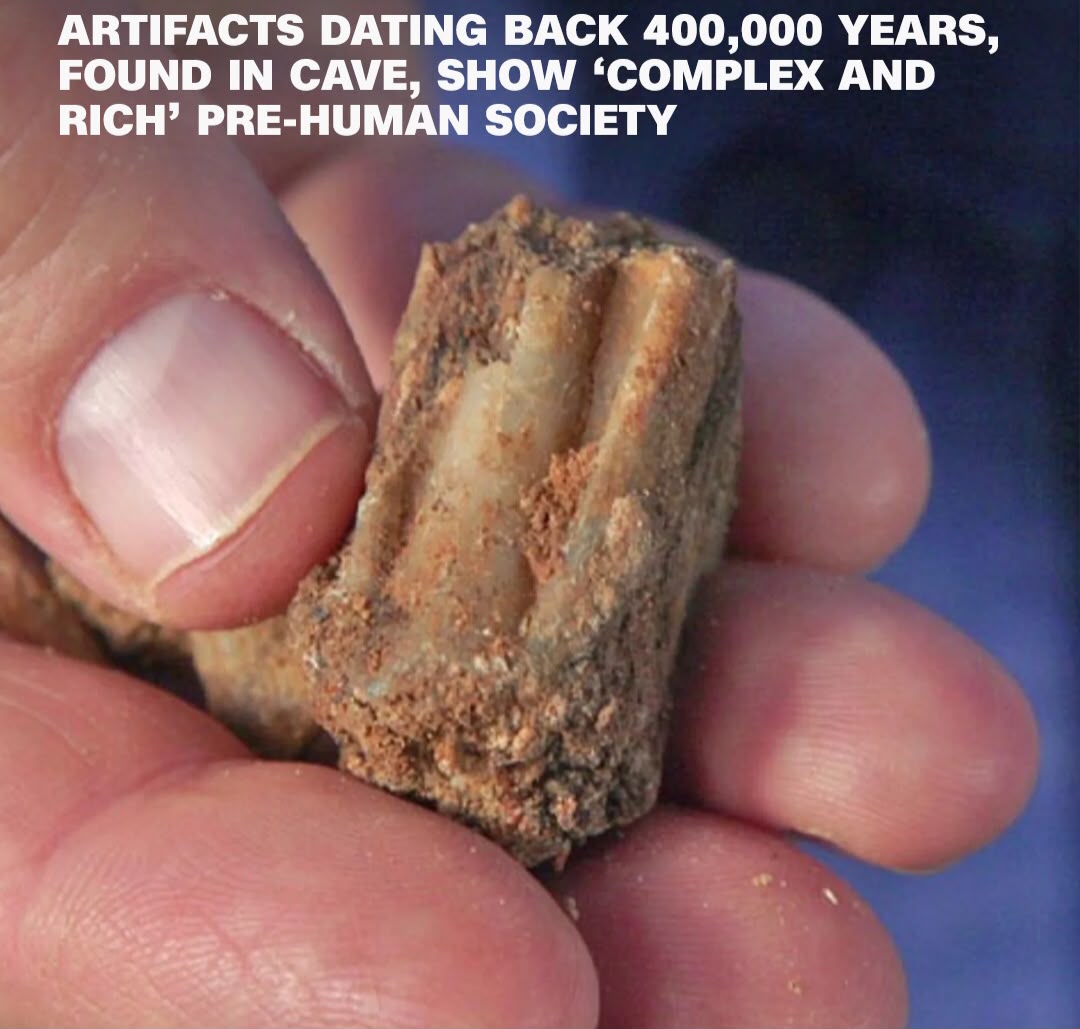
Archaeologists have uncovered a remarkably preserved prehistoric cave in northern Israel that is providing rare insights into the lives of early human ancestors who inhabited the region as far back as 400,000 years ago. Researchers say the site offers an unprecedented glimpse into a poorly understood period of human evolution, long before the emergence of modern humans and Neanderthals. The cave, discovered near the town of Fureidis during archaeological investigations ahead of planned construction work, was initially believed to date back roughly 200,000 years. However, recent excavations revealed evidence showing that it was occupied much earlier by members of the Acheulo-Yabrudian culture, a prehistoric population that lived in the Levant between approximately 400,000 and 250,000 years ago. Researchers uncovered an extensive collection of flint tools, including hand axes, scrapers and blades, along with animal bones belonging to species such as gazelles and fallow deer. The discoveries suggest the cave served as a long-term habitation site where early humans hunted, processed food and likely used controlled fire. Scientists describe the cave as a rare “time capsule” because it remained largely undisturbed for hundreds of thousands of years, preserving valuable archaeological evidence. Experts believe the site could help answer longstanding questions about the evolution of human behavior during a period that remains poorly documented in the archaeological record. Only a small number of comparable sites from this era have been discovered, making the findings especially significant for understanding how early human populations adapted to their environment and developed increasingly sophisticated technologies.Archaeologists say further excavations and laboratory analysis are expected to reveal additional information about the cave’s inhabitants, their daily lives and their place in the evolutionary history of humankind. The discovery is being hailed as one of the most important prehistoric archaeological finds in the region in recent years.