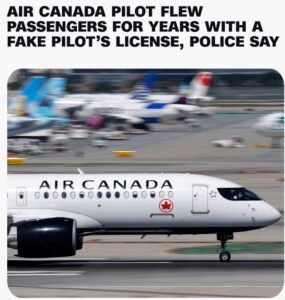
Air Canada Plane Collision At New York’s LaGuardia Airport Kills Two Pilots, Injures Dozens

Air Canada Plane Collision at New York’s LaGuardia Airport Kills Two Pilots, Injures Dozens A deadly runway collision at New York City’s LaGuardia Airport late Sunday night left two pilots dead and dozens injured after an Air Canada Express regional jet struck a Port Authority firefighting vehicle during landing, U.S. authorities confirmed. The aircraft involved was Air Canada Express Flight 8646, a Bombardier CRJ‑900 operated by Jazz Aviation on behalf of Air Canada, arriving from Montréal–Trudeau International Airport with 72 passengers and four crew members aboard. The collision occurred around 11:40 p.m. local time (ET) on Sunday, March 22, 2026, as the jet was landing on Runway 4 at LaGuardia Airport in Queens, New York. At the same time, a fire truck operated by the Port Authority of New York and New Jersey was crossing the runway after being dispatched to respond to an unrelated emergency involving a United Airlines flight. Despite urgent warnings from air traffic controllers, the aircraft’s front section collided with the rescue vehicle as it landed, destroying the cockpit and killing both pilots on impact.
- Two pilots the captain and co‑pilot were killed in the collision.
- 41 people were hospitalized, including 39 passengers and crew and two Port Authority firefighters, with nine still in serious condition the following day.
- By Monday, 32 of the injured had been released from hospitals in the New York area.
Among the injured was a Canadian flight attendant who was ejected from the aircraft but survived with serious injuries and underwent surgery. The collision prompted LaGuardia Airport to halt operations immediately, forcing the cancellation or diversion of hundreds of flights and creating widespread travel chaos across the New York area. The facility partially reopened the next afternoon, with one runway restored to service while debris removal and investigation continued on others.
The U.S. National Transportation Safety Board (NTSB) has launched a formal investigation into the accident, focusing on the sequence of events that allowed the runway incursion to occur. Both the flight data recorder (FDR) and cockpit voice recorder (CVR) have been recovered for analysis.
Authorities are also reviewing air traffic control communications and procedures, as early audio recordings captured frantic warnings issued moments before the collision. Officials from the Port Authority of New York and New Jersey, the Federal Aviation Administration (FAA), and Canadian government representatives have expressed deep condolences to the families of the deceased pilots and support for those injured.
Union leaders and aviation safety experts have called for comprehensive reviews of runway access protocols and air traffic control staffing to prevent future ground collisions at busy airports. The crash is among the most serious ground collisions at a major U.S. airport in decades, drawing renewed attention to runway safety, vehicle‑aircraft separation procedures, and coordination challenges between controllers and emergency responders. As the investigation progresses, aviation authorities are expected to issue preliminary findings that may lead to operational and regulatory changes aimed at reducing the risk of similar tragedies.