Roman Villa With Intricate Mosaics Unearthed Outside Rome After Police Alert Clandestine Dig
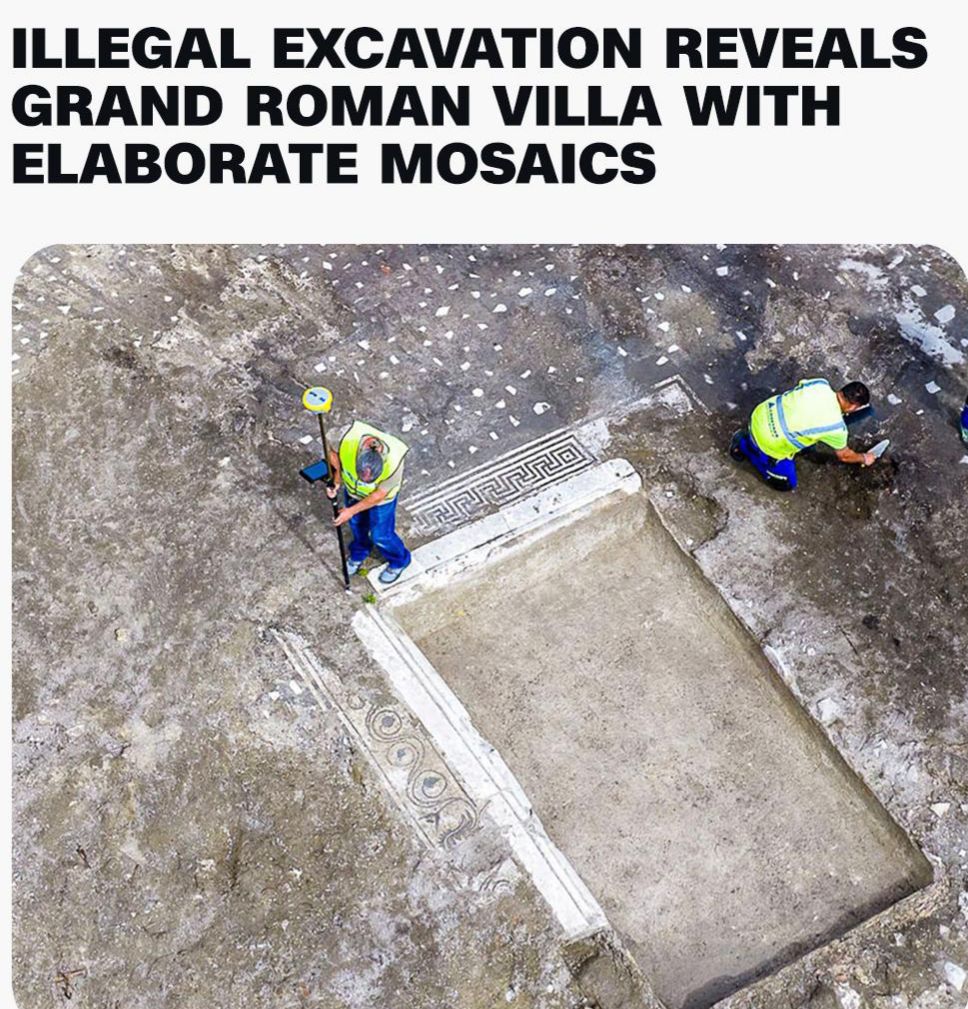
Roman Villa with Intricate Mosaics Unearthed Outside Rome After Police Alert Clandestine Dig A remarkably well-preserved Roman villa featuring intricate mosaic floors, frescoed walls, and a marble statue has been uncovered on the outskirts of Rome after authorities were alerted to illegal excavation activity on government-owned land. The discovery, made at Castel di Guido, west of the Italian capital, emerged after police reported signs of a clandestine dig, prompting archaeologists to launch an emergency investigation that revealed the remains of a previously unknown imperial-era residence. Archaeologists from Italy’s cultural heritage authorities documented parts of a large villa dating back to the Roman imperial period, featuring an entrance atrium, decorated rooms, and agricultural areas typical of elite rural estates. The site includes well-preserved mosaic flooring with geometric and floral designs, along with fragments of painted wall plaster showing traces of red, yellow, and decorative figurative elements. Experts say the quality of decoration suggests the villa belonged to a wealthy aristocratic family, possibly connected to elite circles in ancient Rome’s suburban countryside. Authorities were first alerted in February after reports of unauthorized excavation using heavy machinery on protected land. The activity caused damage to parts of the buried structure, exposing walls and mosaics before archaeologists intervened. Rather than treating the site solely as a crime scene, Italy’s heritage officials converted the area into a controlled archaeological excavation to preserve what remained and document the findings. Among the most significant discoveries is a fragmented white marble statue believed to represent a rural Roman deity associated with agriculture and nature. The villa’s layout includes a central atrium with a water-collecting basin impluvium, surrounded by decorated rooms featuring different mosaic patterns, including black-and white geometric panels and octagonal designs. Archaeologists also uncovered agricultural structures, suggesting the estate combined luxury living with farming production a common feature of Roman rural villas. The villa is located in the ancient territory of Lorium, an area historically associated with Roman emperors such as Hadrian, Antoninus Pius, and Marcus Aurelius, who are known to have frequented or maintained estates in the region. Because of this connection, experts believe the newly discovered structure may have belonged to an aristocratic family closely linked to the Roman imperial elite. Authorities plan to open the site to the public for guided visits following initial conservation work, allowing visitors to view the mosaics and partially excavated rooms. Further archaeological study is expected to determine the full size of the villa, its ownership, and how it fits into the broader network of Roman suburban estates around ancient Rome. What began as an illegal excavation has turned into a major archaeological discovery, shedding new light on Rome’s wealthy rural past and revealing another piece of the city’s long-buried imperial landscape.