Federal Government Acknowledges IMF Assessment Of Nigeria’s Economy, Reaffirms Commitment To Reform Agenda
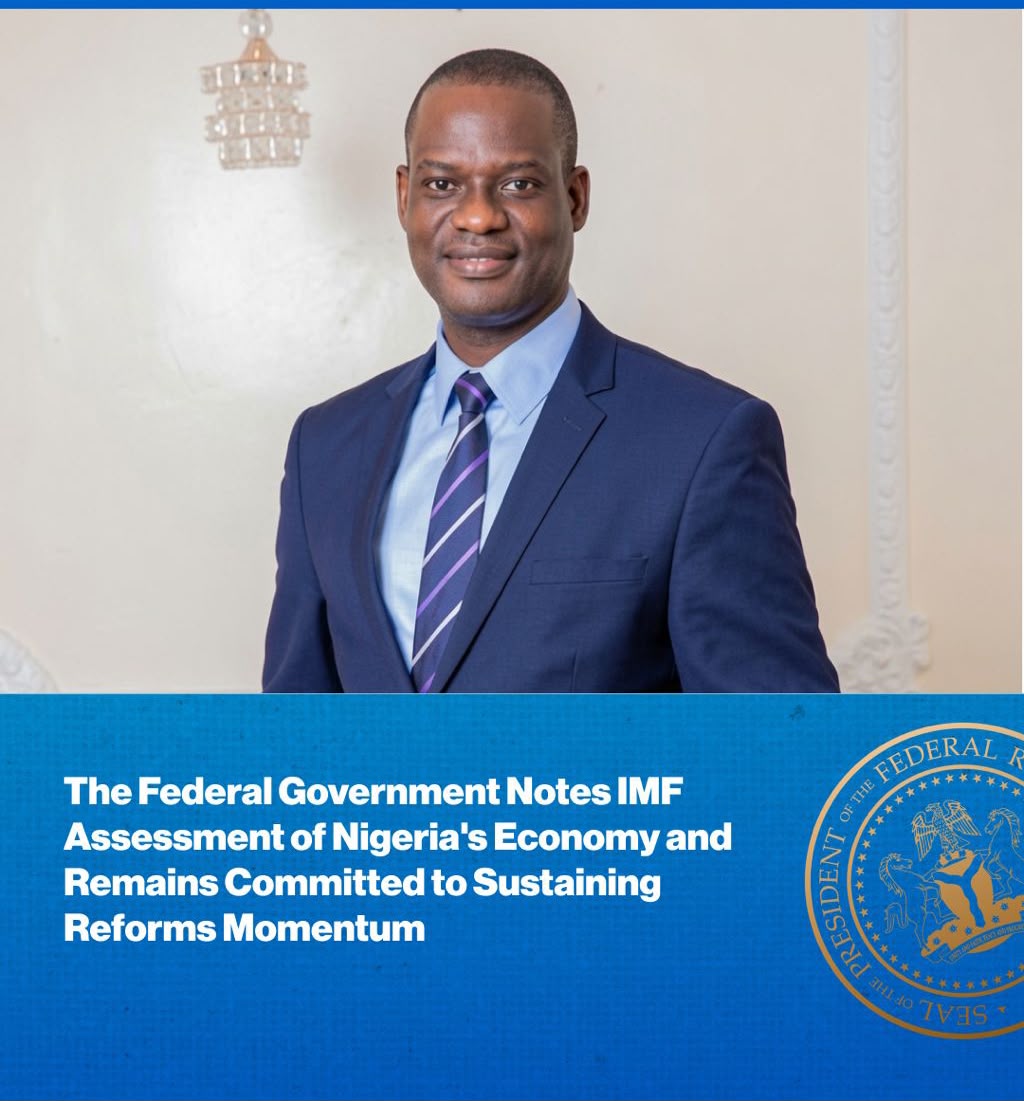
The Federal Government of Nigeria has acknowledged the recent assessment of the country’s economy by the International Monetary Fund IMF and says it remains committed to sustaining ongoing economic reforms under the administration’s policy direction. In a statement reflecting the government’s position, officials said the IMF review forms part of routine global economic surveillance and provides an opportunity to evaluate progress, risks, and policy direction as Nigeria continues its macroeconomic restructuring efforts. The government emphasised that its reform agenda is focused on stabilising key economic indicators, improving fiscal management, strengthening revenue generation, and creating a more investment-friendly environment for both domestic and foreign investors. Nigeria has in recent years implemented a series of economic policy adjustments, including changes in foreign exchange management, fuel subsidy reforms, and efforts to expand non-oil revenue streams. Authorities say these measures are aimed at addressing long-standing structural challenges and improving long-term economic resilience. Officials further noted that while external assessments may highlight areas of concern, they also recognise progress made in aligning Nigeria’s economic framework with global standards and improving transparency in fiscal operations. The Federal Government reiterated that it will continue engaging with international financial institutions, including the IMF and World Bank, to ensure policy coordination and access to technical support as reforms progress. It also stressed that sustaining reform momentum is critical to achieving inclusive growth, attracting investment, and supporting job creation across key sectors of the economy. Economic analysts say IMF assessments often influence investor sentiment and policy expectations, making government responses important in shaping market confidence and public perception. The statement reaffirmed the administration’s commitment to its broader economic vision, commonly referred to as the Renewed Hope Agenda, which prioritises stability, growth, and structural transformation of the Nigerian economy. As reforms continue, policymakers are expected to balance short-term economic pressures with long-term development goals, while maintaining engagement with global financial institutions on policy direction and performance monitoring.