How Four Legacy Road Projects Could Transform Connectivity Across Nigeria’s Six Geopolitical Zones
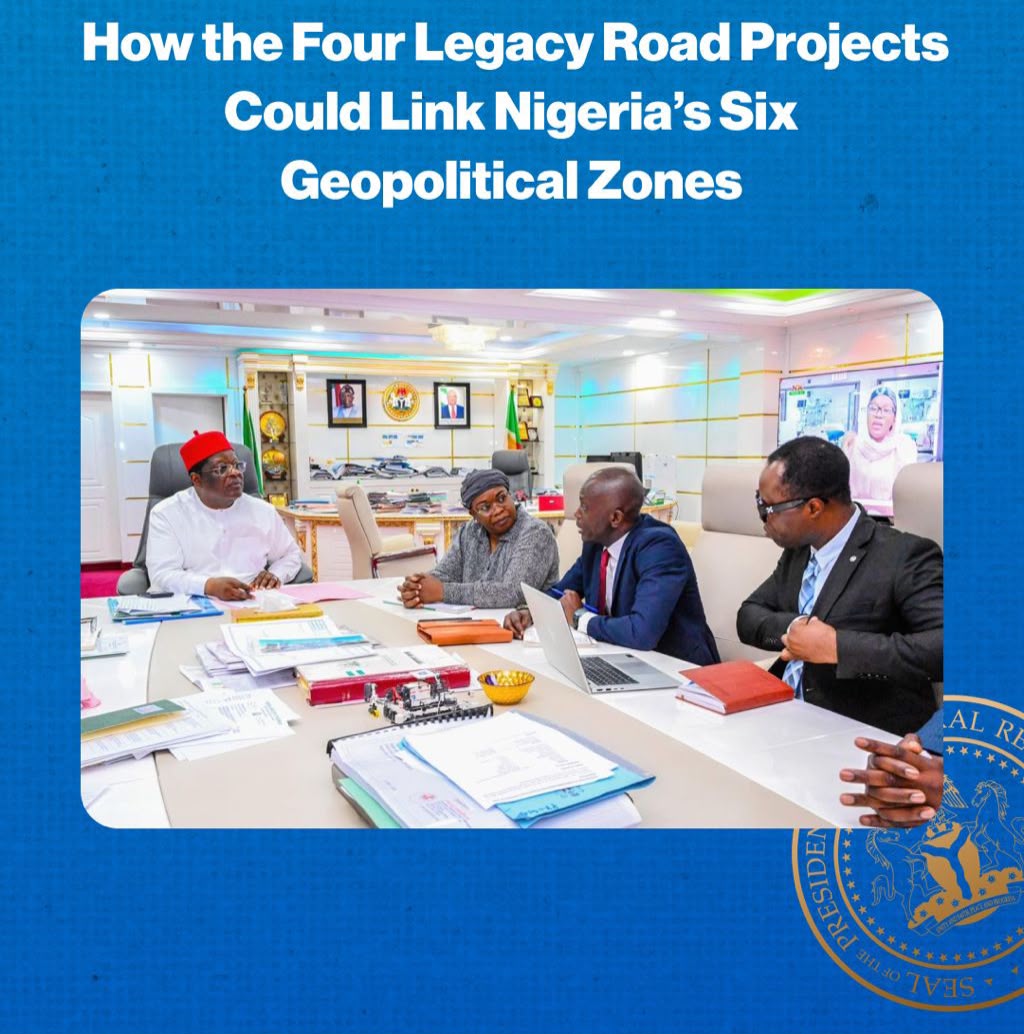
How Four Legacy Road Projects Could Transform Connectivity Across Nigeria’s Six Geopolitical ZonesThe Federal Government’s proposed “legacy road projects” are expected to significantly reshape Nigeria’s transport network by improving connectivity across all six geopolitical zones, linking major economic corridors and strengthening national integration. The initiative, which forms part of the broader infrastructure drive under the Renewed Hope Agenda, focuses on four major highway corridors designed to connect the North and South, East and West, while opening up rural and industrial hubs across the country. President Bola Ahmed Tinubu has repeatedly emphasised that infrastructure development remains central to his administration’s economic strategy, particularly in reducing transport costs, improving trade flows, and boosting internal mobility. The planned road corridors are expected to connect strategic locations across Nigeria’s six geopolitical zones—North West, North East, North Central, South West, South East, and South South—creating faster travel routes between key commercial and agricultural regions. Officials say the projects are designed to reduce travel time between major cities, improve access to ports, and enhance the movement of goods and services across the country. This is expected to strengthen domestic trade and reduce dependence on isolated regional markets. Government planners argue that improved road infrastructure will lower logistics costs, encourage private investment, and support the expansion of manufacturing and agriculture. By linking production zones with consumption and export centres, the roads are expected to boost supply chain efficiency. Analysts note that poor road connectivity has long been a barrier to economic growth in Nigeria, increasing transport expenses and limiting regional integration. The new projects aim to address these challenges by creating more reliable transport corridors. Beyond economic benefits, the legacy road projects are also seen as a tool for national cohesion. By physically linking all parts of the country, policymakers believe the infrastructure will help strengthen unity and reduce regional disparities in development. Security experts also suggest that improved road networks could enhance rapid deployment of emergency and security services, particularly in remote or underserved areas. The Federal Ministry of Works is expected to oversee the execution of the projects in phases, with funding sourced through a combination of government budgets, public-private partnerships, and development financing arrangements. The initiative is part of a broader infrastructure push under the Renewed Hope Agenda, which prioritises roads, rail, power, and digital infrastructure as key drivers of economic transformation. Stakeholders have urged transparency, proper project monitoring, and timely completion to ensure the roads deliver long-term value to citizens and businesses. If fully implemented, the four legacy road projects could represent one of the most ambitious infrastructure integration efforts in Nigeria’s history, with the potential to reshape trade routes and improve connectivity across all six geopolitical zones.