NATIONAL DAY OF MOURNING FOR BONDI ATTACK VICTIMS
NATIONAL DAY OF MOURNING FOR BONDI ATTACK VICTIMS
Australia observed a National Day of Mourning to honour the 15 people killed in a mass shooting at Bondi Beach in Sydney on December 14, 2025 an attack that predominantly targeted Jewish Australians during a Hanukkah celebration and is regarded as one of the nation’s deadliest terrorist incidents. Prime Minister Anthony Albanese led the day’s commemoration, with flags across the country flown at half-mast and major memorial events, including a televised minute of silence and candlelight tributes at the Sydney Opera House and other venues nationwid .
FLOWERS PRESERVED FOR MEMORIAL WORK
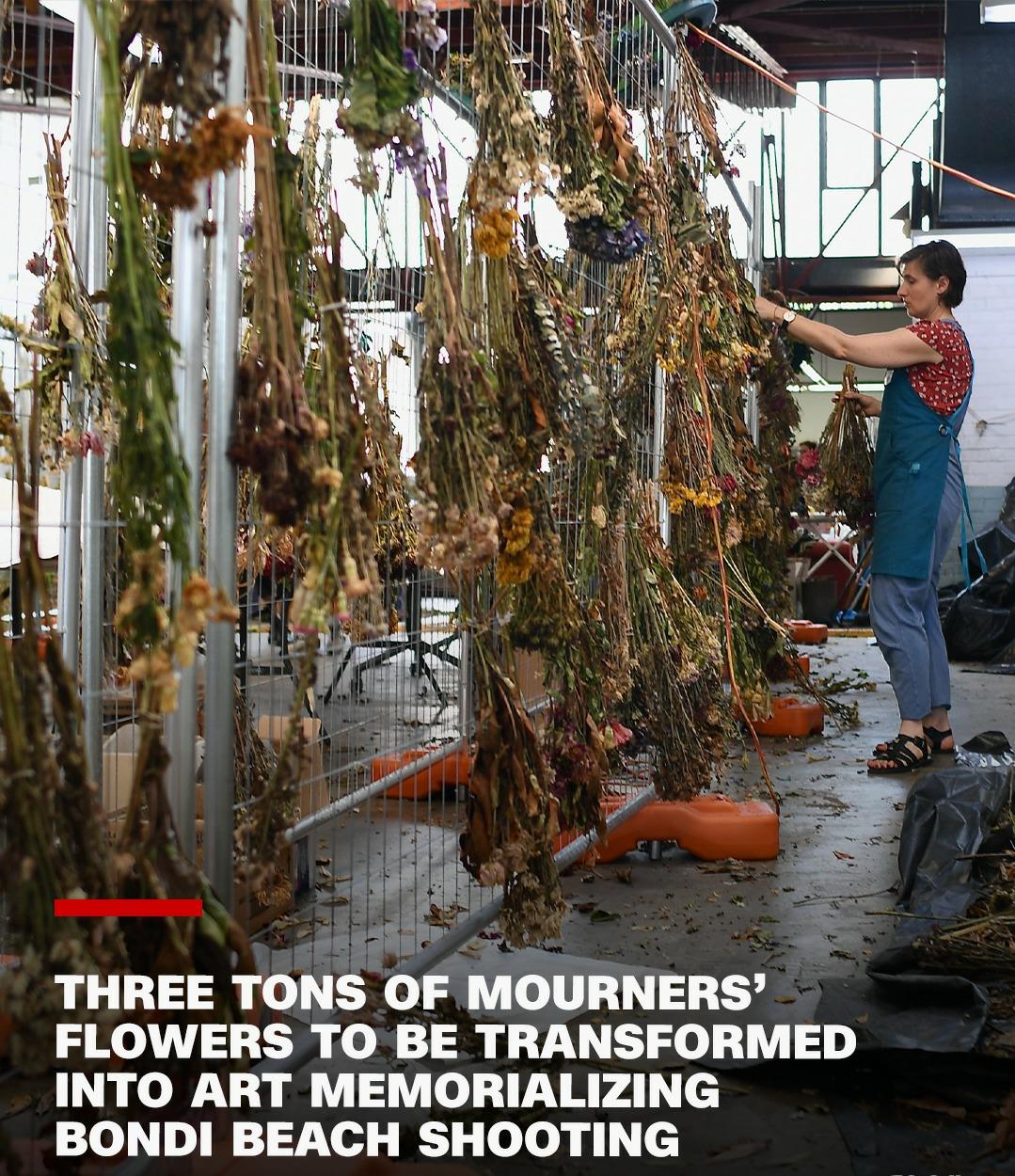
In the emotional aftermath, Jewish artist Nina Sanadze has turned the vast collection of floral tributes left at the Bondi memorial site into the basis for an art project that seeks to symbolise grief, memory and resilience. Sanadze and volunteers collected more than three tonnes of flowers left by mourners at the Bondi Pavilion site. Many of the flowers were deteriorating, so teams transported them to a warehouse where they were dried, sorted and preserved a painstaking process that drew in more than 100 volunteers.
Sanadze, who is based in Melbourne, described her emotional response to the tragedy and the creative work:
“I felt visceral anger… But working with the flowers softened me again and softened my heart. It helped me, in that way, to process my anger.”
She said the act of preserving the flowers and talking about flowers rather than the attack itself helped her manage her emotional distress and “keep going,” even on painful days.
Sanadze has been given a year to complete the artworks for the Sydney Jewish Museum, which is expanding its gallery space and plans to include the memorial pieces in its upcoming exhibits. She envisions a series of mixed-media works, including paintings using pigments derived from the petals. The Bondi Beach shooting on December 14 was declared a terrorist attack fueled by antisemitic motives, and heightened discussions about community security and rising hate-based violence in Australia.
Australia’s government has responded with stricter gun controls and broader legislative measures addressing hate speech and extremism.
The National Day of Mourning was marked not only by government officials and survivors but also by widespread public acts of remembrance and solidarity. The transformation of mourners’ flowers into art has become a powerful symbol of collective healing, turning pain into a memorial narrative that seeks to honour lives lost and promote long-term reflection on unity, compassion and community resilience in the face of terror.