The ‘Miracle Tree’ May Help Solve The Microplastics Crisis, Scientists Say
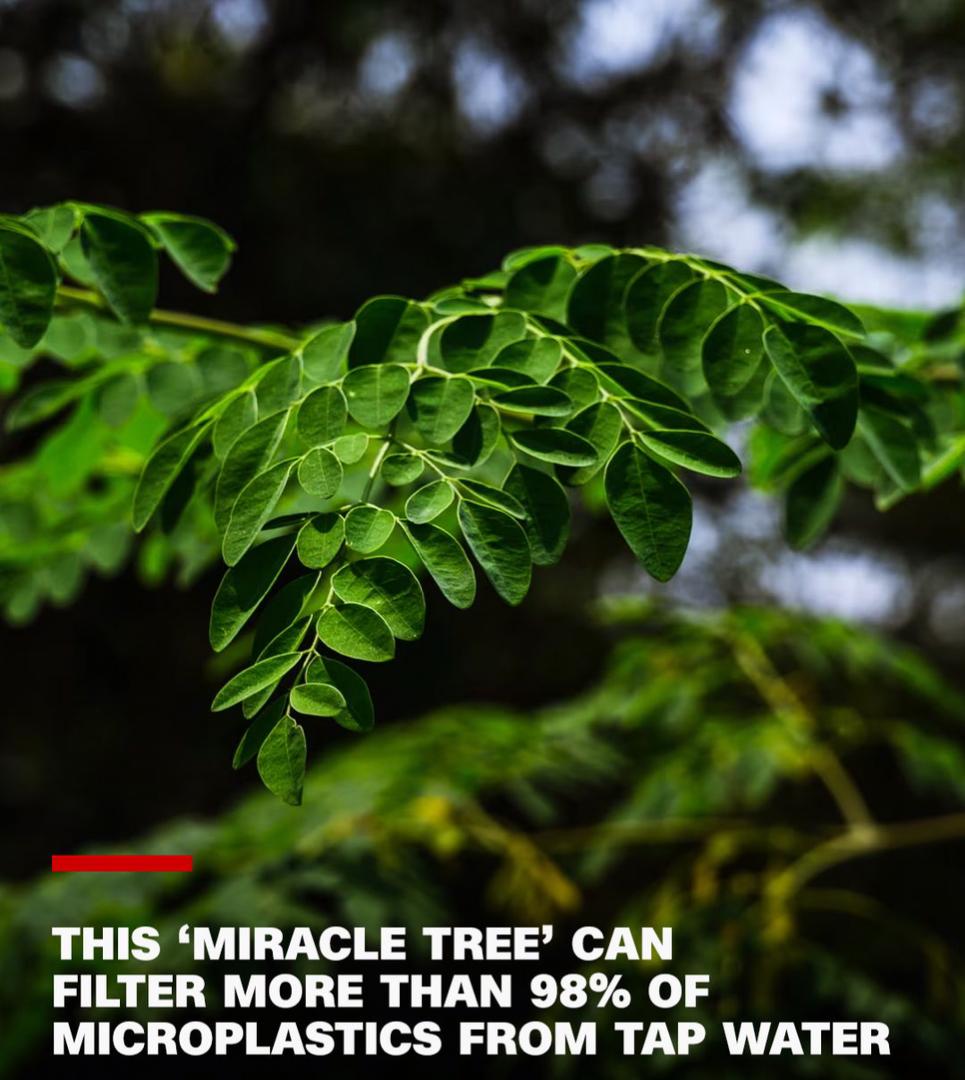
The ‘Miracle Tree’ May Help Solve the Microplastics Crisis, Scientists Say The moringa tree widely celebrated for its nutritional and medicinal benefits may soon play a major role in tackling one of the world’s fastest-growing environmental threats: microplastic pollution in drinking water. Often called the “miracle tree,” Moringa oleifera is already prized across Africa, Asia and other tropical regions for its dense concentration of vitamins, minerals and healing compounds. Now, new scientific research suggests the plant could also become a powerful natural water-purification tool. Microplastics tiny plastic fragments smaller than five millimetres have been detected in oceans, food, air and even human organs, raising growing health and environmental concerns. According to recent research highlighted and scientific publications, extracts derived from moringa seeds can remove up to 98% of microplastics from water under laboratory conditions. Scientists discovered that proteins inside the seeds act as natural coagulants, binding plastic particles together so they clump and sink or can be filtered out easily. The plant-based method rivals conventional chemical treatments used in water facilities and, in some cases, performed even better than commonly used coagulants such as aluminum sulfate. Researchers explain that moringa seed extracts carry positively charged proteins that neutralise the electrical charge of suspended particles in water. Once neutralised, microplastics gather into larger clusters a process known as flocculation making them easier to remove through filtration or settling. Because the approach relies on natural compounds rather than industrial chemicals, scientists say it could provide a low-cost, environmentally friendly alternative for water treatment systems worldwide, especially in developing communities with limited resources. The moringa tree has long been valued for more than water purification. Every part of the plant leaves, seeds and pods is edible or medicinal, and it has been used traditionally to combat malnutrition, inflammation and infections. Its ability to grow quickly in harsh climates has made it especially important across parts of Africa and Asia, where it serves as both a food source and a natural health remedy. While early findings are promising, scientists caution that further research is required before moringa-based purification becomes widely adopted in municipal water systems. Some studies note that natural coagulants can increase organic material in treated water, meaning additional treatment steps may still be necessary. Nevertheless, researchers believe the discovery could mark a major step toward sustainable solutions for reducing plastic contamination in drinking water. With microplastic pollution now considered a global environmental and public-health challenge, the humble moringa tree may offer an unexpected answer combining ancient natural knowledge with modern scientific innovation.
If scaled successfully, experts say this “miracle tree” could help communities around the world access cleaner, safer water while reducing reliance on costly chemical treatment methods.