RARE JAGUAR SPOTTED IN HONDURAN MOUNTAINS AFTER A DECADE, SPARKING CONSERVATION HOPE
RARE JAGUAR SPOTTED IN HONDURAN MOUNTAINS AFTER A DECADE, SPARKING CONSERVATION HOPE
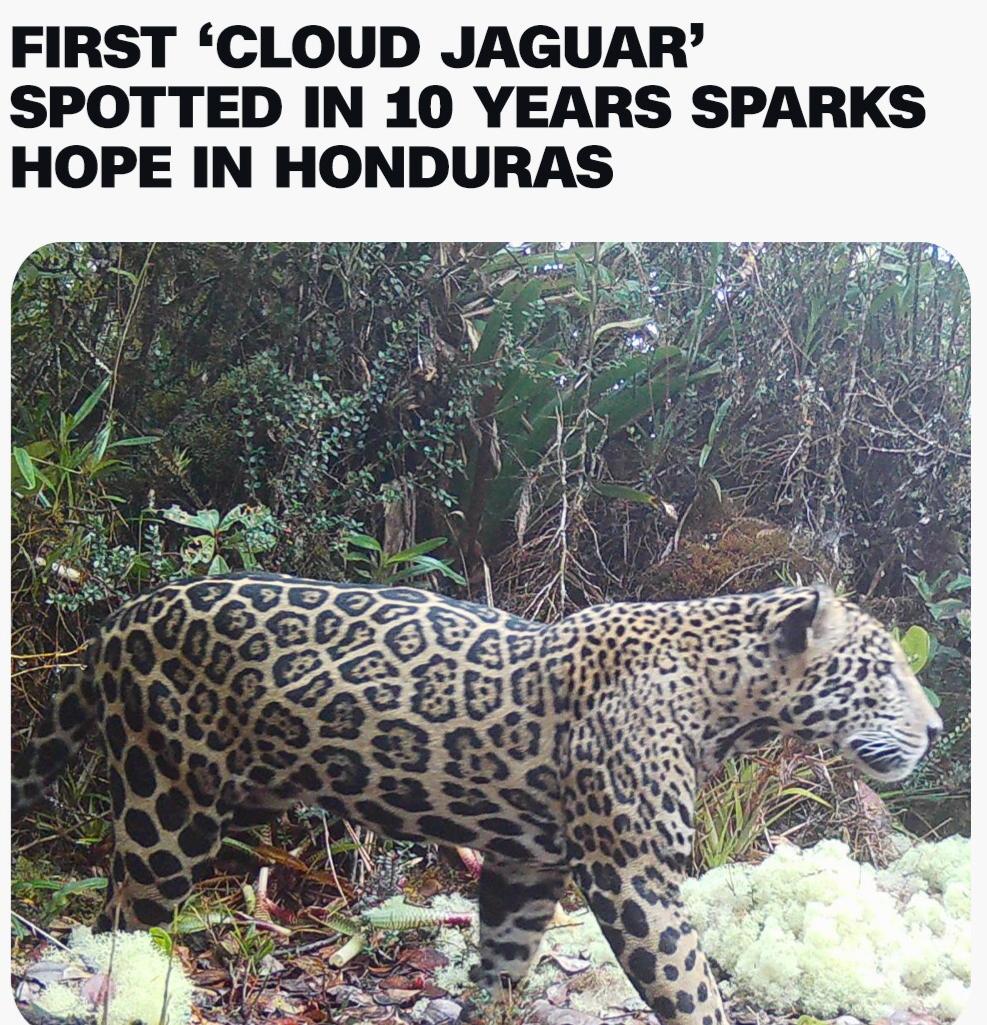
Camera traps have captured images of a jaguar deep in the Sierra del Merendón mountain range in Honduras, marking the first confirmed sighting of the big cat in the area in around ten years.
The discovery has been described by conservationists as a significant boost for biodiversity efforts in Central America, where jaguar populations have faced ongoing threats from habitat loss and human activity. The solitary male jaguar, sometimes referred to by researchers as a “cloud jaguar,” was photographed at high altitude in dense forest, far above typical human activity zones.
According to conservation data, the animal was detected at around 2,200 meters above sea level, making it one of the highest elevation jaguar records in the region.
The sighting was made using motion-activated camera traps installed as part of long-term wildlife monitoring efforts aimed at tracking elusive species in remote habitats.he Sierra del Merendón forms part of a wider ecological corridor that stretches across Honduras and Guatemala, connecting fragmented habitats that are critical for large predators like jaguars.
Experts say the region has experienced severe habitat fragmentation due to agriculture, deforestation, and human settlement, making wildlife movement increasingly difficult.
The return of a jaguar to this area suggests that some forest connectivity may still exist, allowing apex predators to survive in isolated pockets. Conservation groups say jaguars are key indicators of ecosystem health, as they require large territories and stable prey populations to survive.The International Union for Conservation of Nature (IUCN) has reported that jaguars have lost nearly half of their historic range across the Americas, with many populations now classified as endangered or critically endangered.
The reappearance of the species in Merendón is being viewed as a positive sign that conservation efforts in Honduras may be helping to restore parts of its natural wildlife corridor. Researchers had previously gone years without confirmed photographic evidence of jaguars in the specific area, raising concerns that the species may have disappeared locally. The new detection breaks that absence and suggests either survival of a hidden population or movement from nearby protected zones. Scientists working in the region say protecting the jaguar corridor between Central American countries is essential to maintaining genetic diversity and long-term survival of the species. Efforts are ongoing to reduce illegal hunting, prevent habitat destruction, and improve monitoring using camera traps and ranger patrols. While challenges remain for jaguar conservation in Central America, the unexpected return of the species to Sierra del Merendón is being hailed as a rare but encouraging sign that wildlife recovery is still possible with sustained protection efforts.