US Judge Temporarily Halts Trump’s White House Ballroom Project
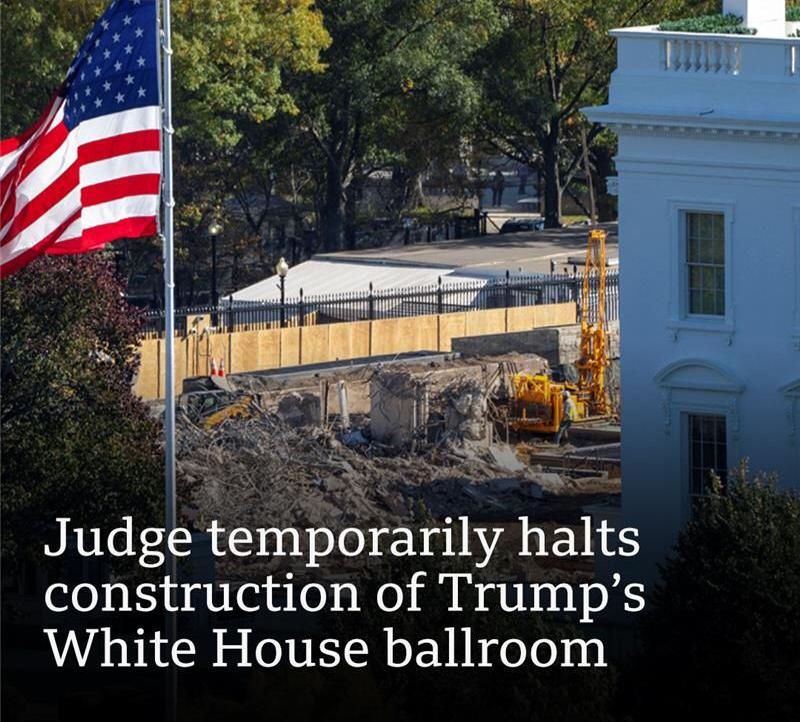
US judge temporarily halts Trump’s White House ballroom project
A US federal judge has temporarily halted President Donald Trump’s plan to build a new ballroom at the White House, ruling that construction cannot proceed without approval from Congress. The decision, issued by US District Judge Richard Leon, grants a preliminary injunction stopping work on the estimated $400 million project while legal challenges continue. The lawsuit was brought by the National Trust for Historic Preservation, which argues that the president exceeded his authority by demolishing the historic East Wing and launching construction without legislative approval.
In his ruling, Judge Leon emphasised that the president is “the steward of the White House not the owner,” adding that no existing law gives the president the power to carry out such a major project unilaterally. The proposed ballroom a large-scale venue intended to host major events is part of a broader redesign of the White House site. Construction began after the East Wing, originally built in the early 20th century, was demolished to make way for the new structure. Supporters of the project, including the Trump administration, argue that it is funded entirely through private donations and would not cost taxpayers anything. They also say it would modernise the White House and improve its ability to host official functions. However, critics say the development threatens the historic integrity of the White House and bypasses established legal and planning processes. Preservation groups have called for greater oversight and adherence to federal law before any work continues. Judge Leon’s order allows some construction activities related to security to continue but otherwise pauses the project. He also granted a 14-day window for the administration to appeal the decision, which officials are expected to pursue. The ruling represents a significant legal setback for one of Trump’s most high-profile architectural projects and sets up a broader constitutional debate over presidential authority and congressional oversight of federal property.