U.S. DEFENSE SECRETARY PETE HEGSETH ANNOUNCES INTENSIFIED STRIKES ON IRAN TEHRAN RESIDENTS DESCRIBE HEAVY IMPACT
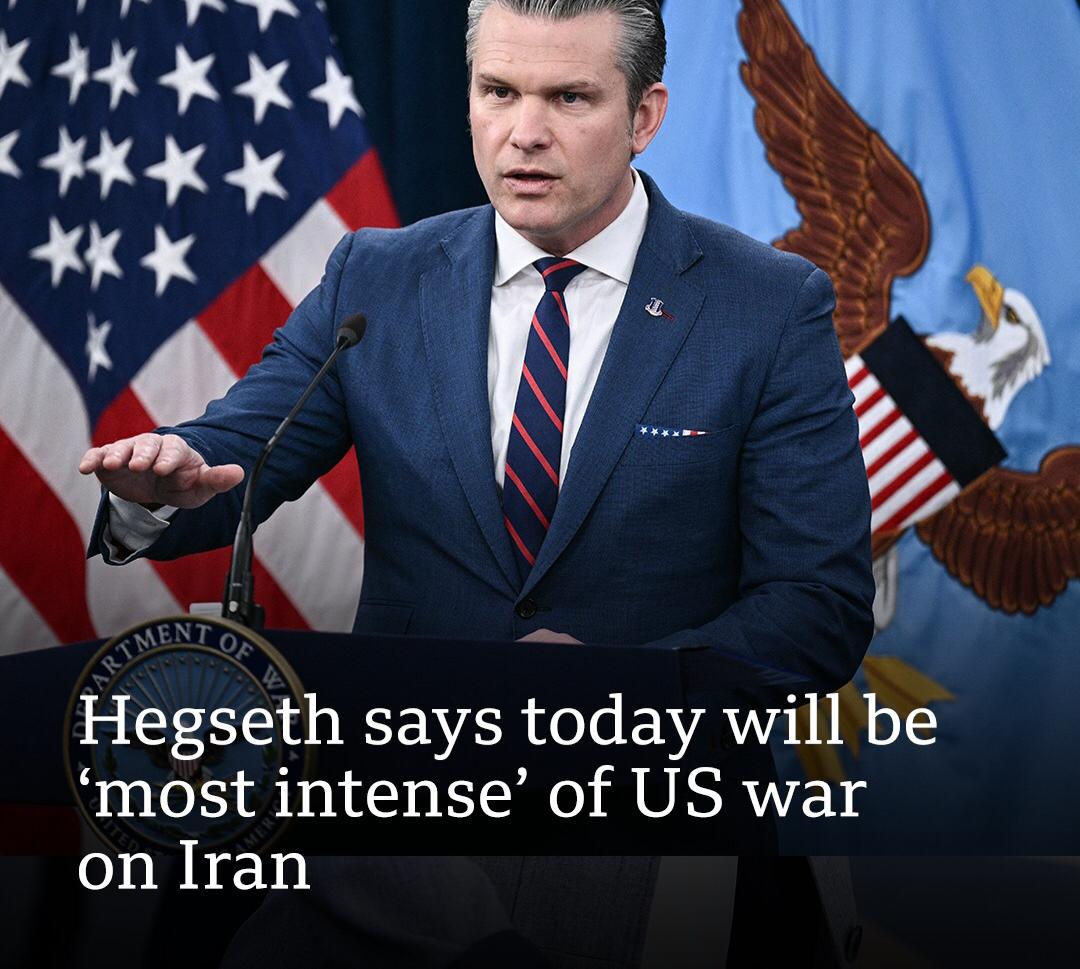
U.S. DEFENSE SECRETARY PETE HEGSETH ANNOUNCES INTENSIFIED STRIKES ON IRAN; TEHRAN RESIDENTS DESCRIBE HEAVY IMPACT U.S. Defence Secretary Pete Hegseth has declared that American military operations against Iran will intensify, calling for some of the most intense strikes yet on Iranian territory while Tehran residents report that the city has been hard hit by continuous bombardment amid the ongoing U.S.‑Israel‑Iran war.
Hegseth told reporters at a Pentagon briefing that the United States is planning a surge in strikes inside Iran, describing the current phase as possibly the most intense since the conflict began. He said the operation will involve “the most fighters, the most bombers, the most strikes,” aiming to destroy Iran’s missile stockpiles, defense infrastructure and military production capabilities. Hegseth framed the offensive as an effort to degrade Iran’s capacity to wage war and to prevent the regime from threatening the region or pursuing nuclear capabilities. He asserted that Iran stands alone and is “badly losing” on the battlefield, despite ongoing Iranian retaliatory actions.
General Dan Caine, chairman of the U.S. Joint Chiefs of Staff, said U.S. forces have struck more than 5,000 targets across Iran since the military campaign dubbed Operation Epic Fury began, including naval vessels and weapon production facilities. Residents of Tehran, Iran’s capital, have described severe disruptions to everyday life as intense bombardments continue across urban areas. Witnesses told broadcasters including the BBC that strikes have shaken neighborhoods, damaged infrastructure, and created widespread fear among civilians. Many Tehran inhabitants said the scale of explosions has left parts of the city looking battered, with ongoing power outages and communication blackouts complicating daily life. Some families have sought shelter or fled to neighboring towns to escape the violence, though many remain in the capital due to economic and security constraints. Reports from humanitarian sources indicate that countless civilians have already been affected by the conflict including casualties and widespread damage to infrastructure as attacks by U.S. and Israeli forces have targeted both military and dual‑use sites The conflict between the United States, Israel and Iran began after a dramatic escalation at the end of February 2026, including coordinated strikes on Iranian leadership and military sites. Since then, Tehran and other cities have faced repeated airstrikes, while Iranian forces have launched missiles and drones at U.S. positions and allied regional nations. Across the region, anti‑war sentiment and civilian displacement have risen as the crisis enters its second week, with international calls for de‑escalation growing alongside military rhetoric from Washington and Tehran. U.S. authorities continue to defend the strikes as necessary to diminish Iran’s military capability and secure regional stability, while Iranian leaders have vowed to continue their military response. Both sides maintain vastly different narratives about the war’s cause and objectives, contributing to a tense geopolitical environment with global economic and security repercussions.