Oil Price Passes $100 A Barrel For First Time Since 2022 As G7 Plans Emergency Talks
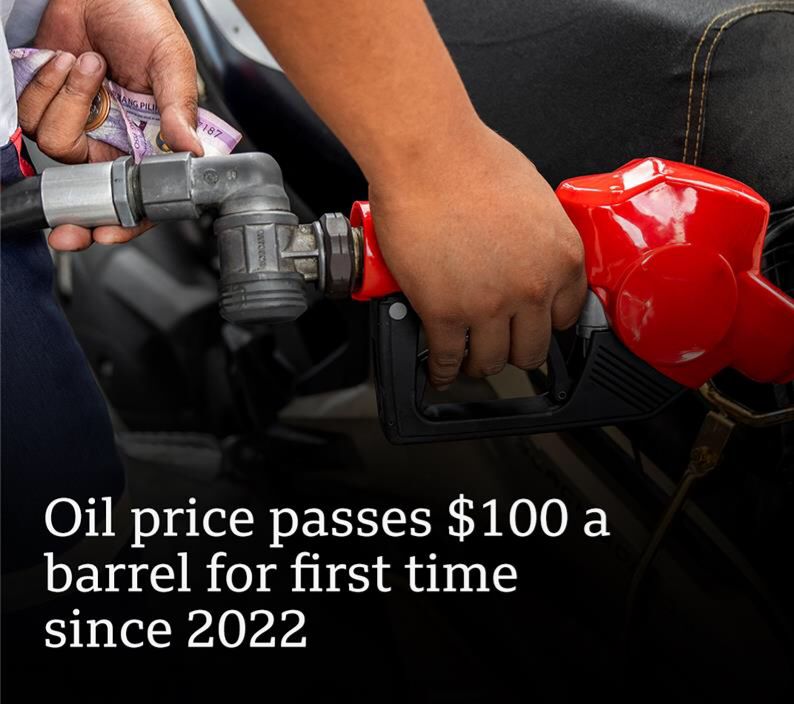
Oil Price Passes $100 a Barrel for First Time Since 2022 as G7 Plans Emergency Talks London Global oil prices have surged past $100 a barrel for the first time since 2022, as escalating conflict in the Middle East threatens global energy supplies and rattles financial markets. Leaders from the Group of Seven (G7) major economies are preparing to hold emergency talks to discuss possible measures to stabilize energy markets. The sharp rise in crude prices comes amid intensifying fighting involving Iran, Israel and the United States, raising fears of disruptions to oil production and shipping routes in the region. Benchmark Brent crude, the global oil standard, climbed above $107 per barrel, while West Texas Intermediate (WTI) traded above $106, marking their highest levels in more than three years. At one point during early trading, oil briefly approached $119 per barrel, before easing slightly as news emerged that world powers were considering emergency intervention in energy markets. Analysts say the price spike reflects fears that the conflict could disrupt oil shipments through the Strait of Hormuz, a critical maritime chokepoint through which roughly 20% of the world’s oil supply passes each day. In response to the surge, G7 finance ministers are expected to hold urgent talks to discuss a possible coordinated release of emergency oil reserves to ease pressure on markets. According to reports, several countries including the United States and European partners support releasing 300–400 million barrels from strategic reserves if supply disruptions worsen.
The reserves are held by members of the International Energy Agency (IEA) and are designed to stabilize markets during major supply shocks. The surge in oil prices has already begun affecting global markets.
- U.S. stock futures fell sharply, with the Dow Jones expected to drop more than 1,000 points.
- Asian and European markets also declined amid fears of rising inflation and slower economic growth.
- Fuel prices in several countries have started rising rapidly as energy costs increase.
Economists warn that prolonged oil prices above $100 could trigger higher transportation costs, rising inflation and slower global growth.
Oil last traded above $100 per barrel in 2022 following Russia’s invasion of Ukraine, which triggered a major global energy shock.
The current surge reflects similar fears that geopolitical conflict could sharply reduce global oil supply and destabilize energy markets worldwide Energy analysts say markets will be closely watching:
- Whether the G7 releases emergency oil reserves
- The security of shipping routes in the Middle East
- Potential retaliatory strikes affecting energy infrastructure
If the conflict escalates further, some analysts warn oil prices could rise significantly higher, potentially triggering another global energy crisis.