BRITISH PRIME MINISTER KEIR STARMER BLOCKS U.S. REQUEST TO USE UK AIR
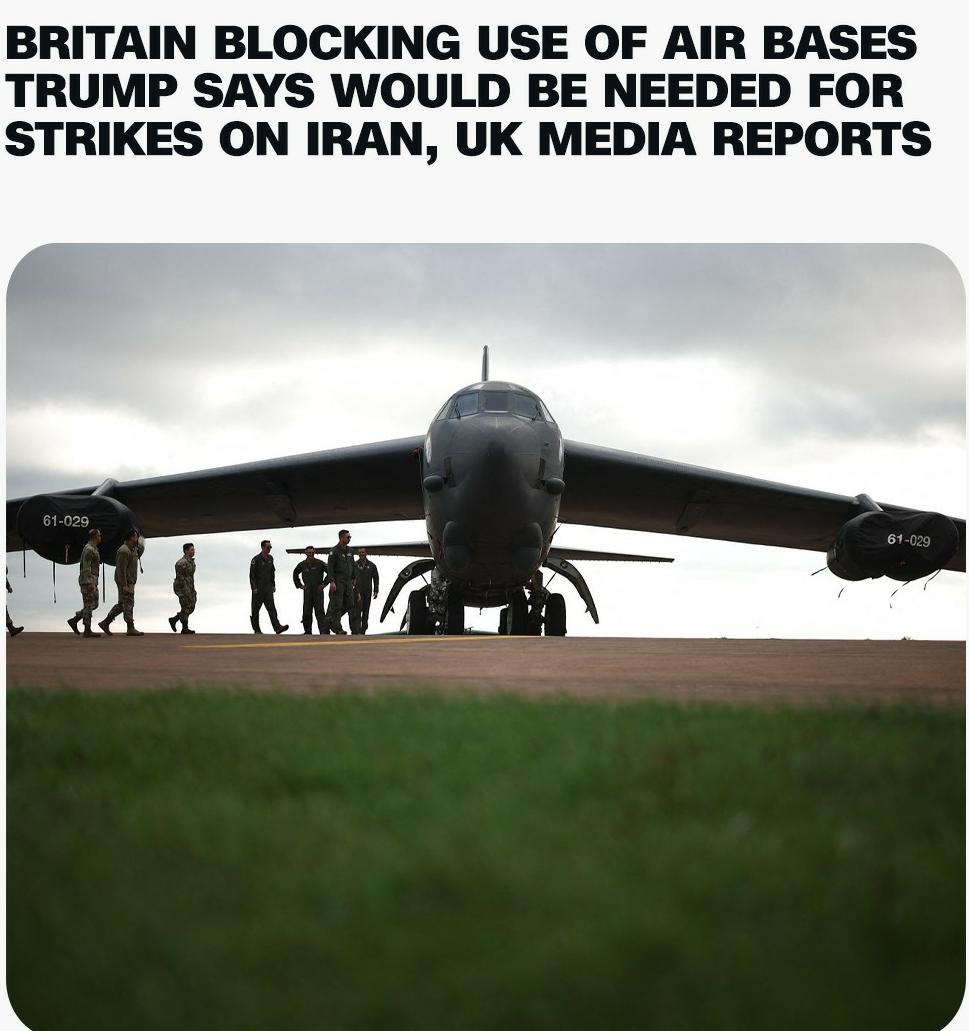
BRITISH PRIME MINISTER KEIR STARMER BLOCKS U.S. REQUEST TO USE UK AIR BASES IN POTENTIAL PREEMPTIVE ATTACK ON IRAN
British Prime Minister Sir Keir Starmer has refused a request from U.S. President Donald Trump to permit the use of British military air bases including RAF Fairford in England and the strategically vital Diego Garcia base in the Indian Ocean for a potential pre‑emptive military strike on Iran, citing concerns that participating in such an operation could violate international law, according to multiple reports in the British media citing government sources.
Starmer’s decision marks a significant diplomatic divergence with the United States amid soaring tensions between Washington and Tehran, underscoring the UK’s caution against becoming directly involved in hypothetical military operations against Iran.
Under longstanding defence agreements, the U.S. military has used British facilities such as RAF Fairford a key hub for long‑range bombers and Diego Garcia as strategic staging points. However, Britain must explicitly authorize each use of these bases for offensive actions. Starmer’s office has withheld that authorization for any pre‑emptive strike on Iran, fearing such an operation may contravene international legal norms that make no distinction between an attacking state and supporting states if they are aware of the unlawfulness of the act. Government lawyers reportedly advised that active participation or facilitation of pre‑emptive strikes could expose the UK to legal liability under international law a core reason behind diplomatic reticence. London’s position reflects broader caution about unilateral military action without explicit United Nations authorisation.
Reports suggest President Trump was displeased with the UK’s stance. His administration had been planning potential military options against Iran and viewed access to British bases as strategically important. Friction over the issue has also spilled into related diplomatic areas, including Trump’s criticism of a UK‑Mauritius deal concerning Diego Garcia’s sovereignty.
Within the UK, Starmer’s stance has drawn mixed reactions:
- Some politicians argue that supporting the U.S. was crucial for shared security interests, including countering Iranian threats.
- Others applaud the Prime Minister’s emphasis on legal caution and diplomatic solutions, asserting that Britain should avoid entanglement in military actions that lack clear international legal backing. The decision comes as relations between Washington and Tehran remain tense over Iran’s nuclear ambitions and broader Middle East security issues. The U.S. has maintained that any military planning is aimed at preventing nuclear escalation, while diplomatic efforts continue alongside these strategic calculations.