TRUMP POSITIONS BOARD OF PEACE AS GLOBAL POWER SHIFT AWAY FROM THE UNITED NATIONS
TRUMP POSITIONS BOARD OF PEACE AS GLOBAL POWER SHIFT AWAY FROM THE UNITED NATIONS
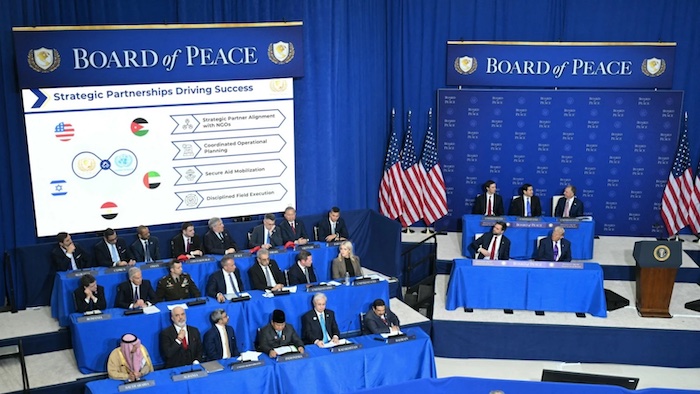
U.S. President Donald Trump has positioned his newly formed Board of Peace created to lead post‑war Gaza reconstruction as a new model of global governance that could shift power away from the United Nations and reshape international crisis management frameworks. Officials and international observers say the move signals a bold attempt to recalibrate how global diplomacy and peacebuilding are conducted. At the inaugural Board of Peace meeting in Washington, D.C., Trump framed the board as an alternative to traditional multilateral institutions, openly suggesting it could “overlook” the United Nations to ensure it functions effectively a clear departure from established UN‑centric global frameworks. Trump described the initiative originally launched to manage Gaza’s reconstruction and stabilisation as a results‑driven coalition free from the bureaucracy that critics say hobbles legacy institutions like the UN. Trump allies, including U.S. Secretary of State Marco Rubio, argue that existing international mechanisms have failed to resolve what they call “unique crises,” and that the Board of Peace offers decisive leadership instead of consensus diplomacy.
While Trump publicly praised the UN’s potential and stated intentions to “strengthen” and “help it money‑wise,” he reiterated that the Board of Peace could effectively “look over” the UN to ensure it “runs properly” an assertion interpreted by analysts as an effort to sideline the U.N.’s traditional leading role in peace and security governance. Several countries acknowledged the board’s innovative approach, with observers from Italy, the UK and Germany attending the meeting but declining formal membership due to legal and constitutional concerns over its relationship with existing global organisations. France refused outright, citing fears the body could encroach on UN authority.
Experts highlight that the board’s architecture blending state actors, financial institutions and private capital under U.S. leadership represents something distinct from typical UN peace operations. The World Bank will act as a “limited trustee” handling donor funds, but strategic direction remains under the board’s purview, reinforcing its politically driven structure.
If implemented as envisioned, the Board of Peace could signal a paradigm shift in how global disputes and reconstruction efforts are managed, operating adjacent to or even “above” traditional UN systems. Critics argue this approach risks undermining established international law and norms, diminishing the role of neutral institutions and potentially concentrating power among a select coalition of states and private actors.
Trump even suggested his model could be replicated in other “impossible” conflicts beyond Gaza implying a broader role for the board as a new form of crisis governance. However, sceptics warn that unless the board achieves tangible results, it may deepen geopolitical fragmentation and reinforce scepticism about parallel international frameworks that bypass the United Nations.