MILLIONS CELEBRATE LUNAR NEW YEAR AS 2026 MARKS THE YEAR OF THE FIRE HORSE
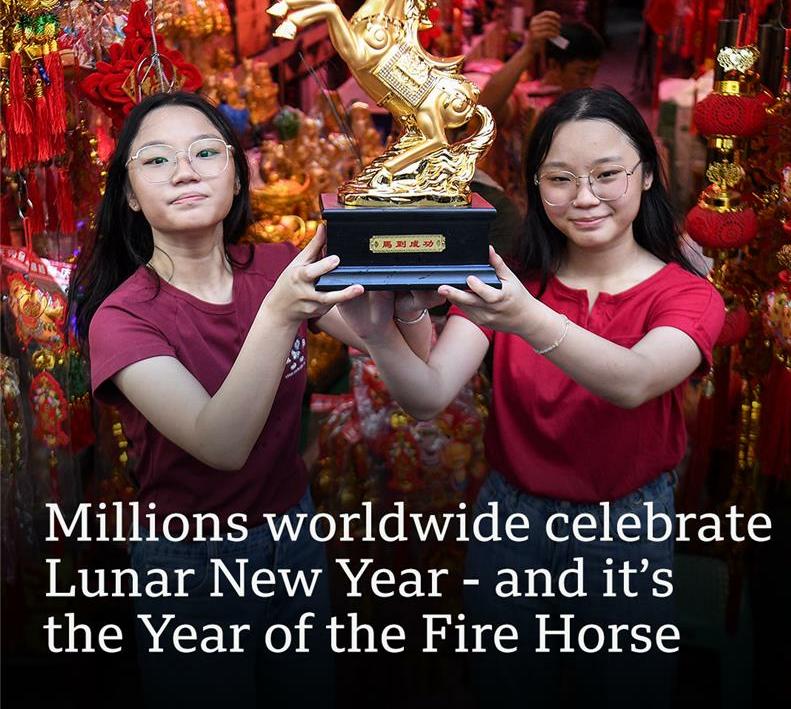
MILLIONS CELEBRATE LUNAR NEW YEAR AS 2026 MARKS THE YEAR OF THE FIRE HORSE Millions of people across Asia and around the globe are celebrating Lunar New Year 2026, a major cultural festival that began on 17 February 2026, marking the start of the Year of the Fire Horse — a rare zodiac year that occurs only once every 60 years. The holiday, which falls on the first new moon of the lunisolar calendar, is observed with vibrant traditions, family reunions, symbolic rituals and festive events dependent on local culture and heritage. China: Cities from Beijing to Guangzhou are alive with fireworks, temple prayers, lantern displays, and street celebrations welcoming luck and prosperity. Thousands visited temples to burn incense and make wishes for happiness, success and good fortune in the coming year. Hong Kong and Taiwan: Devotees lined up at midnight to light incense, bow before altars and pray for blessing, while temple bells pealed 108 times a number considered auspicious. Vietnam (Tết): Celebrations included music countdowns, outdoor concerts, spectacular fireworks shows and traditional social gatherings. Hong Kong’s temples and other regional centers were filled with festival goers participating in age‑old rituals. Outside the traditional heartlands:
In Moscow, snowy streets were decorated with red lanterns and dragon motifs, and people sampled Chinese foods at street fairs as multi‑week celebrations began. Buenos Aires’ Chinatown saw thousands of Argentines attend dragon and lion dance performances, martial arts exhibitions and cultural shows, reflecting large Asian diaspora participation.
Other cities with significant Asian communities including places in Australia, Europe and the Americas held parades, lion dances, lantern festivals and cultural gatherings marking the new year.
Family and feasting: Families traditionally reunite for a reunion dinner on New Year’s Eve, sharing symbolic foods such as dumplings for wealth, long noodles for longevity and whole fish for abundance. Red decorations: Homes and streets are adorned with red lanterns, couplets and banners, which symbolize luck, happiness and warding off bad fortunes. Hongbao/red envelopes: People exchange red envelopes (hóngbāo) containing money a gesture meant to bring prosperity and good fortune to recipients Fireworks and firecrackers: These are set off in many regions to chase away evil spirits and welcome the new year with energy and brightness. According to Chinese zodiac tradition, the Horse symbolizes strength, energy, freedom and success, while the Fire element signifies passion, dynamism and action. This combination last seen 60 years ago is believed to bring a year marked by ambition, transformation and lively energy and is expected to influence celebratory themes and cultural symbolism throughout the year. Decorations and gifts often feature horse imagery and fire‑inspired colors like red and gold to harness auspicious energy, and common greetings emphasize luck, prosperity and forward motion as families and communities usher in the new year.
The Lunar New Year celebration spans about 15 days, culminating in the Lantern Festival when colorful lanterns are lit and carried in night parades. For many countries, especially in East and Southeast Asia, the festivities are deeply rooted in cultural heritage and community identity, uniting traditional customs with modern celebrations and global participation.
The Lunar New Year is one of the largest cultural celebrations on the planet, not only for its sheer number of participants hundreds of millions in Asia alone but for its symbolism of renewal, family unity and hope for the future. The arrival of the rare Year of the Fire Horse adds a unique layer of enthusiasm and cultural resonance to 2026’s festivities, reinforcing themes of bold beginnings, optimism and community spirit across generations and continents.