Israel’s West Bank Settlement Expansion Accelerates Under Netanyahu Amid Rising Settler Violence
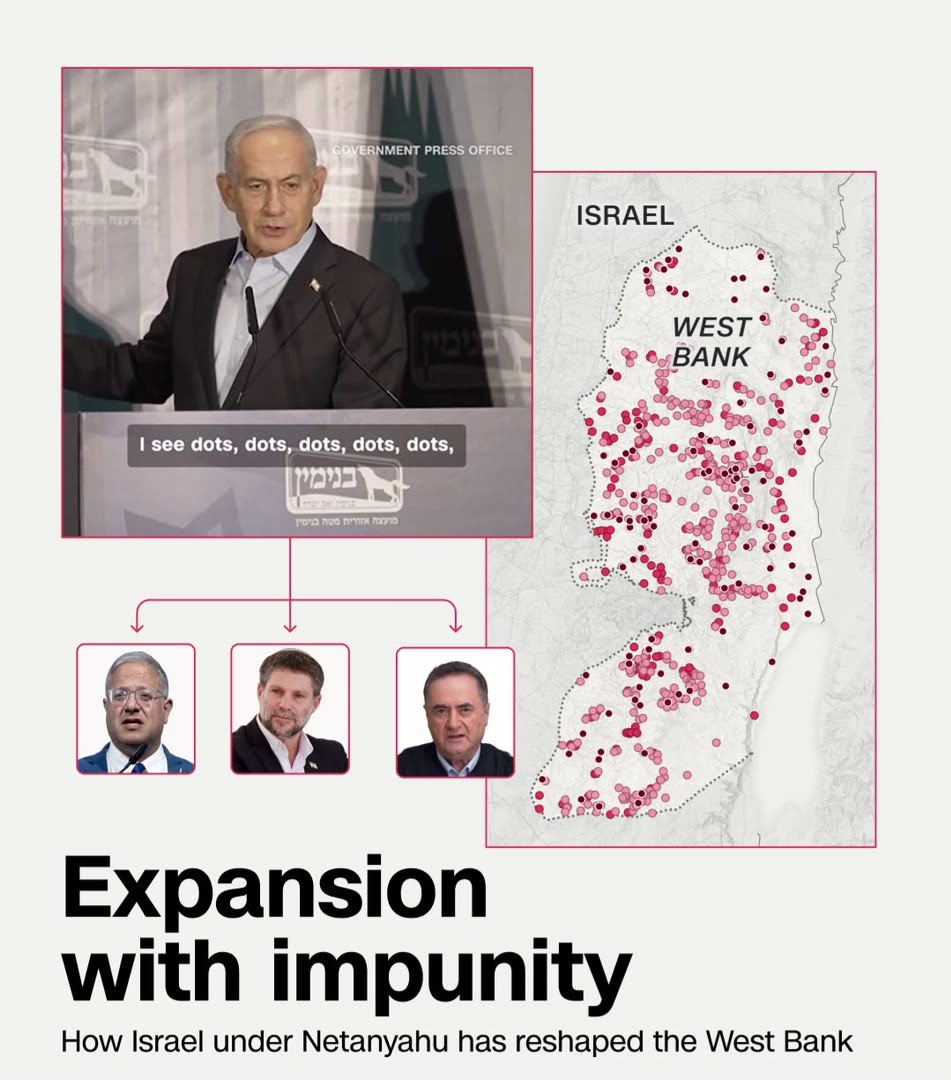
Israel’s West Bank Settlement Expansion Accelerates Under Netanyahu Amid Rising Settler Violence Israel’s government under Prime Minister Benjamin Netanyahu has overseen a significant expansion of settlements in the occupied West Bank, accompanied by a surge in violence by Israeli settlers against Palestinians, raising fresh concerns about displacement, land seizures and the future of a Palestinian state. A examining the transformation of the territory highlights how settlement construction, the establishment of new outposts and attacks on Palestinian communities are changing conditions on the ground. The developments have intensified concerns among Palestinians and international observers that the expansion could further undermine the possibility of establishing an independent Palestinian state alongside Israel. Since Netanyahu formed his right-wing governing coalition in 2022, settlement expansion has accelerated, with far-right figures in his government openly advocating increased Israeli control over the occupied territory. Finance Minister Bezalel Smotrich, a prominent supporter of the settlement movement, has played a central role in advancing policies aimed at expanding settlements and strengthening Israeli control over the West Bank. In July 2026, Israeli authorities announced plans to establish additional settlements and legalise existing outposts. The moves formed part of a broader drive to expand Israel’s presence across strategically important areas of the territory. According to reporting by Al Jazeera, Israeli authorities approved 34 new settlements during the first half of 2026, while Palestinian officials documented 42 new settlement outposts over the same period. The expansion has raised concerns that settlements and connecting infrastructure could divide Palestinian communities, restrict movement and make the creation of a geographically connected Palestinian state increasingly difficult. The growth of settlements has coincided with increased attacks by Israeli settlers on Palestinian residents, agricultural land and property. Incidents have included assaults, destruction of homes, burning of vehicles and olive trees, intimidation of farmers and the displacement of vulnerable communities. A United Nations Human Rights Office report published in March 2026 documented 1,732 incidents of settler violence resulting in casualties or property damage during the 12-month reporting period ending October 31, 2025. The report also said more than 36,000 Palestinians had been forcibly displaced amid expanding settlement activity and rising violence by settlers and Israeli security forces. In a particularly serious incident on October 16, 2026, Israeli settlers attacked Palestinians harvesting olives in the West Bank village of Abu Falah, burning trees and injuring several people. American photojournalist Heidi Levine was among those injured and required hospital treatment. The incident drew renewed attention to the risks facing Palestinian farmers during the olive harvest, an important source of income for many families. For Palestinian communities, settlement expansion and settler attacks have created growing uncertainty over land ownership, personal safety and access to livelihoods. The establishment of outposts and the extension of settlement infrastructure can restrict access to farmland, grazing areas and essential resources. Residents of some communities have also faced pressure to leave their homes following repeated attacks and intimidation. Palestinian officials and human rights organisations argue that the combined effects of settlement growth and violence are contributing to the gradual displacement of Palestinians from parts of the occupied West Bank. Israeli authorities have security-related justifications for some measures in the territory, while the Israeli government has supported settlement expansion. Critics say the scale and direction of the policies go beyond immediate security concerns and are changing the territory’s demographic and geographic landscape. Israeli settlements in the occupied West Bank, including East Jerusalem, are widely regarded as illegal under international law. Israel disputes aspects of this position. The United Nations and numerous governments have repeatedly criticised settlement expansion, warning that it violates international law and threatens prospects for a negotiated settlement to the Israeli-Palestinian conflict. The continued growth of settlements is particularly contentious because it can fragment Palestinian-controlled areas and complicate the establishment of a viable, sovereign Palestinian state. Critics of the Netanyahu government also warn that the influence of far-right politicians who oppose Palestinian statehood has reduced the prospects for meaningful negotiations. The combination of settlement expansion, land disputes and settler violence has become a central issue in the future of the West Bank. As new outposts emerge and existing settlements grow, Palestinian communities face mounting pressure, while international calls for restraint and accountability continue. The central concern is whether continued expansion will make a negotiated two-state solution increasingly difficult to achieve, leaving Palestinians with diminishing territorial space and fewer prospects for independent statehood.