Opposition Questions Tinubu’s 12-State Campaign Plan As City Boy Movement Targets 10 Million Votes
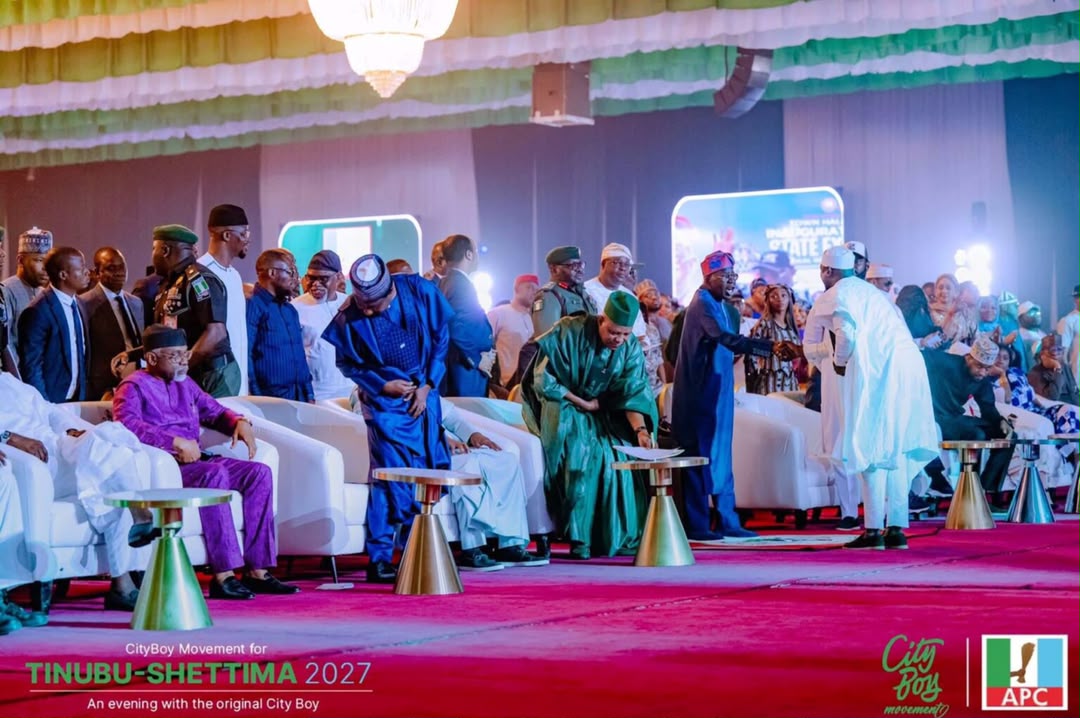
Opposition Questions Tinubu’s 12-State Campaign Plan as City Boy Movement Targets 10 Million Votes President Bola Ahmed Tinubu’s reported plan to personally attend campaign rallies in 12 state capitals ahead of the 2027 presidential election has sparked debate, with opposition figures questioning the strategy and the President’s ability to campaign across the country. The All Progressives Congress (APC) has defended the proposed itinerary, arguing that Tinubu must balance electioneering with his responsibilities as the incumbent President. The party says its campaign strategy will combine rallies with political consultations and stakeholder meetings in other states. The controversy comes as the City Boy Movement (CBM), a youth-focused political support group, has pledged to mobilise at least 10 million votes for Tinubu’s re-election, citing its nationwide grassroots network and millions of registered members. The developments reflect growing political mobilisation ahead of the 2027 general election, with parties and support groups preparing to engage voters amid continuing debate over economic reforms, the cost of living and the performance of the current administration. The APC Presidential Campaign Committee plans for Tinubu to physically attend and address rallies in 12 state capitals rather than campaign personally across all 36 states of the federation. Peter Ameh, Secretary of the Coalition of United Political Parties (CUPP), criticised the proposal, arguing that limiting the President’s physical campaign appearances could create the impression that some states and their residents were being overlooked. Ameh questioned whether the President would be able to undertake the demands of an extensive nationwide campaign. He argued that Nigerians should have the opportunity to hear directly from the incumbent about his record in office and his plans for a second term. His comments were political criticism, not evidence establishing any medical reason for the proposed campaign schedule. Dr Omenazu Jackson, Chancellor of the International Society of Social Justice, also urged Tinubu to visit all 36 states, saying direct engagement would allow the President to hear citizens’ concerns about insecurity, hunger and environmental challenges. Jackson argued that reports from political associates could not replace firsthand engagement with communities. He also called on the President to consider the demands of the office when assessing his second-term ambition. Agnes Okwe, a politician in Rivers State, similarly urged Tinubu to prioritise his health and carefully assess the demands of nationwide campaigning. The comments illustrate the disagreement surrounding the proposed itinerary, with critics emphasising direct presidential engagement while the ruling party maintains that campaign activities must be balanced with governance. The APC rejected the suggestion that the proposed campaign itinerary reflected an unwillingness or inability to engage voters nationwide. The party’s National Chairman, Nentawe Yilwatda, speaking through his aide, Abimbola Tooki, said an incumbent President seeking re-election could not abandon official responsibilities to focus exclusively on campaign rallies.
According to the party, campaign effectiveness should not be judged only by the number of states visited or the duration of public appearances. Political consultations, meetings with stakeholders and grassroots mobilisation would also form part of the strategy. The APC said the selection of the 12 states was strategic, including efforts to strengthen its position in states where Tinubu lost in the 2023 presidential election. The party also indicated that meetings would be held in 19 additional states to engage political stakeholders and canvass support. Under the reported arrangement, the President’s physical appearances at rallies would therefore form part of a wider campaign structure rather than represent the full extent of the party’s activities.While the campaign itinerary attracts attention, the City Boy Movement has announced a target of mobilising at least 10 million youth votes for Tinubu in the 2027 election. The group’s Director-General, Francis Shoga, announced the target during a meeting between the movement’s leadership and the President at the State House in Abuja. Shoga said the organisation had registered approximately 4.6 million members in its national database and engaged more than 50,000 young Nigerians through its Renewed Hope Youth Tour across Nigeria’s six geopolitical zones. He said the movement intended to translate its membership, community networks and outreach activities into electoral support for the President. Shoga also appealed to Tinubu to expand youth participation in governance by considering qualified members of the movement for appointments to public offices. The 10 million figure remains the organisation’s stated mobilisation target. It is not a verified estimate of votes already secured, and the group’s membership figures do not necessarily indicate how its members or other young Nigerians will vote. At the State House gathering, Tinubu urged young supporters to defend his administration’s economic policies and communicate its message to Nigerians ahead of the election. He argued that the reforms introduced since he assumed office in 2023 were intended to address structural weaknesses in the economy and reduce dependence on an unsustainable fiscal model. The President specifically defended the removal of petrol subsidies, maintaining that the country could not achieve lasting prosperity by relying on borrowing while postponing difficult economic decisions. He urged members of the City Boy Movement to take the administration’s message to campuses, markets and communities, while acknowledging the role young supporters had played in promoting its policies. Tinubu also referred to youth-focused initiatives, including student loans and technical-skills programmes, as part of efforts to expand opportunities for younger Nigerians. However, the administration’s economic reforms remain a subject of public debate, particularly over their impact on transport costs, household spending and living standards. The election campaign is likely to provide an opportunity for the government and its opponents to present competing assessments of the policies and their outcomes. Political analyst Fouad Oki, a former director-general of campaign organisations in Lagos, said a presidential campaign should not be assessed solely by the candidate’s physical presence at rallies. Oki argued that negotiations, alliances and political consultations could influence electoral performance, particularly in states with large voter populations and complex political dynamics. He identified Lagos, Rivers, Kaduna, Kano and Katsina as states that could attract particular attention because of their voter numbers and political significance. Oki also cautioned against treating social media activity as a reliable measure of nationwide electoral support, noting that online popularity does not necessarily translate into votes at polling units. His comments highlight the competing elements of modern election campaigns: public rallies, political alliances, party structures, voter registration and turnout. The Guardian’s report also featured comments by Russian political analyst Valentin Bianki, who argued that divisions among opposition parties could affect their ability to challenge the APC in 2027. Bianki said dissatisfaction with an incumbent government would not automatically translate into an opposition victory without effective organisation, voter mobilisation and a credible political platform. He cited the 2023 election as an example of how online engagement, opinion polls and actual voting outcomes can differ. The analyst also pointed to low voter turnout as a factor that political parties would need to address. His comments were presented as his own political analysis and not as an official position of the Russian government. For opposition parties, the challenge will include building alliances, resolving competing ambitions and persuading supporters to participate in the electoral process. The debate over Tinubu’s proposed 12-state campaign itinerary raises questions about how presidential candidates should balance nationwide engagement with other campaign activities and, in the case of an incumbent, official duties. For the APC, the reported strategy combines selected rallies with stakeholder meetings and grassroots mobilisation. Opposition figures, meanwhile, argue that direct engagement across all states would give the President an opportunity to hear citizens’ concerns and defend his record before voters. The City Boy Movement’s 10 million-vote target adds another dimension to the contest, highlighting the importance both major parties and political support groups place on youth mobilisation. Ultimately, the proposed itinerary and the movement’s target are campaign plans rather than electoral outcomes. Their significance will depend on how effectively the parties engage voters, address public concerns and convert political organisation into participation at the ballot box.