Tiny Wild Cat In Bolivia Identified As New Species
Tiny Wild Cat in Bolivia Identified as New Species
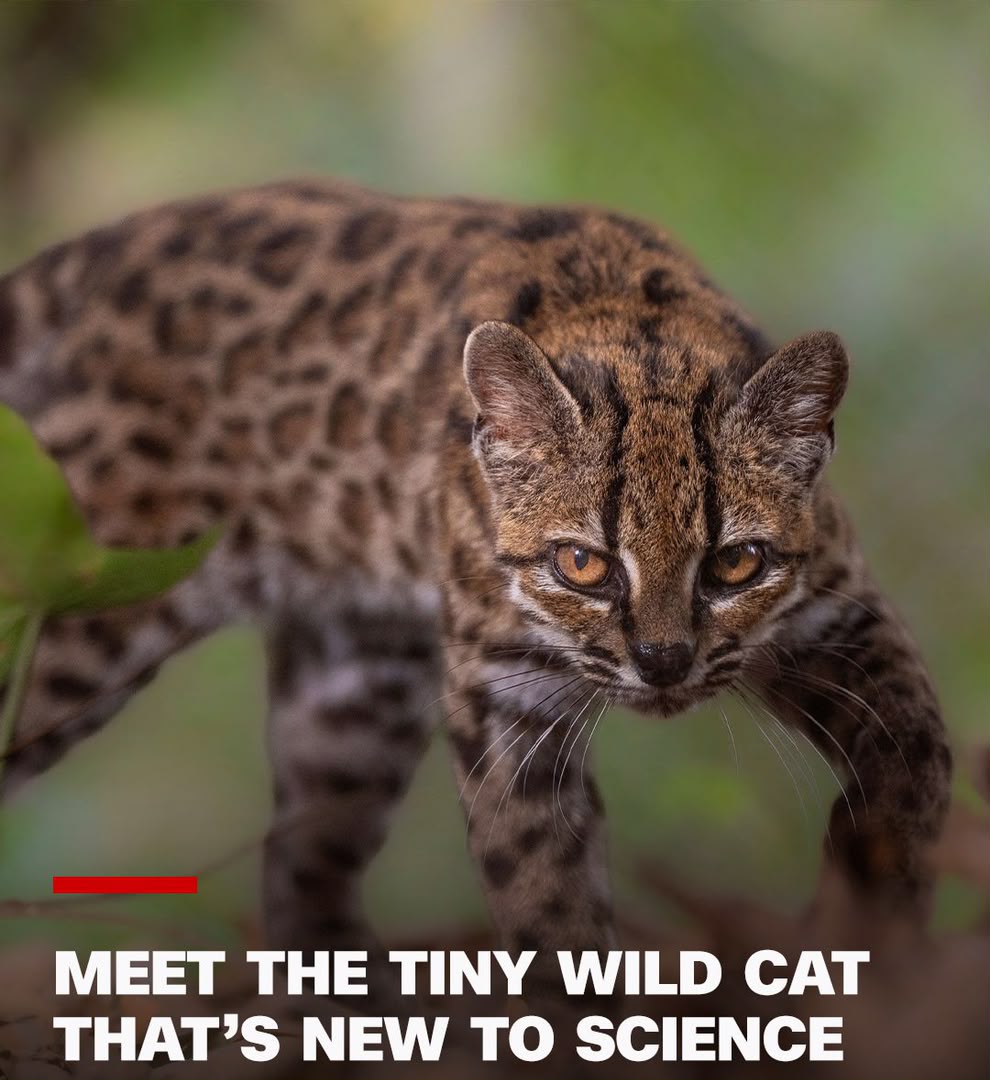
A diminutive wild cat living in Bolivia’s Yungas cloud forests has been identified as a previously unknown species, marking the first formal description of a new living cat species in more than a century.The animal, known locally as the Tilcayo, has been given the scientific name Leopardus tilcayo. It belongs to the group of small spotted felines known as tiger cats that inhabit parts of South America. The Tilcayo measures about 46 centimetres (18 inches) in body length and weighs roughly 1.4 kilograms (3 pounds). Its light-brown coat is marked with irregular dark rosettes, while researchers say the species appears to be predominantly nocturnal. Camera-trap observations and fecal samples have provided some of the first clues about its behaviour and diet. Scientists analysed DNA from 38 tiger cats from across South America, including museum specimens. The research found that what had previously been treated as a single tiger-cat group actually contains five genetically distinct species. The lineage leading to Leopardus tilcayo diverged from the other tiger-cat lineages about 1.4 million years ago, providing genetic evidence for its recognition as a separate species. The discovery was led by researchers including National Geographic Explorer Paola Nogales-Ascarrunz. One of the cats studied is a 10-year-old male currently living at the Senda Verde wildlife sanctuary. The animal had previously been kept by a local family after being found as what appeared to be a kitten. Researchers became interested after noticing that Bolivian tiger cats did not correspond closely with descriptions based largely on animals from Brazil. Further genetic investigation eventually revealed the previously unrecognised lineage. Scientists say very little is currently known about the Tilcayo’s population, distribution and behaviour. Researchers have so far relied on only a small number of individuals and camera-trap records.The Yungas forests where the species occurs face threats including deforestation, agricultural expansion, fires, mining and habitat fragmentation. The findings have been submitted for consideration in future conservation assessments. The discovery highlights how much biodiversity may remain undocumented, even among animal groups that scientists have studied for generations.