Japan’s Centenarian Population Surpasses 100,000 For First Time
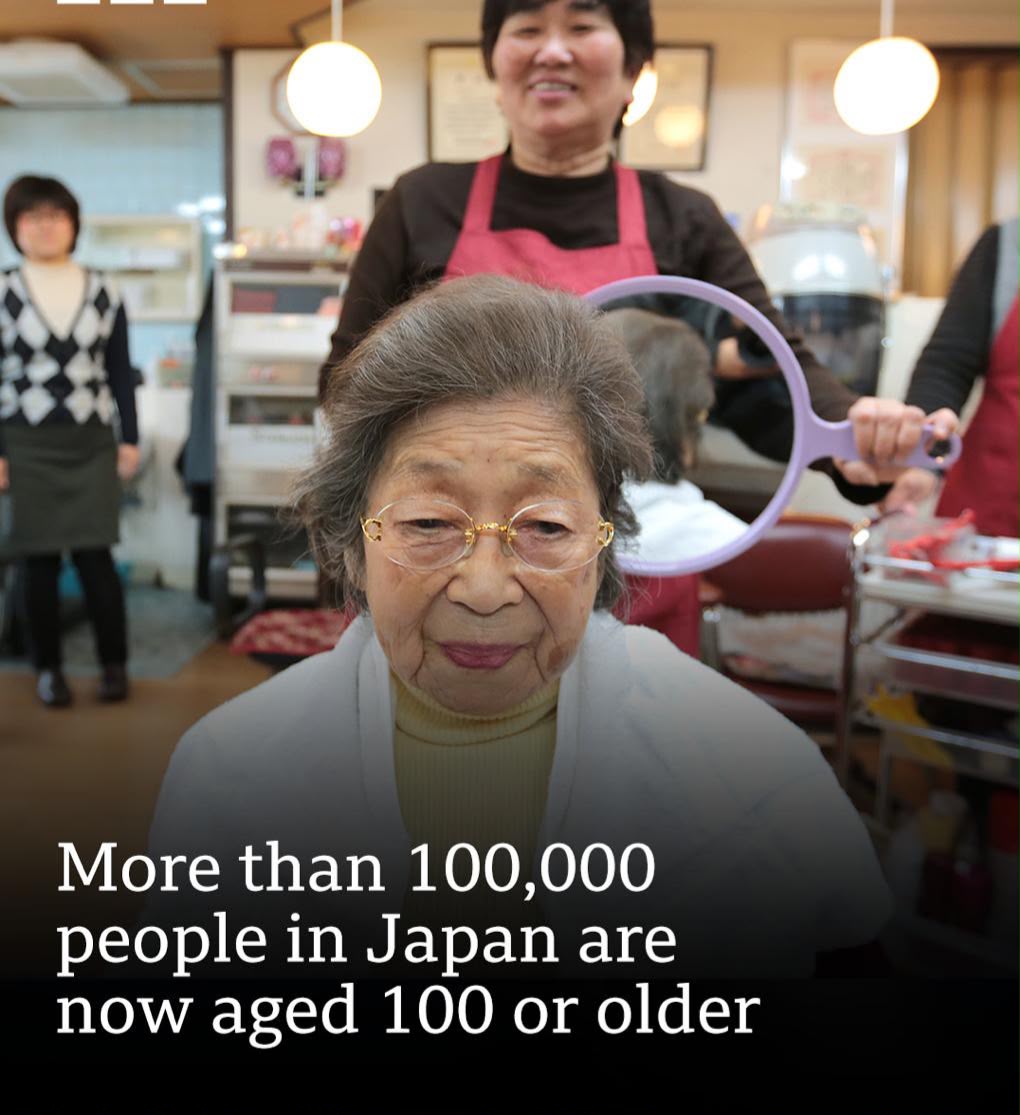
Japan’s Centenarian Population Surpasses 100,000 for First Time
Japan has recorded more than 100,000 people aged 100 or older for the first time, with the country’s centenarian population reaching a record 107,677, according to figures from the Ministry of Health, Labour and Welfare. The figure, recorded as of September 1, represents an increase of 7,914 people from the previous year and marks the 56th consecutive year that Japan’s centenarian population has risen. Women make up the overwhelming majority of Japan’s centenarians. Of the 107,677 people aged 100 or older, 94,298 are women, representing 87.6 per cent of the total, while 13,379 are men. Japan’s oldest woman is 114-year-old Fuyo Kishimoto, who lives in Kyoto, while the country’s oldest man is 112-year-old Hikaru Kato from Kumamoto. Japan began officially tracking people aged 100 and older in 1963, when only 153 centenarians were recorded. The number passed 1,000 in 1981, reached 10,000 in 1998 and exceeded 50,000 in 2012. The latest figures represent another major milestone in the country’s long-term rise in longevity. Health Minister Kenichiro Ueno welcomed the figures, saying advances in medicine and technology, together with lifestyle and dietary factors, have contributed to longer lives. The milestone comes as Japan faces a wider demographic challenge involving an ageing population and declining birth rate. People aged 65 and older account for around 30 per cent of Japan’s population, while the country’s fertility rate fell to a record 1.14 in 2025, well below the approximately 2.1 births per woman considered necessary to maintain population levels without migration. Japan’s National Institute of Population and Social Security Research projects that the country’s population could fall to about 87 million by 2070, with people aged 65 and above accounting for nearly 40 per cent of the population.The growing number of elderly citizens is expected to place additional pressure on Japan’s healthcare and social security systems. Ueno has stressed the importance of maintaining a sustainable social security system as the population continues to age and the number of births remains low. The latest statistics were released around Japan’s annual Respect for the Aged Day, when the government traditionally recognises people who reach the age of 100. The record number of centenarians highlights both Japan’s remarkable longevity and the demographic pressures created by longer life expectancy combined with persistently low birth rates.