US Airman Reveals Harrowing 50-Hour Survival And Rescue Mission After Jet Was Shot Down Over Iran
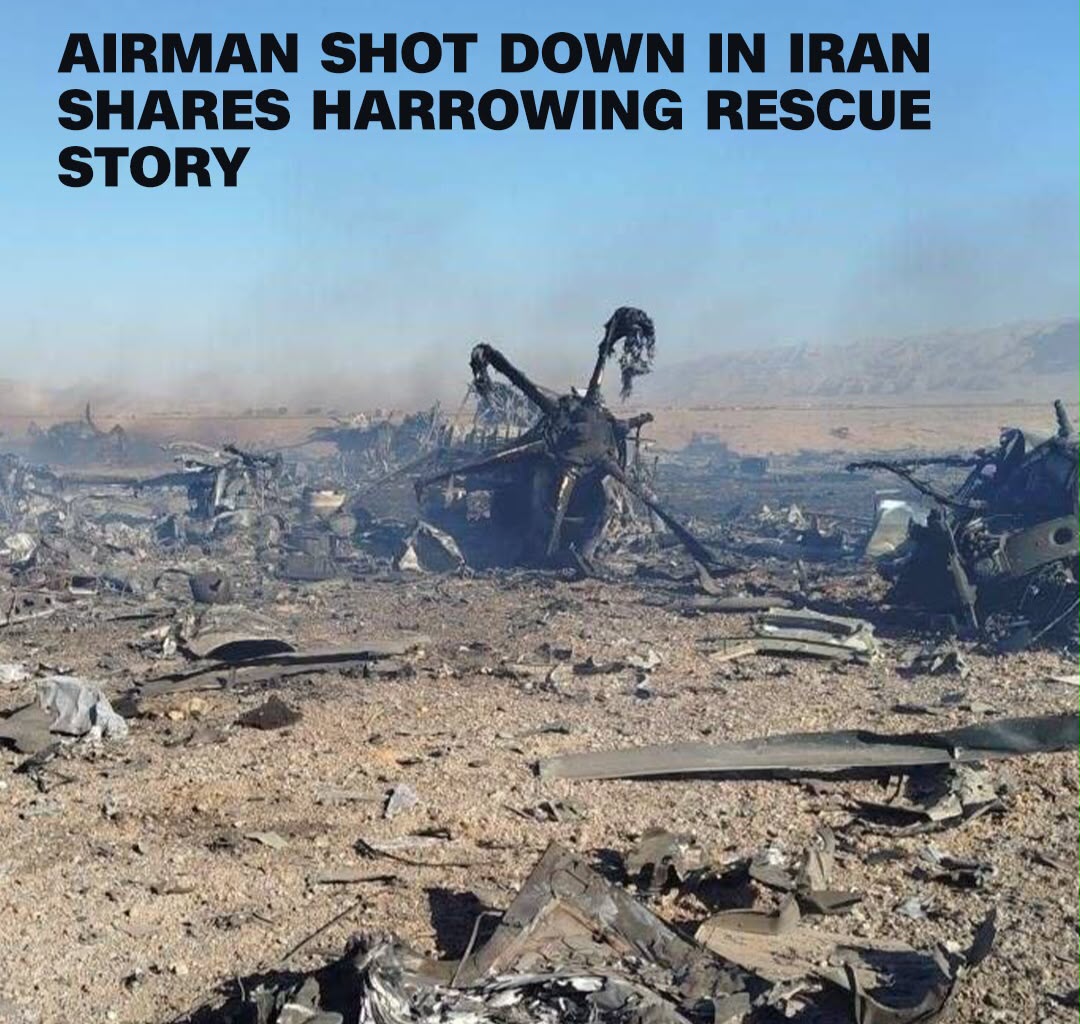
US Airman Reveals Harrowing 50-Hour Survival and Rescue Mission After Jet Was Shot Down Over Iran A US Air Force airman rescued from Iran after his F-15E Strike Eagle was shot down in April has publicly revealed details of the extraordinary operation that brought him home, describing a 50-hour ordeal in which he suffered serious injuries while evading Iranian forces. The airman, identified by the mission call sign “Bravo” because of security concerns, recounted his experience during an interview with CBS’ 60 Minutes that aired on Sunday. His account provided new details about one of the most complex US combat-rescue missions carried out in recent years. The ordeal began on April 3, 2026, when the F-15E, operating under the call sign DUDE 44, was struck by a shoulder-fired missile while carrying out a mission over Iran.The aircraft had two crew members a pilot known as “Alpha” and Bravo, the weapons systems officer. Bravo recalled the impact as being like “getting hit by a freight train.” Both airmen ejected from the aircraft, but they became separated after landing in hostile territory. Alpha’s parachute deployed successfully and US forces located and rescued him within hours. Bravo, however, faced a far more dangerous situation. Bravo said his parachute was damaged during the ejection, leaving him falling at extremely high speed. He survived the descent but suffered multiple serious injuries, including a broken back, arm and shoulder. Despite his condition, he had to move through rugged mountainous terrain to avoid being discovered by Iranian forces. He eventually reached a ridgeline about 7,000 feet above sea level, where he spent almost two days attempting to remain hidden. With Iranian forces searching the area, Bravo relied on his military training and the surrounding terrain to stay concealed. He described the experience as a modern-day miracle, emphasizing the physical and psychological challenges of surviving alone in hostile territory while seriously injured. While Bravo attempted to evade capture, American commanders launched a massive search-and-rescue operation. The US military deployed more than 150 aircraft, including fighter jets, refuelling aircraft, rescue helicopters and other support aircraft, as American forces raced to locate the missing airman before Iranian forces could reach him About 90 US troops were ultimately involved on the ground in the operation, with hundreds more supporting the mission from the air and thousands of personnel involved in broader support roles. The operation required close coordination between US special operations forces, intelligence personnel and other military units. After spending roughly 50 hours in Iranian territory, Bravo was finally located and extracted by US forces. The rescue involved aircraft and special operations personnel operating deep inside hostile territory. US forces faced the continuing danger of Iranian troops discovering the airman’s location before the rescue team could reach him. The mission was ultimately successful, bringing Bravo out of Iran alive. The operation has since been described by US military officials as one of the most challenging combat search-and-rescue missions in recent American military history. The scale of the operation reflected the urgency of recovering the airman. Military accounts indicate that dozens of aircraft were involved in the two-day effort, while hundreds of personnel supported the mission. The operation included rescue helicopters, special operations aircraft, fighters, tankers and intelligence support. The rescue also involved difficult decisions as US forces operated in an area where discovery by Iranian forces could have resulted in the airman being captured. Despite the risks, the operation succeeded in recovering both members of the downed F-15E crew. Bravo said his survival and rescue demonstrated the importance of military training, teamwork and leadership. His account also highlighted the longstanding US military principle of leaving no service member behind. The dramatic rescue was initially kept largely out of the public eye because of the sensitivity surrounding the operation. Bravo’s 60 Minutes interview offered one of the most detailed first-person accounts of what happened after the F-15E was shot down. The interview has now brought renewed attention to the scale and complexity of the mission, as well as the extraordinary circumstances faced by an injured American airman who spent two days alone in hostile territory before being rescued.