New Research Shows That The World’s Third Largest Greenhouse Gas Emitter India
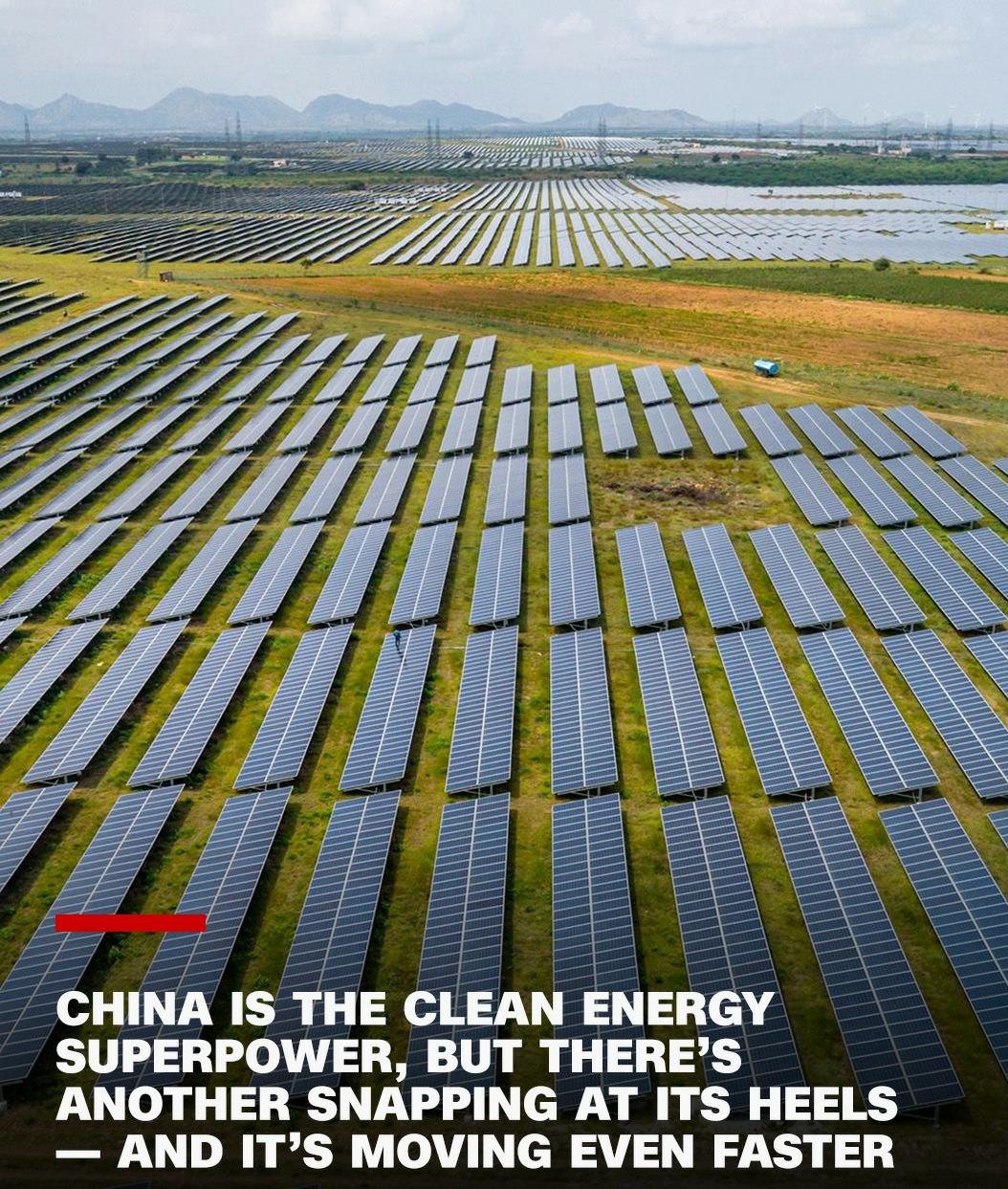
New research shows that the world’s third-largest greenhouse gas emitter India is rapidly expanding wind and solar power and electrifying transport at a pace that, at comparable levels of economic and power system development, surpasses the speed China achieved earlier in its energy transition.
This shift has far-reaching global implications for climate targets, technology costs, and patterns of energy trade. Many analysts see it as evidence that emerging economies are no longer lagging behind advanced economies in moving away from fossil fuels.India, historically reliant on coal for most of its power, has now become the world’s third-largest producer of electricity from wind and solar energy, overtaking long-established producers like Germany and holding a major share of global additions. In recent years it has added large new wind and solar capacity, rapidly increasing clean power’s role in electricity generation and doing so more quickly, relative to its starting point, than China managed at similar stages of its own transition. Analysts say this rapid deployment, combined with expansion of electric vehicles and energy-efficient technologies, represents a faster pace of clean transformation than China achieved when it was at a comparable level of development. Global renewable deployment especially in wind and solar continues to grow quickly. By some measures, Asia (driven chiefly by China and India) accounts for nearly half of new clean capacity additions.
The International Renewable Energy Agency (IRENA) reports record expansions in global renewable capacity, with solar photovoltaics and wind leading the way.
Growth in clean technology particularly solar, wind, batteries, and electric vehicles is now delivering economic benefits alongside climate gains, lowering energy costs and creating jobs. India’s shift to clean energy comes at a time when global emissions must peak and fall quickly to meet international climate targets like those in the Paris Agreement. Analysts say large emerging economies’ transition now plays a key role in whether the world stays within critical warming
Rapid deployment in India and Asia has helped drive down the cost of wind and solar technology worldwide, making renewables increasingly competitive with fossil fuels even in developing markets. The growing scale of renewable manufacturing and electrification technologies including EVs and grid infrastructure strengthens global supply chains and accelerates adoption in other regions.Although China remains the single largest emitter and a dominant force in renewable manufacturing and investment, India’s recent growth trajectory indicates a new multipolar energy transition. This shift alters the geopolitical and economic dynamics of energy influencing how countries collaborate on trade, climate finance, and technology sharing. Renewables and electrification are now central drivers of energy growth in both emerging and mature economies. India’s trajectory shows that late-emerging economies can leapfrog traditional fossil-fuel-based pathways, thanks in part to cheaper clean technologies and global investment flows. The pace of growth sets the stage for the next decade of climate policy negotiations and shapes whether global emissions can be brought into meaningful decline.