Michelin-starred South Korean Chef Faces Jail Over Desserts Garnished With Ants
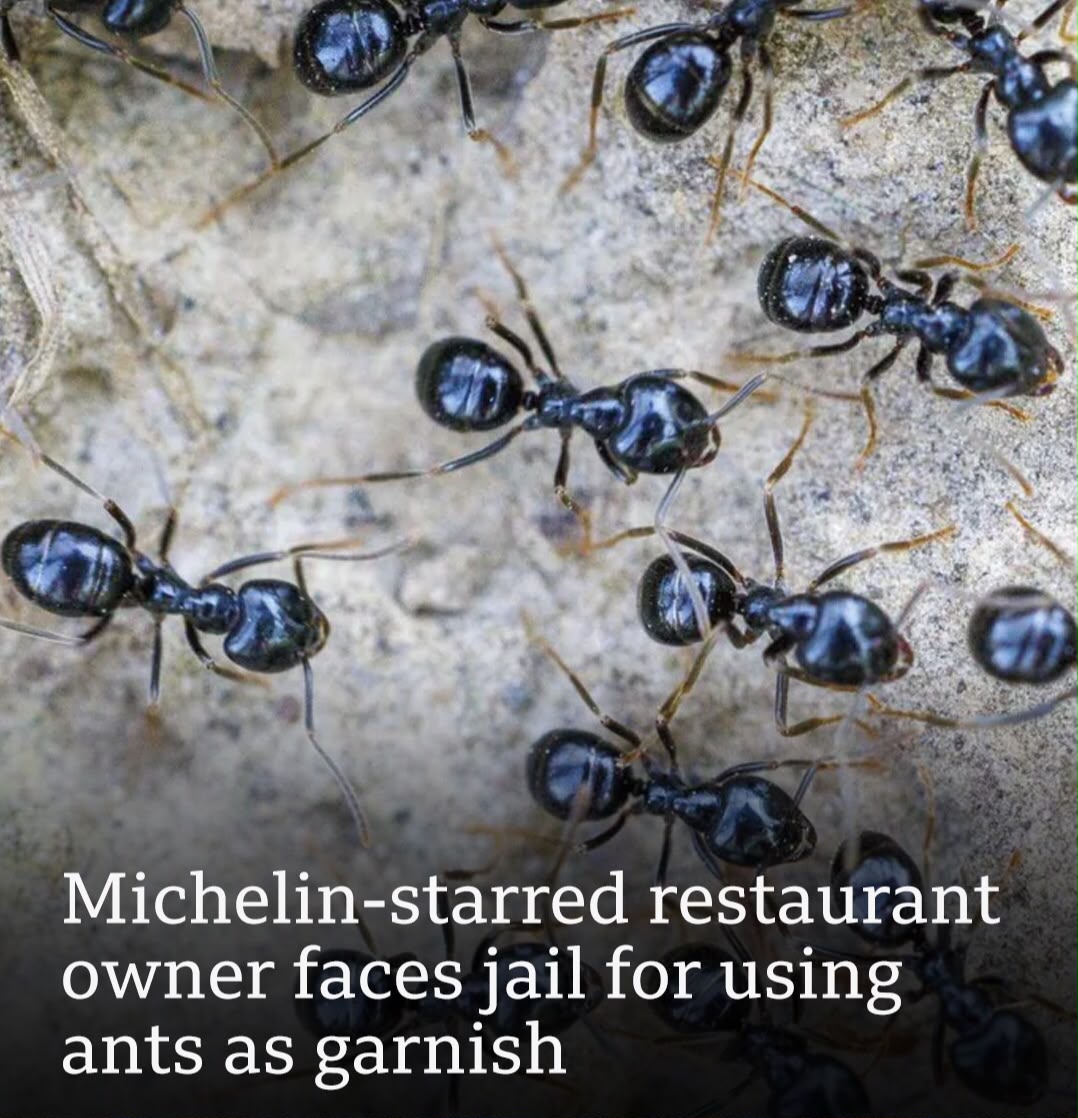
Michelin-starred South Korean chef faces jail over desserts garnished with ants A Michelin-starred restaurant owner in South Korea is facing a possible prison sentence after prosecutors accused the establishment of illegally serving ants as a garnish on desserts, with investigators estimating that about 49,000 ants were used over a four-year period. According to prosecutors, the restaurant imported dried black ants from the United States and Thailand beginning in 2021 and used them primarily to top a palate-cleansing sorbet served as part of its tasting menu. Authorities allege the restaurant sold the ant-topped dessert more than 12,200 times, generating about 120 million won around US$87,000 in revenue.
South Korean law permits only 10 approved insect species for human consumption, and ants are not among them. Prosecutors have therefore charged the restaurant owner and the operating company with violating the country’s Food Sanitation Act. They are seeking a one-year prison sentence for the owner and a fine of 20 million won about US$13,500 for the company. The investigation began after food safety officials reviewed customer photos and online posts showing ants on desserts. Laboratory testing later found that some of the imported ants contained levels of heavy metals up to 55 times higher than those typically found in approved edible insects, raising additional food safety concerns. The restaurant owner has admitted using ants but argued they were offered only as an optional topping on a small portion of the 15-course menu. The defence also disputed prosecutors’ estimate of 49,000 ants, saying only about 60% of diners chose the ant garnish after being offered alternatives such as edible flowers or fermented vinegar. The owner further noted that ants are used in fine dining restaurants in countries including Australia, Denmark and the United Kingdom. A South Korean court is expected to deliver its verdict on September 2. The case has sparked debate over the balance between culinary innovation and food safety regulations, particularly as insects become increasingly common ingredients in high-end restaurants around the world.