Massive Crowds Gather In Mashhad For Burial Of Iran’s Late Supreme Leader Khamenei
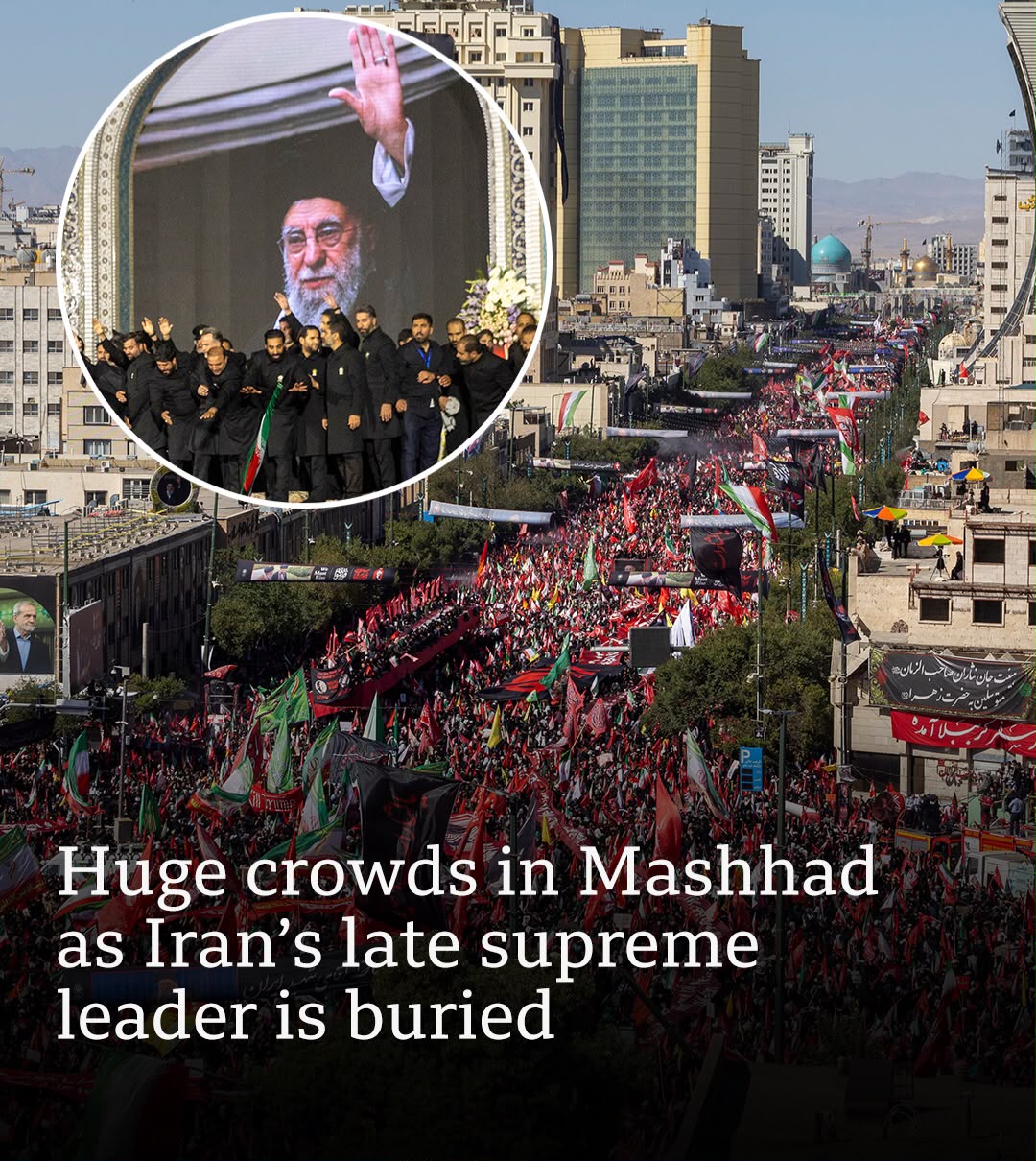
Massive Crowds Gather in Mashhad for Burial of Iran’s Late Supreme Leader Khamenei Hundreds of thousands of mourners converged on the northeastern Iranian city of Mashhad on Thursday for the burial of Iran’s late Supreme Leader, Ayatollah Ali Khamenei, bringing to a close days of nationwide funeral ceremonies following his death in an Israeli strike at the start of the war involving Iran, Israel and the United States. The burial took place at the Imam Reza shrine, one of the holiest sites in Shia Islam and Khamenei’s hometown. Crowds filled streets leading to the shrine, waving Iranian flags, carrying portraits of the late leader and chanting slogans calling for resistance and retaliation. Authorities deployed extensive security personnel to manage the large turnout and maintain order during the ceremony. Khamenei, who led the Islamic Republic for nearly four decades, was killed in a joint U.S.-Israeli airstrike on February 28, the opening day of the conflict that has reshaped the political and military landscape of the Middle East. His death marked one of the most significant developments in Iran’s modern history and triggered an extended period of national mourning. The funeral procession spanned several cities in Iran and Iraq, including Tehran, Qom, Najaf and Karbala, before concluding in Mashhad. Iranian officials described the ceremonies as among the largest state funerals in the country’s history, aimed at honouring the late leader and demonstrating national unity despite months of conflict.
The burial coincided with renewed military exchanges between Iran and the United States, despite earlier efforts to sustain a ceasefire. The latest hostilities have heightened fears that the conflict could escalate further, complicating diplomatic efforts to restore stability in the region. As Iran concludes the official mourning period, analysts say the country faces a pivotal moment. Beyond managing the transition in leadership, Tehran must contend with ongoing military tensions, economic pressures and growing international scrutiny, all of which are expected to shape the next phase of the Islamic Republic’s domestic and foreign policy. Attention has also focused on Khamenei’s son and successor, Mojtaba Khamenei, who has remained largely out of public view since reportedly sustaining injuries in the strike that killed his father. His absence from major public ceremonies has fuelled speculation about his health and Iran’s evolving political leadership, although Iranian authorities have not provided detailed information.