Japanese Yen Falls To 40-Year Low Against U.S. Dollar, Raising Fears Of Market Intervention
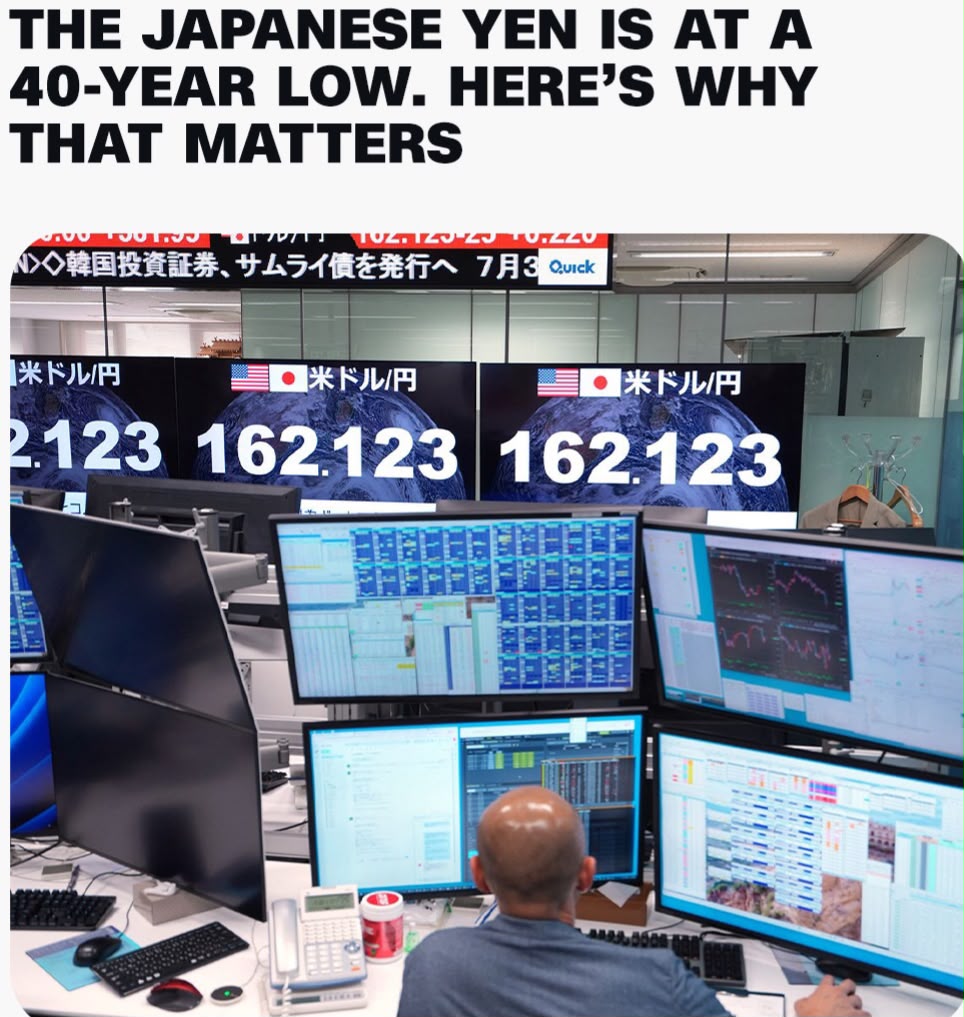
Japanese Yen Falls to 40-Year Low Against U.S. Dollar, Raising Fears of Market Intervention The Japanese yen has tumbled to its weakest level against the U.S. dollar in four decades, intensifying speculation that Japanese authorities could step into the foreign exchange market to support the currency. The sharp decline has placed global investors on high alert, as any intervention by Japan could send ripples through U.S. stock markets, Treasury yields, and the broader global financial system. The yen’s weakness has largely been driven by the widening interest rate gap between Japan and the United States. While the U.S. has maintained relatively high interest rates to combat inflation, Japan has kept borrowing costs comparatively low, making the dollar more attractive to investors.Currency intervention would likely involve Japan selling U.S. dollars and buying yen in an effort to stabilize its currency. Such a move could affect demand for U.S. Treasuries, influence global bond yields, and increase volatility across international financial markets.Market participants are closely watching Tokyo for signs of action, particularly after Japanese officials reiterated their readiness to respond to excessive currency movements. Previous interventions have provided only temporary relief, leaving investors uncertain about whether another round of government action would have a lasting impact.