45 Million Nigerian Pupils Resume As School Security Concerns Persist
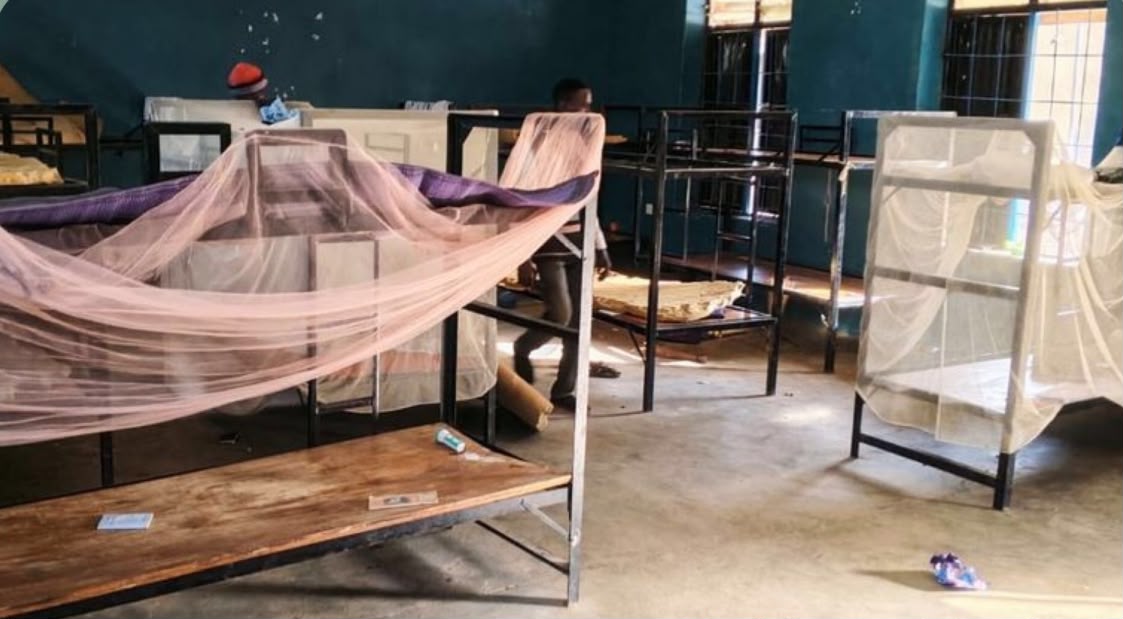
45 Million Nigerian Pupils Resume as School Security Concerns Persist More than 45 million pupils in basic and secondary schools across Nigeria are resuming academic activities today amid renewed concerns over the safety of students and teachers, with school owners and administrators strengthening security arrangements in response to persistent threats. The new academic session begins after two particularly difficult school years marked by kidnappings, attacks on educational facilities and the abduction of students and teachers in several parts of the country. The resumption has again drawn attention to the Federal Government’s Safe Schools Initiative (SSI), which was established following the 2014 Chibok schoolgirls’ abduction to protect schools in vulnerable communities. Despite billions of naira committed to the programme, significant security gaps remain. A Universal Basic Education Commission audit found that 78 per cent of public schools lack perimeter fencing, while 65 per cent operate without security guards, leaving many schools vulnerable to attacks. The National Plan on Financing Safe Schools for 2023–2026 projected investment of about N144.8 billion, comprising federal and state contributions. The plan included funding for security equipment, infrastructure, training, monitoring and operations. It also envisaged measures such as perimeter fencing, CCTV systems, early-warning mechanisms and the deployment of security personnel to high-risk schools.However, actual releases have fallen significantly below projected funding requirements.In 2024, the Federal Government’s direct appropriation for Safe Schools reportedly dropped by 67.8 per cent, from about N30.7 billion to N5.01 billion. The programme also recorded no budget allocation in 2024 and 2025, according to officials who appeared before the Senate. The security challenge is particularly severe in northern Nigeria. More than 42,000 primary and secondary schools in the region reportedly lack perimeter fencing, while 4,270 secondary schools across 21 northern states and the Federal Capital Territory have also been identified as unfenced. Security experts warn that an unfenced school may lack controlled entry points, clear boundaries, adequate lighting and the ability to detect or delay an attack.For schools located in isolated rural communities, the risks can be even greater because of their distance from security formations and surrounding settlements. The concerns are reinforced by recent statistics on attacks against schools. Between May 2023 and June 2026, at least 758 students, teachers and other school staff were held hostage in mass school-related attack.
The incidents have heightened fears among parents as children return to classrooms for the 2026/2027 academic year. With gaps remaining in the national programme, several state governments are introducing additional measures to protect schools. In Katsina State, authorities have strengthened security around boarding schools through mobile police units, community patrol teams and vigilantes. Some schools have reportedly been assigned between six and 10 community patrol personnel to work alongside security agencies. In Enugu State, the government is expanding the use of CCTV cameras, drones and command-and-control centres around schools. Traditional rulers, community leaders and local government officials have also been assigned responsibilities for school security in their areas.In Oyo State, the police command has also increased engagement with school proprietors, Parent-Teacher Associations and community groups to improve early detection and reporting of threats. The National Safe Schools Response and Coordination Centre has significantly increased the number of schools registered on its monitoring platform. The number reportedly rose from about 11,550 schools in November 2025 to 169,478 by September 2026. However, stakeholders stress that registration alone does not guarantee that a school has fencing, trained security personnel, emergency communication equipment, rapid-response arrangements or regular patrols. They have therefore called for greater transparency, including the publication of the number of schools fenced, equipped with emergency systems, covered by security patrols and assessed as high-risk. Security is not the only concern confronting families as schools reopen. Parents are also dealing with rising education and transportation costs, with private-school operators citing higher fuel, rent, electricity and staff expenses. Higher petrol prices have increased the cost of school transportation, staff commuting and the movement of food and educational materials. Families with several school-age children face additional pressure from tuition and levies, uniforms, textbooks, examination charges, meals and transport expenses As millions of children return to school, stakeholders say the success of the Safe Schools Initiative should ultimately be measured by whether pupils and teachers are actually safer. They have called for stronger coordination among schools, parents, communities and security agencies, as well as reliable emergency communication systems and rapid responses to threats. For many Nigerian families, the new academic session therefore begins with both hope for improved learning and persistent anxiety over whether children can safely travel to school, remain in classrooms and return home each day.