11-Year-Old Canadian Boy Dies Of Rabies After Bat Contact During Sleep
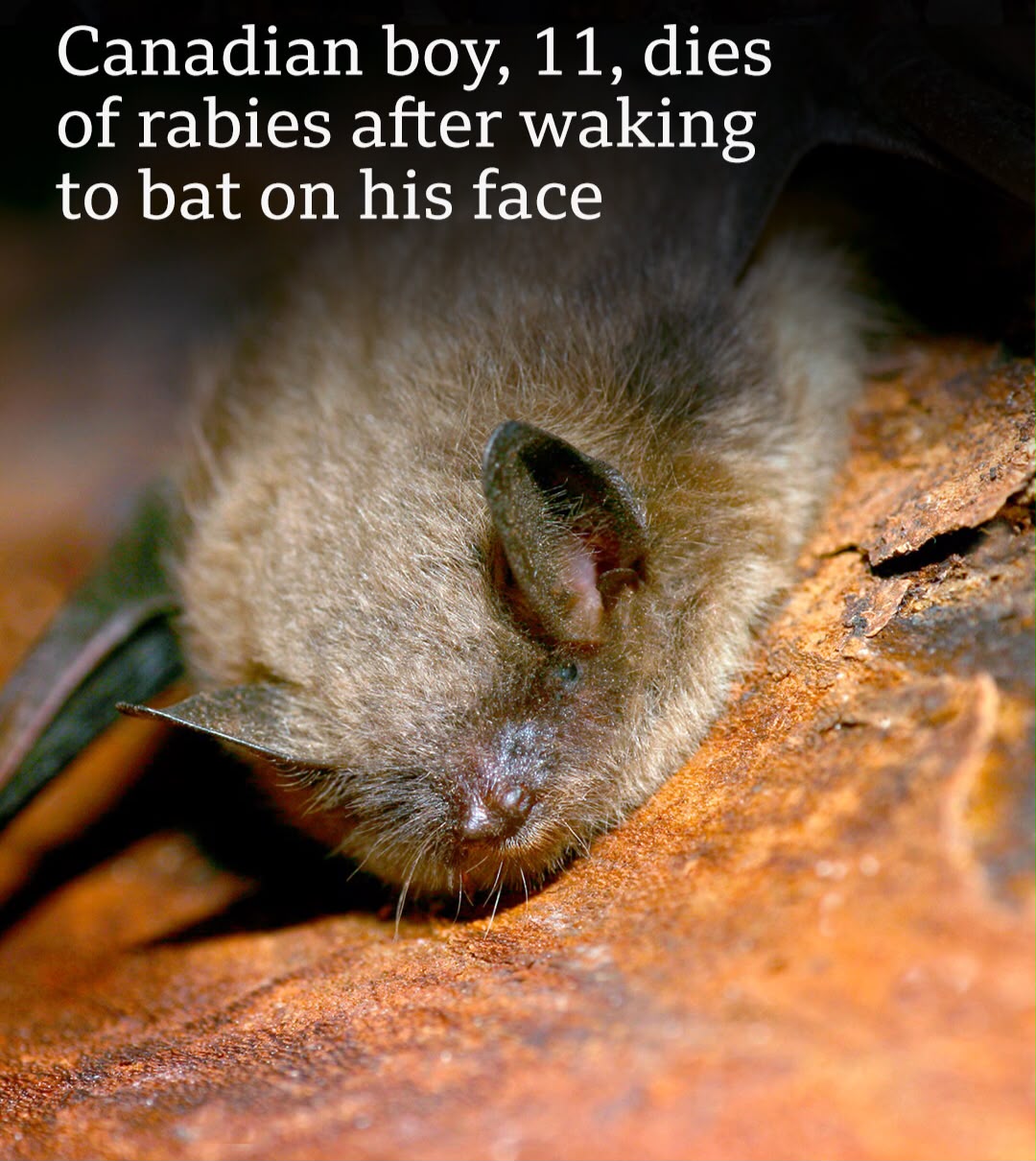
11-Year-Old Canadian Boy Dies of Rabies After Bat Contact During Sleep A heartbreaking case in Canada has renewed global warnings about rabies after an 11-year-old boy died weeks after unknowingly coming into close contact with a bat while sleeping.
The incident occurred in northern Ontario during the summer of 2024, when the boy was staying at a family cottage. According to a report published in the Canadian Medical Association Journal CMAJ, he woke up to find a bat lying across his nose and mouth. He swatted the animal away, and his father later caught it in a container and released it outside. Because there were no visible bite marks or scratches, the family did not seek immediate medical care. Nineteen days after the encounter, the boy began experiencing serious neurological symptoms, including vomiting, facial tingling, and numbness. He was later taken to hospital, where his condition rapidly worsened. Doctors diagnosed rabies, a disease that is almost always fatal once symptoms appear. Despite medical care and hospitalization, the boy’s condition continued to deteriorate, and he later died. Health experts say the case highlights how easily rabies exposure from bats can go unnoticed. Medical specialists involved in the report stressed that any direct contact with a bat even without visible bites or scratches should be treated as a potential rabies exposure and requires immediate medical evaluation for possible post-exposure prophylaxis PEP. Rabies is extremely rare in Canada, with only a small number of human cases recorded in the past century. However, bats remain a known source of infection, and even brief contact can be dangerous because their bites may be too small to detect. Once symptoms begin, rabies is almost universally fatal, but it is highly preventable if treatment is given before symptoms develop. The case has been shared by researchers and clinicians to raise awareness, particularly during warmer months when human bat encounters are more common. Health authorities continue to urge the public to avoid direct contact with wild animals and to seek urgent medical attention after any suspected exposure.