US Supreme Court To Review Colorado Law On Funding For Preschools Rejecting Children Of Same-Sex Couples
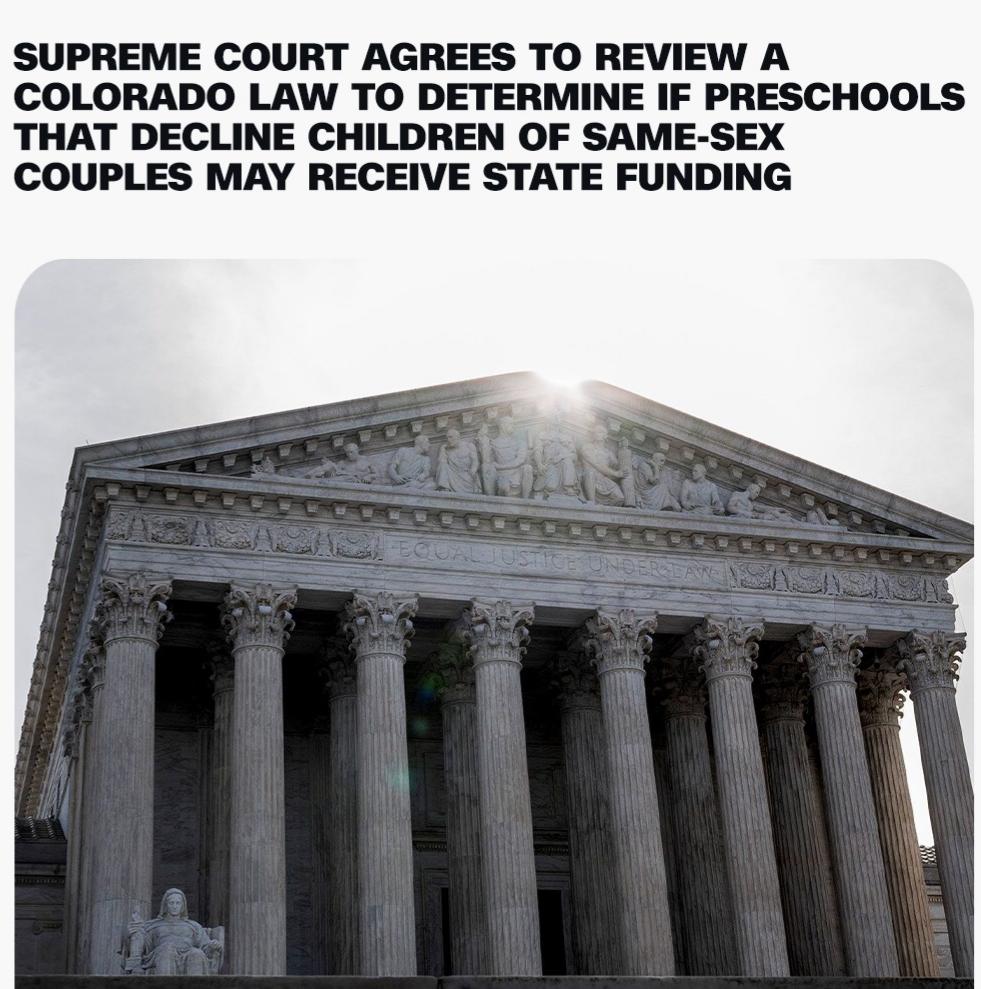
US Supreme Court To Review Colorado Law On Funding For Preschools Rejecting Children Of Same-Sex Couples The United States Supreme Court has agreed to hear a case examining whether preschools in Colorado that refuse admission to children of same sex couples can still qualify for state funding, setting up a major legal test on religious freedom and anti-discrimination protections.
The case centers on a Colorado policy requiring educational institutions receiving public funds to comply with state anti discrimination laws, including protections covering sexual orientation and family structure. At issue is whether faith-based preschools that decline to enroll children from same-sex households citing religious beliefs should remain eligible for taxpayer-funded education programs. Supporters of the Colorado law argue that public funds must not support institutions that discriminate against families, stressing that equal access to early childhood education is a fundamental public interest. However, religious organizations challenging the policy contend that denying funding over admissions decisions violates constitutional protections for religious liberty and free exercise of faith. Legal analysts say the dispute could reshape how the courts balance anti-discrimination rules with religious rights in publicly funded services, especially education and social programmes. The Supreme Court’s decision to review the case comes amid ongoing national debates over LGBTQ+ rights following earlier landmark rulings such as Obergefell v. Hodges, which legalized same-sex marriage nationwide.Observers note that the outcome could have nationwide implications, potentially affecting funding policies for religious schools, childcare providers, and other organizations receiving government support across the United States. Arguments are expected later in the court’s term, with a ruling anticipated to clarify the limits of state authority in conditioning public funding on compliance with anti-discrimination standards.