UK High Court Rules Palestine Action Terror Ban Unlawful But Ban Stays In Place
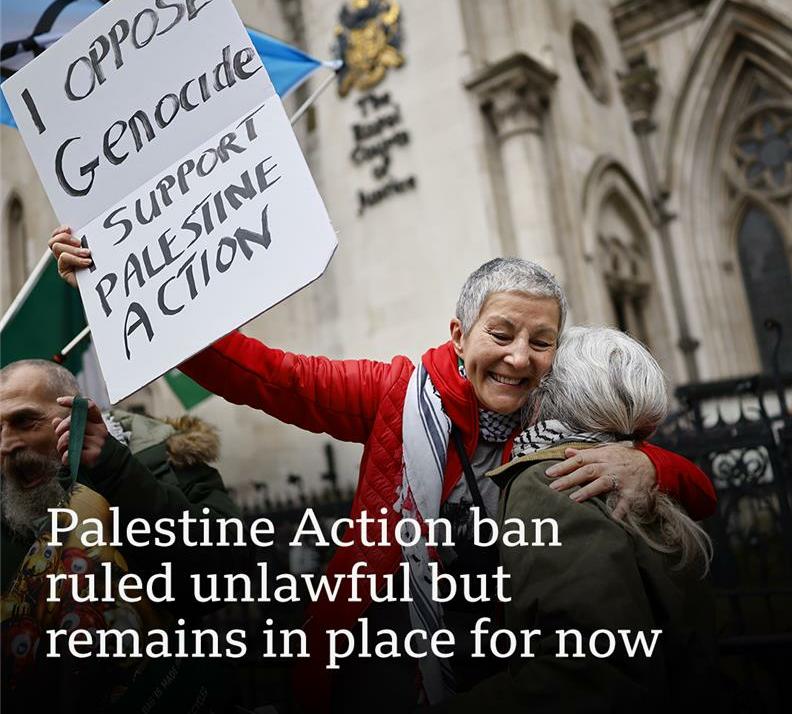
UK High Court Rules Palestine Action Terror Ban Unlawful But Ban Stays in Place Pending Appeal The High Court of England and Wales has ruled that the British government’s decision to proscribe the activist group Palestine Action under the UK’s terrorism legislation was unlawful and disproportionate. Despite this landmark ruling, the ban remains in effect temporarily while the government prepares an appeal and the court considers next steps. The High Court delivered its judgement on 13 February 2026 in London. Three senior judges, including Dame Victoria Sharp, found that Palestine Action’s actions did not meet the “level, scale and persistence” required to justify designation as a terrorist organisation under the Terrorism Act 2000.
The ruling stated that while some of the group’s acts might constitute criminal or even terror-defined illegal conduct, they were not enough to proscribe the entire organisation.
For now, the ban remains in place to allow time for the government’s appeal and a follow-up hearing.
Judges emphasised that the government’s decision:
Interfered with rights to freedom of expression and assembly without adequate justification.Failed to demonstrate that the scale of Palestine Action’s activities warranted proscription alongside recognised terror groups.
Did not adhere to internal policy and human-rights standards required before imposing such severe legal penalties.
Home Secretary Shabana Mahmood expressed disagreement with the court’s assessment and confirmed the government will appeal the decision, arguing that Palestine Action poses a threat and undermines public order. The appeal process is expected to play out in court later this month. Palestine Action co-founder Huda Ammori hailed the decision as a “monumental victory” for free speech and protest rights, asserting the ban was an extreme government overreach. Trade unions and rights groups welcomed the judgement as a defence of fundamental civil liberties.
The Metropolitan Police stated it will prioritise evidence-gathering over immediate arrests for people expressing support for Palestine Action, while enforcement continues for clear criminal conduct.
Some civil liberties advocates argue the ban chilled legitimate protest and free expression, and that thousands of people have been arrested under a designation now deemed unlawful.
Critics have called the proscription an excessive use of counterterror laws for political protest.
The government first proscribed Palestine Action in July 2025 under the Terrorism Act 2000, after some group members carried out direct actions including a break-in at a Royal Air Force base against infrastructure linked to military or defence suppliers.
Membership in or support for the organisation became a criminal offence punishable by imprisonment of up to 14 years.
Since the ban, thousands of people have been arrested under the proscription law for alleged support or endorsement of the group.
The High Court will hear further arguments including the government’s appeal at a scheduled hearing later in February.
Until then, Palestine Action remains listed as proscribed but in legal limbo, with enforcement shifting toward evidence gathering rather than immediate arrests.