UAE Quits OPEC Amid Iran War Shock, Triggering Major Blow To Saudi-Led Oil Bloc And Global Energy Stability
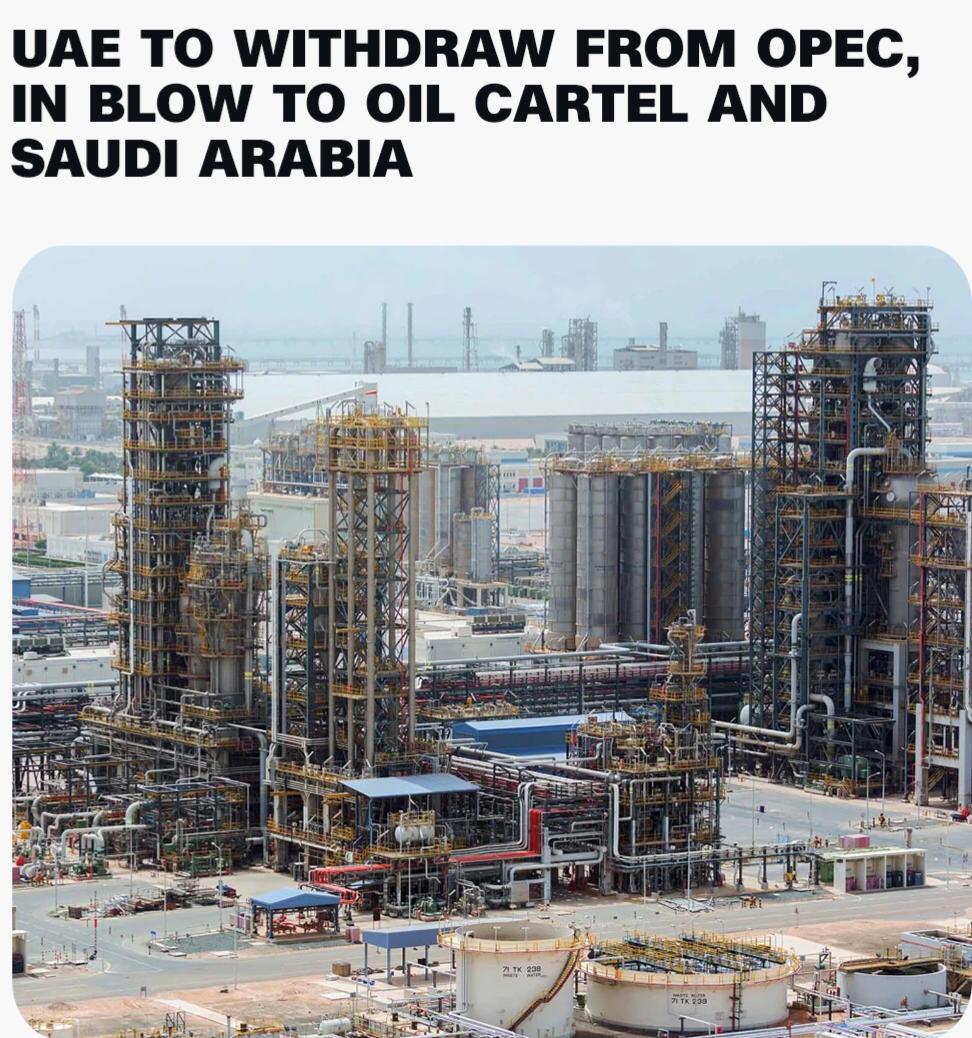
UAE Quits OPEC Amid Iran War Shock, Triggering Major Blow to Saudi-Led Oil Bloc and Global Energy Stability The United Arab Emirates (UAE) has announced its withdrawal from the Organization of the Petroleum Exporting Countries (OPEC) and its allied group OPEC+, in a dramatic move that marks a major rupture within the world’s most influential oil producers amid the ongoing Iran war and escalating global energy crisis. The decision is widely seen as a significant blow to Saudi Arabia’s leadership of the oil cartel and comes at a time when geopolitical tensions have already destabilised global energy marke The UAE confirmed that it will formally exit OPEC and OPEC+ arrangements, ending its long-standing membership in the group that has shaped global oil production policy for decades.
The move was announced during a period of extreme volatility in the global energy market, with oil supply chains already strained by conflict-related disruptions in the Middle East. OPEC, which includes major producers such as Saudi Arabia, Iran, Iraq and others, has historically coordinated production levels to influence global oil prices. The UAE’s departure is being interpreted as a serious challenge to Saudi Arabia’s dominance within OPEC, weakening the group’s ability to maintain coordinated production control. Analysts say the exit undermines OPEC’s internal unity at a time when cohesion is most needed due to severe supply disruptions caused by the Iran war. Reports suggest rising tensions between Gulf allies over production quotas, strategic direction, and responses to regional security threats have contributed to the decision. The announcement comes against the backdrop of the ongoing Iran war, which has severely disrupted global oil flows, particularly through the Strait of Hormuz, a critical chokepoint for global energy transport.
The conflict has already caused
- Major oil supply disruptions across the Gulf
- Sharp increases in global fuel prices
- Widespread volatility in energy markets
- Production shutdowns and export delays in several OPEC states
At its peak, the crisis has been described as one of the largest energy disruptions in modern history, rivaling past global oil shocks.
Oil markets reacted sharply to the UAE announcement, with prices fluctuating as traders assessed the long-term implications of reduced coordination among major producers. The UAE is one of the few Gulf nations with significant spare production capacity, meaning its exit could alter global supply dynamics and reduce OPEC’s ability to stabilise prices. Some analysts warn the move could increase oil price volatility and weaken Saudi Arabia’s role as the central stabiliser of global crude supply. Early reports suggest the UAE’s decision may be driven by
- Desire for greater control over national oil production
- Long-term energy diversification plans
- Frustration with OPEC quota restrictions
- Shifting geopolitical alignments within the Gulf region
The timing of the exit—during an ongoing regional war has raised concerns about further fragmentation within Gulf energy alliances.
The announcement also highlights widening political and economic differences between Gulf states, particularly between the UAE and Saudi Arabia. Observers say the Iran war has intensified existing disagreements over foreign policy coordination, security cooperation, and economic strategy within the region.
With the UAE’s departure, analysts say OPEC’s influence over global oil pricing could weaken significantly, especially if other producers reconsider their membership. The development adds further uncertainty to already fragile global energy markets, which are grappling with war-related disruptions, supply shortages, and rising inflationary pressures The UAE’s exit from OPEC represents a major turning point in global energy politics, arriving at a moment when the Iran war has already destabilised oil supply chains and reshaped international markets. As the situation develops, attention will remain focused on how Saudi Arabia and remaining OPEC members respond to maintain stability in an increasingly volatile global energy landscape.