Tinubu Assures UAE And Gulf States Of Nigeria’s Solidarity
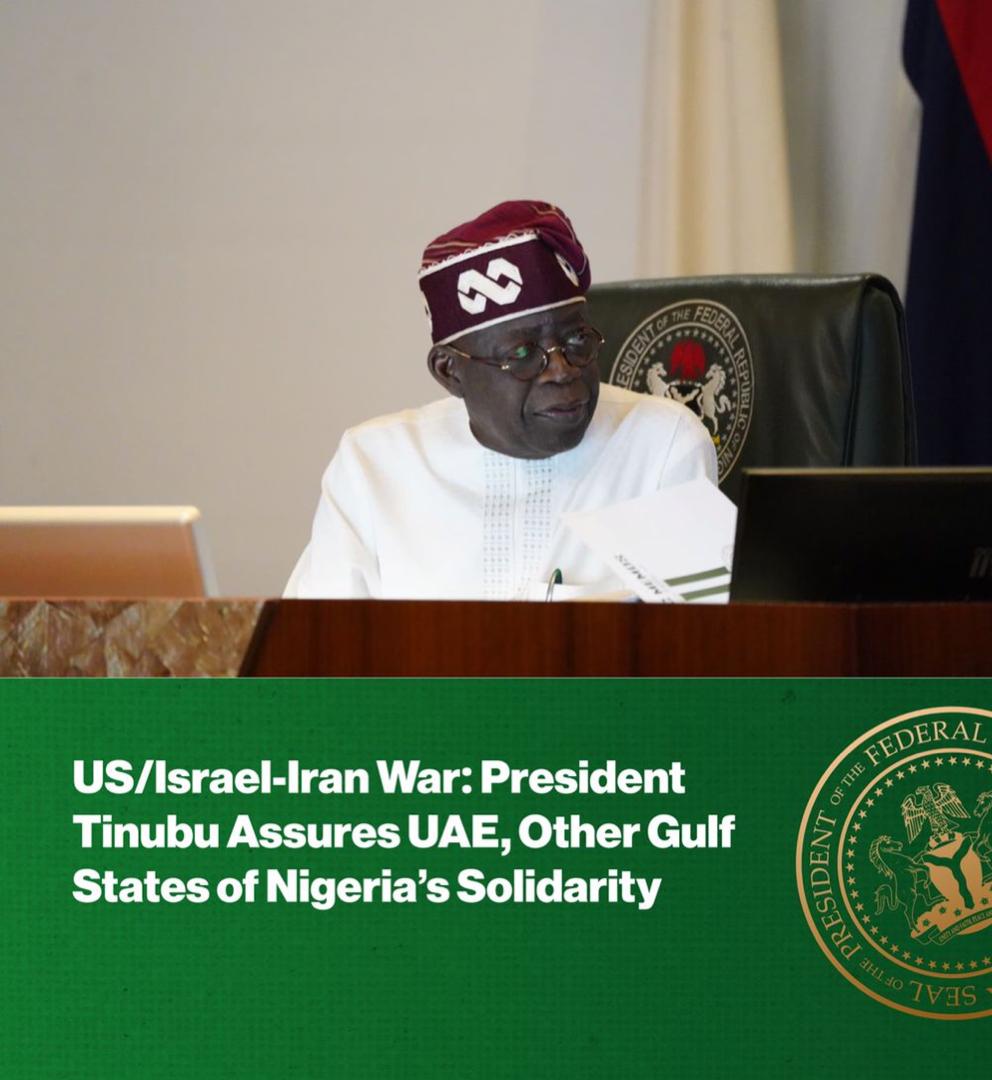
Tinubu Assures UAE and Gulf States of Nigeria’s Solidarity
President Bola Ahmed Tinubu has expressed Nigeria’s solidarity with the United Arab Emirates (UAE), Saudi Arabia, Qatar and other Gulf nations affected by spillover tensions from the ongoing US/Israel Iran conflict, reaffirming Nigeria’s commitment to global peace, stability, and restraint. The President made the remarks during a diplomatic ceremony at the State House, Presidential Villa, Abuja, where he received Letters of Credence from newly accredited ambassadors and high commissioners. Tinubu said Nigeria recognises the challenges facing Gulf countries amid escalating geopolitical tensions linked to the wider Middle East conflict.
He commended the affected nations for their resilience and restraint, stressing that Nigeria would continue to support efforts aimed at de-escalation and peaceful resolution of global conflicts.
The President specifically extended solidarity to
- United Arab Emirates
- Kingdom of Saudi Arabia
- State of Qatar
- State of Kuwait
- Kingdom of Bahrain
- Sultanate of Oman
- Hashemite Kingdom of Jordan
According to the President, Nigeria’s foreign policy remains anchored on diplomacy, cooperation, and peaceful coexistence.
He reiterated that Tinubu also emphasized that Nigeria’s engagement with global partners is guided by its Renewed Hope Agenda, focusing on economic cooperation, security collaboration, and mutual development. The event saw the presentation of Letters of Credence by envoys from multiple countries, formally accrediting them to begin diplomatic duties in Nigeria. Countries represented included Qatar, Saudi Arabia, Lebanon, Sudan, Namibia, Rwanda, Somalia, Argentina, and Congo. The President assured the diplomats of Nigeria’s readiness to deepen bilateral relations and strengthen multilateral cooperation. Tinubu noted that Nigeria remains committed to playing an active role in addressing global challenges, including:
- Regional insecurity
- Economic instability
- Climate change
- Energy transitions
- Counter-terrorism efforts
He urged stronger international collaboration to build a more stable and equitable world order. The statement comes amid heightened tensions in the Middle East involving the United States, Israel, and Iran, with Gulf countries increasingly concerned about regional security, energy stability, and maritime safety in strategic corridors such as the Strait of Hormuz. Recent diplomatic reports indicate growing anxiety among Gulf states over the broader implications of the conflict on global oil supply chains and regional stability. Nigeria’s reaffirmation of solidarity signals a continued diplomatic posture of neutrality combined with support for peaceful dialogue, as global powers and regional actors navigate one of the most complex geopolitical crises in recent years.