The Federal Government Has Warned That 226 Local Government Areas Across 33 States
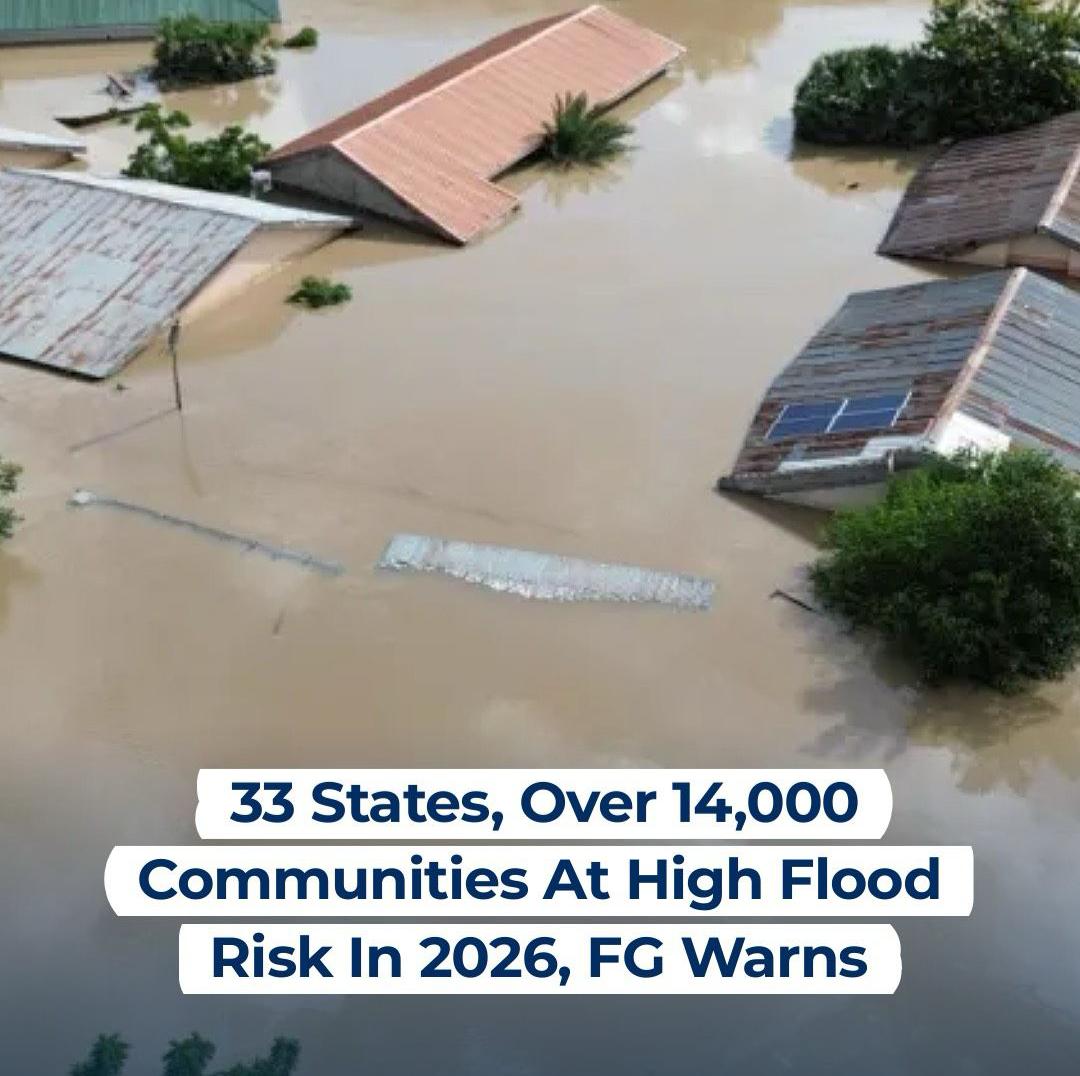
The Federal Government has warned that 226 local government areas across 33 states and the Federal Capital Territory (FCT) fall within high flood-risk zones in 2026, raising fresh concerns over potential widespread impact on communities nationwide. The disclosure is part of the 2026 Annual Flood Outlook released by the government through relevant agencies, highlighting areas most vulnerable to severe flooding during the rainy season. According to the report, the high-risk LGAs are spread across 33 states and the FCT, indicating that a significant portion of the country could face flooding this year if preventive measures are not taken.
Beyond the LGA-level warning, the government also identified more than 14,000 communities nationwide as being at risk of flooding in 2026. Experts say this reflects a broader and more detailed forecasting approach that now pinpoints vulnerable communities rather than just states or regions, allowing for more targeted disaster preparedness efforts.
Authorities have urged state governments, local councils, and residents in flood-prone areas to take early precautions, including
- Clearing drainage systems
- Relocating from high-risk zones
- Strengthening emergency response plans
The warning comes as Nigeria continues to experience recurring floods, which have historically displaced thousands of people and destroyed homes, farmland, and infrastructure. Flood disasters are among the most frequent environmental hazards in Nigeria, often driven by heavy rainfall, poor drainage systems, and rising water levels in rivers and coastal areas. Major cities and riverine states are particularly vulnerable, with past incidents causing large-scale humanitarian crises and economic losses. With climate variability and changing weather patterns increasing flood risks, authorities say early warning systems and community awareness will be critical in reducing casualties and damage. Emergency management agencies are expected to intensify sensitization campaigns and coordinate with state governments to mitigate the anticipated impact.