Ten Years Ago Today, The United Kingdom Voted To Leave The European Union
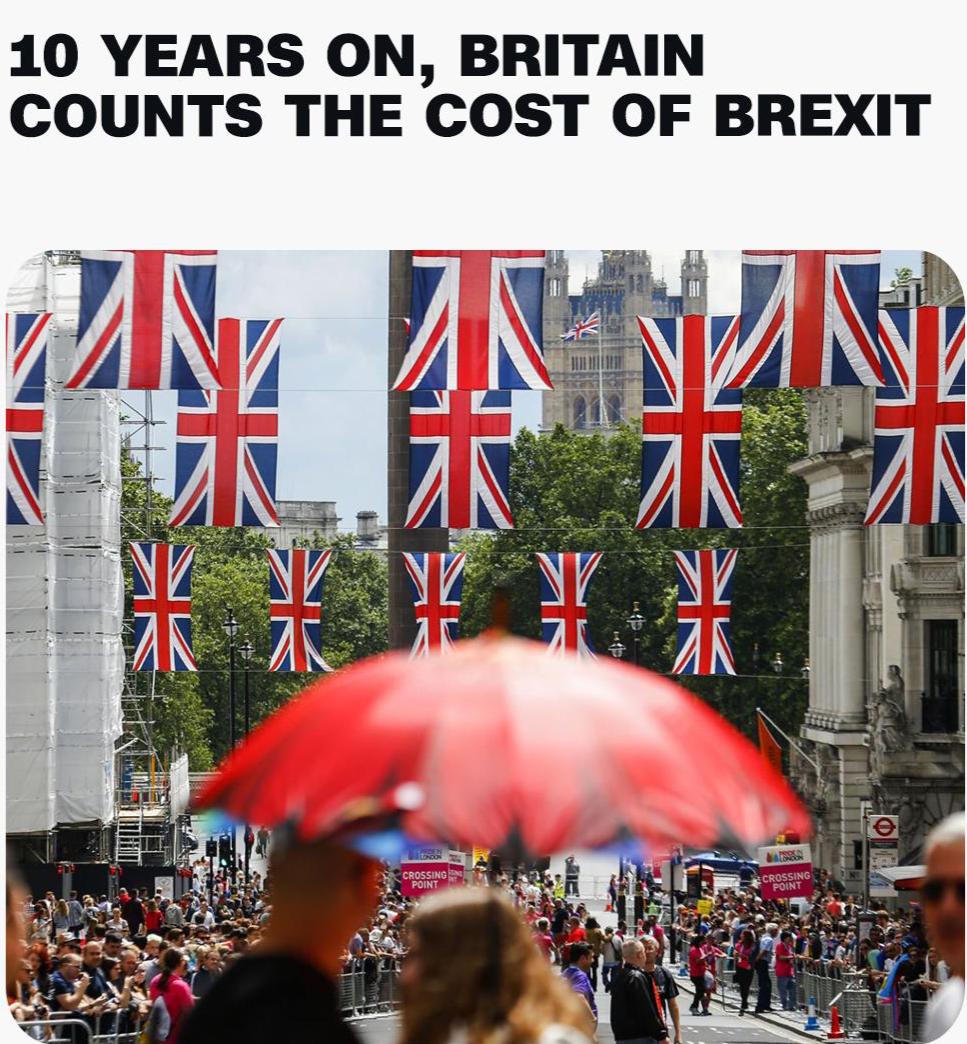
Ten years ago today, the United Kingdom voted to leave the European Union in a historic referendum that reshaped British politics, economics, and relations with Europe. In the June 23, 2016 vote, 51.9% of voters backed leaving the EU, while 48.1% supported remaining, making the UK the first member state to decide to exit the bloc. The result triggered years of political turmoil, including the resignation of then-Prime Minister David Cameron, prolonged negotiations with Brussels, and intense debates over trade, immigration, and national sovereignty. Britain formally left the European Union on January 31, 2020, before completing a post-Brexit transition period at the end of that year. Financial markets reacted sharply to the referendum outcome, with global stocks falling and the British pound suffering significant losses amid uncertainty about the UK’s future relationship with Europe. A decade later, Brexit remains a defining issue in British public life. Analysts and policymakers continue to debate its economic and political consequences, with studies pointing to reduced trade, investment challenges, and slower economic growth, while supporters argue that leaving the EU restored national control over laws, borders, and policymaking. Recent surveys suggest many Britons believe Brexit has not delivered the benefits that were promised, although there is no broad political consensus in favor of rejoining the European Union. Discussions instead focus on improving cooperation between London and Brussels while maintaining the UK’s independence outside the bloc. The Brexit referendum remains one of the most consequential political decisions in modern British history, with its effects still shaping the country’s economy, politics, and international relationships ten years later.