STARMER APOLOGISES TO JEFFREY EPSTEIN VICTIMS
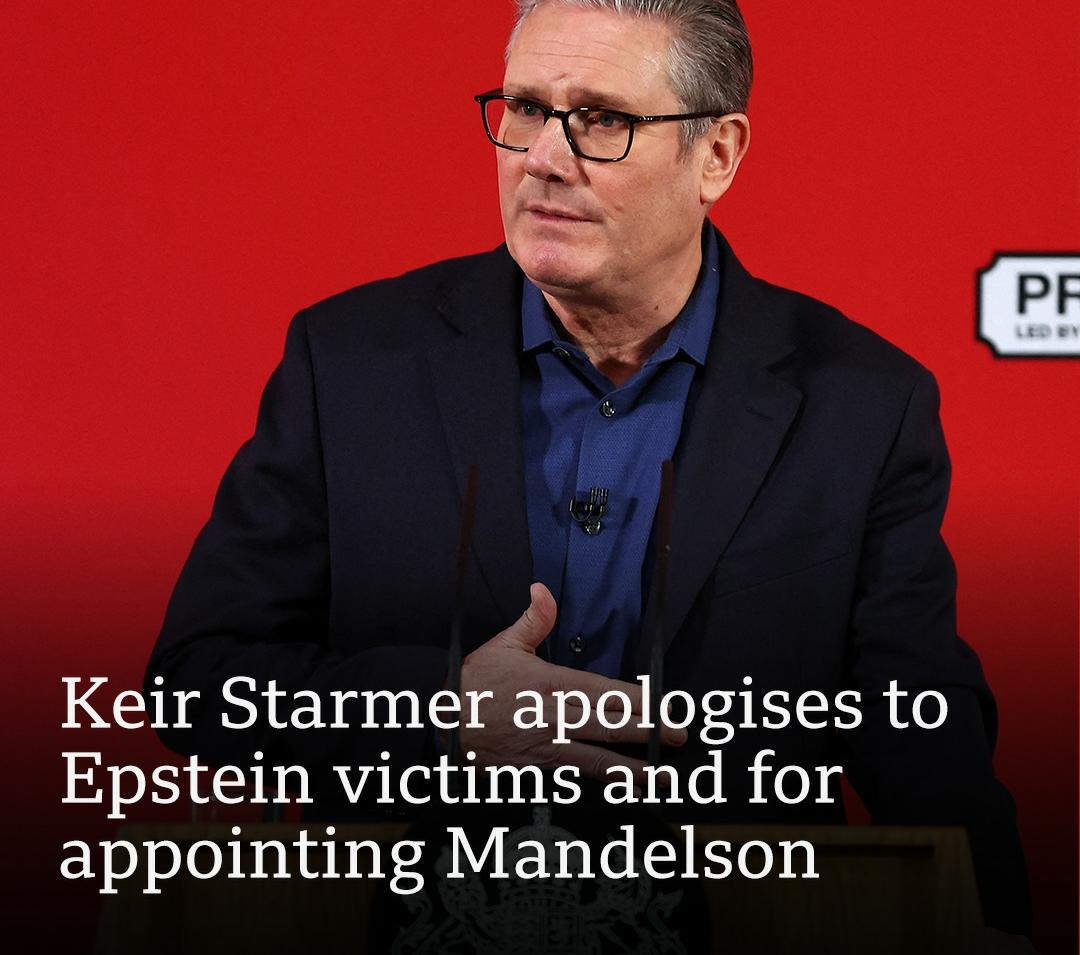
STARMER APOLOGISES TO JEFFREY EPSTEIN VICTIM “SORRY FOR HAVING BELIEVED MANDELSON’S LIES AND APPOINTING HIM”
British Prime Minister Sir Keir Starmer has issued a formal and highly public apology to the victims of convicted sex offender Jeffrey Epstein saying he was “sorry for what was done to you, sorry that so many people with power failed you, sorry for having believed Mandelson’s lies and appointing him.” Starmer spoke on Thursday in St Leonards‑on‑Sea, England, during a speech on government policy, shifting the focus onto accountability amid intense political pressure. His apology comes amid a major scandal in UK politics, triggered by revelations about the appointment of Lord Peter Mandelson a veteran Labour politician as the UK’s ambassador to the United States despite significant ties to Epstein. Newly released documents showed deeper connections between Mandelson and Epstein than previously acknowledged.
Starmer directly addressed the trauma suffered by Epstein’s victims and acknowledged multiple layers of failure by those in power:
“Sorry for what was done to you.” Starmer recognised the harm and suffering endured by victims of Epstein’s crimes.
“Sorry that so many people with power failed you.” He acknowledged systemic shortcomings that left victims feeling unheard and justice delayed. “Sorry for having believed Mandelson’s lies and appointing him.” Starmer said he had been misled by Mandelson’s account of his relationship with Epstein at the time of the ambassadorial appointment. He also stressed that the public must see justice served and truth pursued, rejecting complacency toward powerful figures. Starmer said: “In this country, we will not look away… we will not allow the powerful to treat justice as optional. We will pursue the truth… and we will uphold the integrity of public life.” Lord Peter Mandelson, a former senior Labour cabinet minister and architect of modern British politics, was appointed by Starmer in December 2024 as UK ambassador to Washington, DC. That appointment was controversial because Mandelson had a long‑standing personal relationship with Epstein and had stayed at Epstein’s residence even after Epstein’s conviction for sex offences.
When questioned about this connection, Mandelson had previously denied the extent or severity of his relationship with Epstein statements Starmer now says were lies that he regretted believing.
Mandelson was dismissed from the ambassador role in September 2025 after emails and documents were made public showing his ongoing contact with Epstein post‑conviction. He later resigned from the Labour Party amid the controversy.
Starmer’s apology comes at a time of serious political fallout:
His own party has been shaken, with some senior Labour MPs demanding accountability and transparency over how Mandelson was appointed. Opposition parties and critics have seized on the episode, calling into question Starmer’s judgment and vetting processes. There are growing calls for release of the internal vetting documents related to Mandelson’s appointment though police investigations have temporarily delayed full publication to avoid jeopardising inquiries. The Metropolitan Police are investigating Mandelson for alleged misconduct in public office linked to sharing sensitive information with Epstein although he is not accused of any sexual offences. Starmer has stated he may push for the removal of Mandelson’s title and seat in the House of Lords, saying the alleged deceit was “incompatible with public service.”
This episode has become one of the most significant political scandals in the UK in recent years, raising questions about:
Vetting and integrity in senior diplomatic appointments
Accountability of political elites with ties to individuals accused of sexual abuse The government’s handling of victims’ rights and public trust in institutions Starmer’s apology is significant because UK prime ministers rarely issue public expressions of remorse for decisions that indirectly enabled controversial figures to hold public office. It underscores growing demands from survivors and campaigners for justice, transparency, and systemic reform in how political appointments are made and scrutinised.