Spotify Removes Tens Of Thousands Of Fake Podcasts Promoting Illegal Online Pharmacies After Investigation
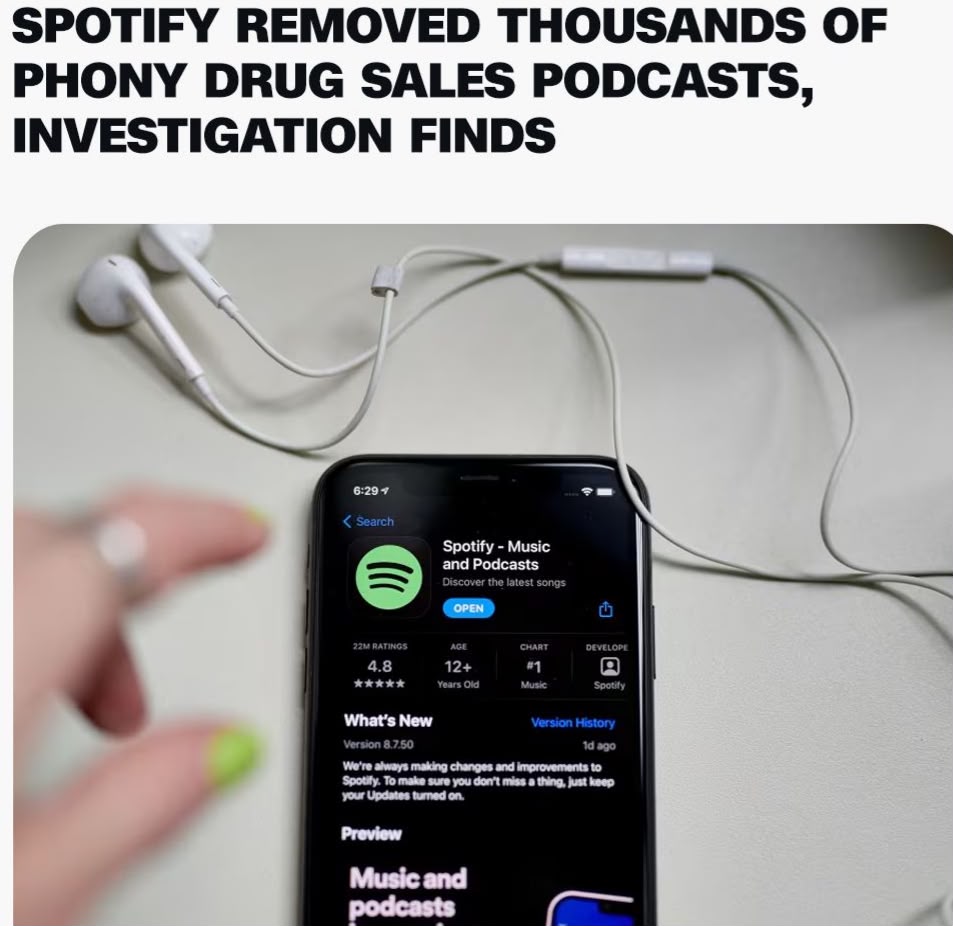
Spotify Removes Tens of Thousands of Fake Podcasts Promoting Illegal Online Pharmacies After Investigation Spotify has removed tens of thousands of fake podcast episodes promoting illegal online pharmacies after a series of investigations and other media organisations exposed widespread abuse of the platform, according to a new report and statements from lawmakers. The takedowns include content that allegedly advertised prescription drugs such as opioids and ADHD medications without requiring a prescription, often directing users to unregulated online pharmacies. The removal effort follows mounting pressure on the streaming platform over its content moderation practices. According to investigative findings, the removed material consisted largely of AI-generated or spam style podcasts that mimicked legitimate health content but instead contained links or references to illicit drug-selling websites. Some episodes were reportedly extremely short or lacked meaningful audio content, functioning primarily as search-engine manipulation tools rather than genuine podcasts.The issue first gained widespread attention after and other outlets identified dozens of such podcasts on Spotify, prompting further scrutiny by U.S. lawmakers. Senator Maggie Hassan later raised concerns about the platform’s response time and the potential risks posed by delayed removal of harmful content.In response, Spotify said the offending material was part of a broader spam operation rather than a coordinated attempt to sell drugs directly on the platform. The company maintained that it operates continuous moderation systems and removes content that violates its rules, stressing that drugs cannot be bought or sold on Spotify. A major investigation cited by U.S. officials found that Spotify ultimately removed over 57,000 podcast episodes linked to illegal drug promotion or related spam activity by late 2025, including thousands of accounts and shows involved in the network. Despite the scale of the removals, critics argue that the incident highlights gaps in platform enforcement and raises concerns about how quickly harmful or misleading content can spread before detection. Lawmakers have also questioned whether such content should have been reported to law enforcement more promptly. Spotify has defended its actions, stating that it began removing the content as soon as it was identified and continues to invest in automated and human moderation systems to detect emerging abuse patterns. The company says it remains committed to combating spam and protecting users from fraudulent or dangerous content.
The revelations add to ongoing debates about content moderation on major streaming platforms, particularly as AI-generated material becomes easier to produce and more difficult to detect, increasing the risk of large-scale misinformation and illicit advertising campaigns.