Spain‑based Banking Giant Santander UK
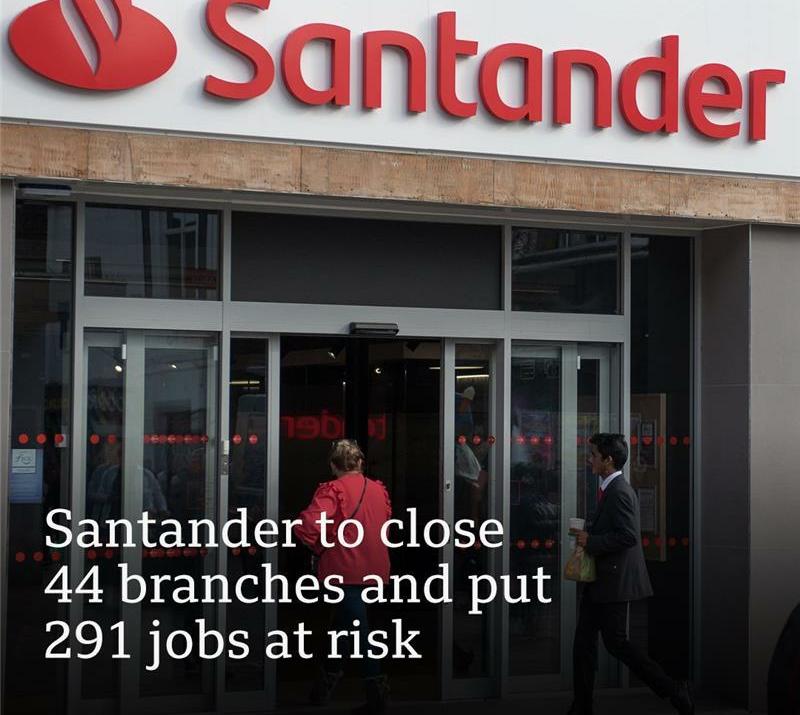
Spain‑based banking giant Santander UK has announced plans to shut 44 bank branches across the United Kingdom, a move expected to put 291 jobs at risk as part of a continued restructuring of its high‑street operations. The closures reflect the bank’s response to a major shift in customer behaviour, with 96 % of all transactions now taking place online or via digital channels.
This latest round of cuts comes less than a year after Santander closed 95 branches in 2025, affecting around 750 workers.
Santander says the closures are part of a broader strategy to streamline its branch network while maintaining face‑to‑face support through alternative services. Many of the scheduled closures will take place between April and May 2026, with a small number of branches set to close by the end of January 2027.
Berwick‑upon‑Tweed (Northumberland) 28 April 2026
Boston (Lincolnshire) 28 April 2026
Evesham (Worcestershire) 28 April 2026
Bangor (County Down) 29 April 2026
Northallerton (North Yorkshire) 6 May 2026
Macclesfield (Cheshire) 12 May 2026
Shirley (West Midlands) 20 May 2026
Leighton Buzzard, Ormskirk, Whitehaven, Wilmslow by end January
In an official announcement, Santander explained the closures would be balanced by investment in other customer services, including:
“Community Bankers” staff who will provide face‑to‑face support from Santander Locals and banking hubs in local community spaces.
Continued expansion of Work Cafés hybrid community spaces offering banking support, co‑working facilities and events.
Improvements to digital services such as mobile and online banking, phone support, and refreshed ATMs.
Access to banking services through Post Office branches and shared Banking Hubs. Santander said it would contact potentially vulnerable customers directly to help them find alternative ways to bank and support affected employees with redeployment and wellbeing services. The closures continue a long‑running trend of high‑street banks reducing physical branches due to falling in‑branch transaction volumes and growing online banking use.
Other UK banks, including Lloyds and NatWest, have also announced branch network reductions, sparking concerns about access to cash and in‑person services for elderly or less digitally‑inclined customers.
Critics argue that fewer physical branches may disproportionately affect rural communities, older people and small businesses that rely on face‑to‑face banking.