Scottish Parliament Rejects Assisted Dying Bill By 69 Votes To 57
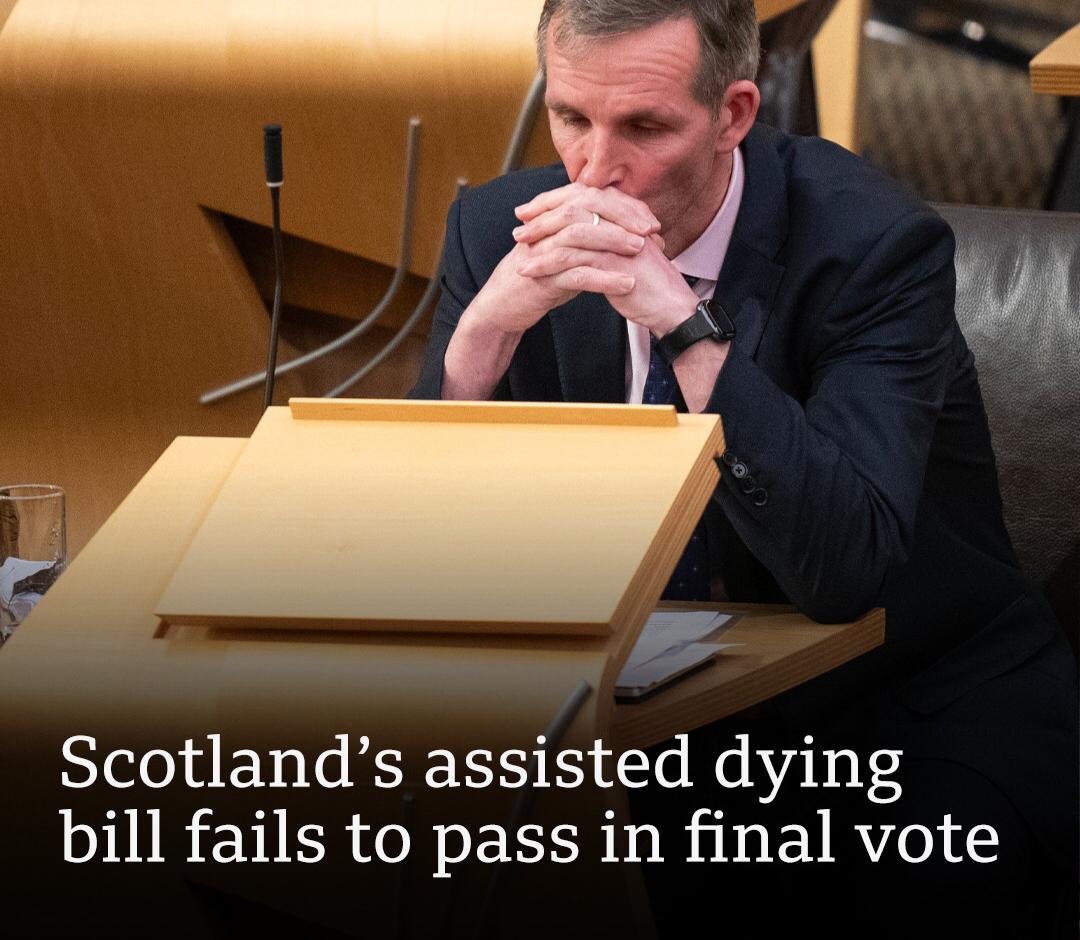
Scottish Parliament rejects assisted dying bill by 69 votes to 57
The Scottish Parliament has voted against legalising assisted dying, rejecting a landmark bill by 69 votes to 57 after a deeply emotional and divisive debate. The proposed law, which would have allowed terminally ill adults to seek medical assistance to end their lives, was defeated at its final stage on Tuesday
The legislation, introduced by Liam McArthur, aimed to permit assisted dying for mentally competent adults diagnosed with terminal illness.
- Eligibility limited to adults with a terminal condition
- A requirement for medical assessments by doctors
- Safeguards intended to ensure decisions were voluntary and free from coercion
Supporters said the bill would provide dignity and choice to people facing the end of life Despite earlier backing at a preliminary stage, the bill ultimately failed to secure enough support in the final vote.
- Risks to vulnerable people, including the disabled
- Fears of coercion or pressure on patients
- Questions over whether safeguards were strong enough
Some lawmakers also argued that improving palliative care should be prioritised instead.
The debate was described as one of conscience, with MSPs allowed a free vote rather than following party lines. Supporters of the bill expressed disappointment, arguing it would have offered compassion and relief for those suffering at the end of life.
- Personal choice
- Reducing unnecessary suffering
- Allowing people to die with dignity
However, critics welcomed the result, saying it protected vulnerable individuals and upheld ethical medical standards.
The vote marks the third time attempts to legalise assisted dying in Scotland have failed. The bill had previously passed an earlier stage in 2025, but support shifted before the final decision, with some MSPs changing their positions.
- Assisted dying remains illegal across all parts of the UK
- Campaigners are likely to continue pushing for reform
- The issue remains politically and socially divisive
Similar debates are ongoing in other parts of the UK and internationally, reflecting broader questions about ethics, medicine and personal autonomy at the end of life.