Scientists Identify New Giant Long-Necked Dinosaur In Thailand
Scientists Identify New Giant Long-Necked Dinosaur in Thailand
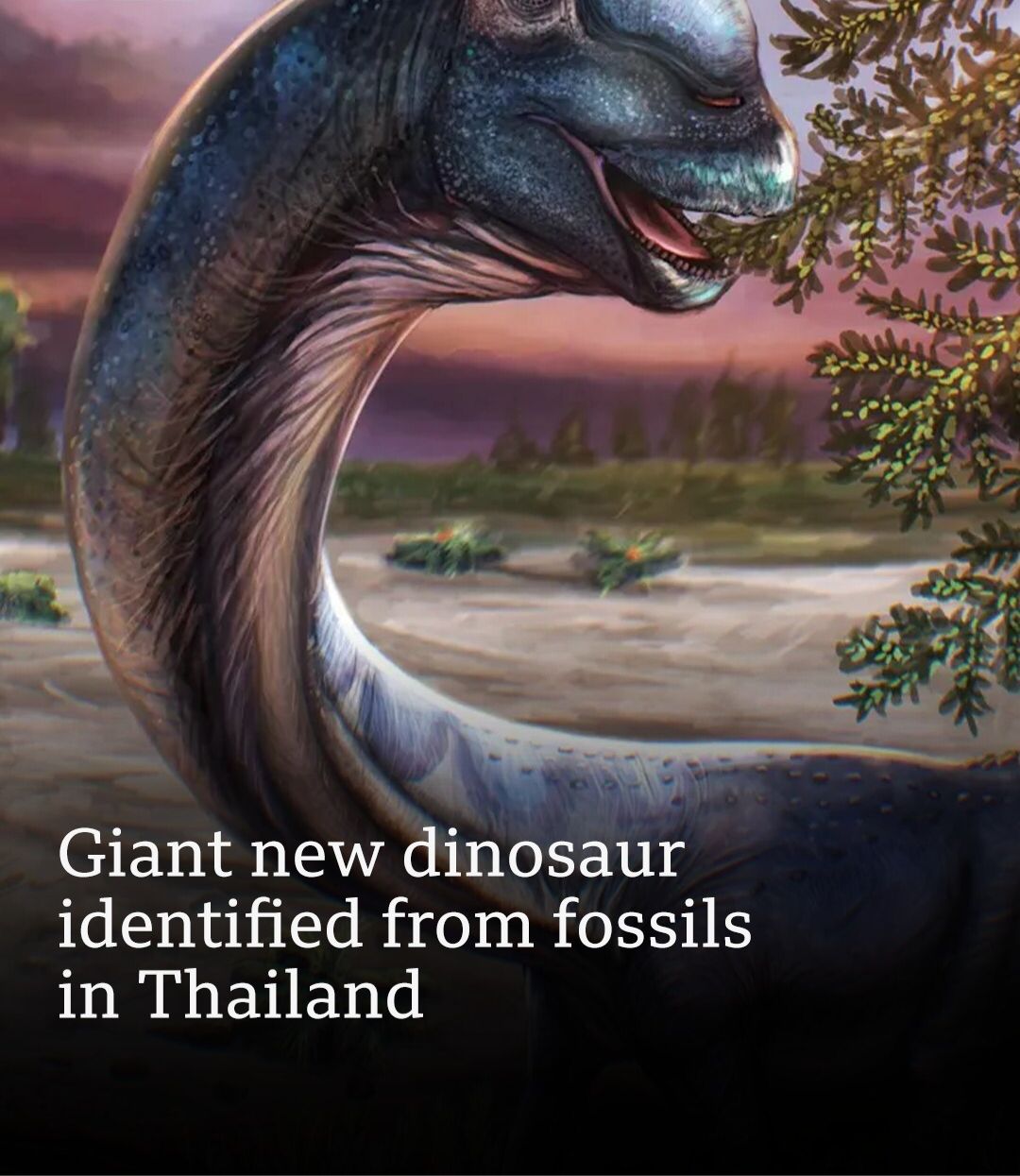
Scientists have identified a new species of giant long-necked dinosaur from fossil remains discovered in Thailand, marking what researchers describe as the largest dinosaur ever found in Southeast Asia. The newly identified dinosaur, named Nagatitan chaiyaphumensis, lived approximately 113 million years ago during the Early Cretaceous period and belonged to the sauropod family a group of massive herbivorous dinosaurs known for their long necks, tails, and enormous body sizes. Researchers estimate that the dinosaur measured about 27 metres 89 feet in length and weighed between 25 and 28 tonnes, making it comparable in weight to nine adult Asian elephants. Fossil remains including vertebrae, ribs, pelvis fragments, and limb bones were excavated in Chaiyaphum Province in northeastern Thailand after the fossils were first spotted by a local villager in 2016. The name “Nagatitan” combines “Naga” a serpent like mythical figure prominent in Southeast Asian folklore and “Titan,” reflecting the dinosaur’s enormous size. Scientists say the species represents one of the most significant paleontological discoveries ever made in the region. According to researchers, the dinosaur likely thrived in a warm subtropical environment consisting of forests, shrublands, rivers, and savanna-like ecosystems. Experts believe the massive herbivore fed primarily on large volumes of vegetation such as conifers and ferns.The discovery also offers scientists new insight into how environmental conditions and rising global temperatures during the Cretaceous period may have contributed to the evolution of gigantic dinosaurs. Researchers noted that warm climates and open habitats may have created favorable conditions for sauropods to evolve larger body sizes. Paleontologists further described Nagatitan chaiyaphumensis as potentially the “last titan” of Thailand because younger rock formations in the region were later submerged under shallow seas, reducing the likelihood of discovering newer giant dinosaur fossils in the area. The findings were published in the journal Scientific Reports by an international research team involving scientists from Thailand and the United Kingdom.