Pro-Trump Candidate Abelardo De La Espriella To Face Leftist Iván Cepeda In Colombia Presidential Runoff
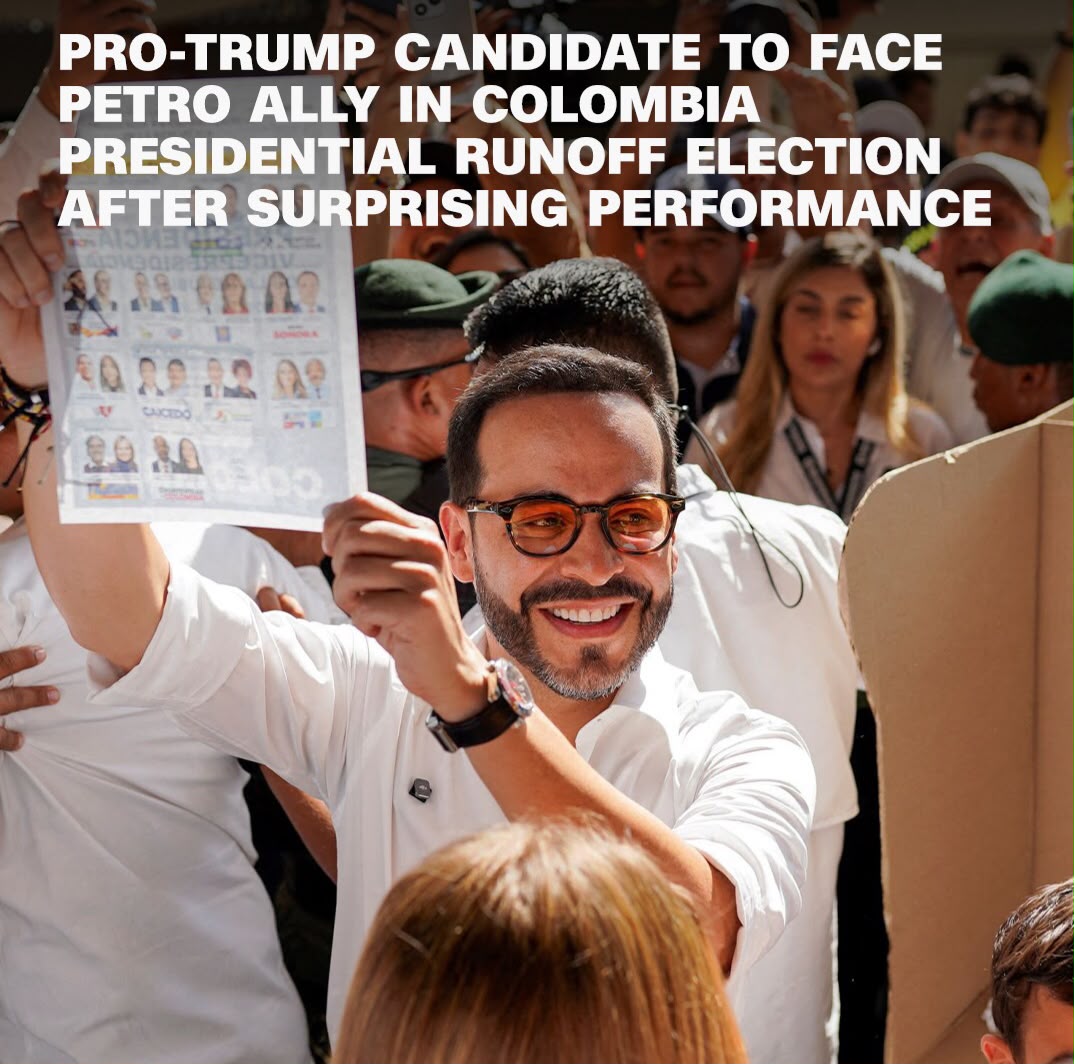
Pro-Trump Candidate Abelardo de la Espriella to Face Leftist Iván Cepeda in Colombia Presidential Runoff Colombia is heading into a highly polarised presidential runoff after right-wing candidate Abelardo de la Espriella and leftist senator Iván Cepeda emerged as the top two contenders in the first round of voting, setting up a decisive second round that could reshape the country’s political direction and its relations with the United States. De la Espriella, a pro-Trump outsider and lawyer, secured the highest share of votes in the first round with about 43.7%, narrowly ahead of Cepeda, who received roughly 40.9%, according to preliminary results. Since neither candidate crossed the 50% threshold, both will now face off in a runoff scheduled for June 21. The outcome marks a major shift in Colombia’s political landscape, with voters sharply divided between two contrasting visions for the country: a hardline security agenda on the right and a continuation of left-wing social reforms on the other side.Abelardo de la Espriella, often described as a political outsider, built his campaign around a tough-on-crime platform, promising to crack down on armed groups, strengthen security policies, and restore what he calls “order” in Colombia. He has also positioned himself as a supporter of former U.S. President Donald Trump and has drawn comparisons to other right-wing populist leaders in the region. His rapid rise surprised many political analysts, as he gained momentum late in the campaign and consolidated support from other conservative figures after the first round. De la Espriella has also advocated for more aggressive security measures, including expanding prison capacity and taking a harder stance against armed organisations operating in rural areas.Supporters say his message resonates with voters frustrated by rising insecurity and violence, while critics warn that his rhetoric signals a shift toward authoritarian-style governance.Iván Cepeda, a senator aligned with outgoing President Gustavo Petro, represents the left-wing Historic Pact coalition and is campaigning on a platform focused on peace negotiations, social reform, and continued dialogue with armed groups. Cepeda has long been associated with Colombia’s peace process initiatives and has promised to expand social programmes, land reform, and public services if elected. His supporters argue that his approach prioritises long-term stability through negotiation rather than confrontation.However, critics of the current administration argue that its peace strategy has struggled to contain violence in several rural regions, an issue that has become central to the election debate. The election has also been marked by tension and allegations of irregularities. President Gustavo Petro has questioned aspects of the preliminary vote count, suggesting possible discrepancies in the electoral system, although officials have defended the integrity of the process.De la Espriella has rejected those claims, insisting that the results reflect the will of the people and urging that the electoral process be respected.The June 21 runoff is expected to be highly competitive, with both candidates now attempting to win over centrist and undecided voters who supported eliminated candidates in the first round. Analysts say the election will effectively decide whether Colombia continues its current left-leaning reform path or shifts toward a tougher, security-first approach aligned with right-wing populist movements in the region. Beyond domestic policy, the outcome could also significantly influence Colombia’s foreign relations, particularly with the United States, given De la Espriella’s openly pro-Trump stance and Cepeda’s alignment with Petro’s more independent foreign policy vision.
With the country deeply divided, the runoff is shaping up to be one of the most consequential elections in Colombia’s recent history.