PRESIDENT TINUBU SIGNS AMENDED ELECTORAL ACT, COMMITS TO STRENGTHENING DEMOCRACY
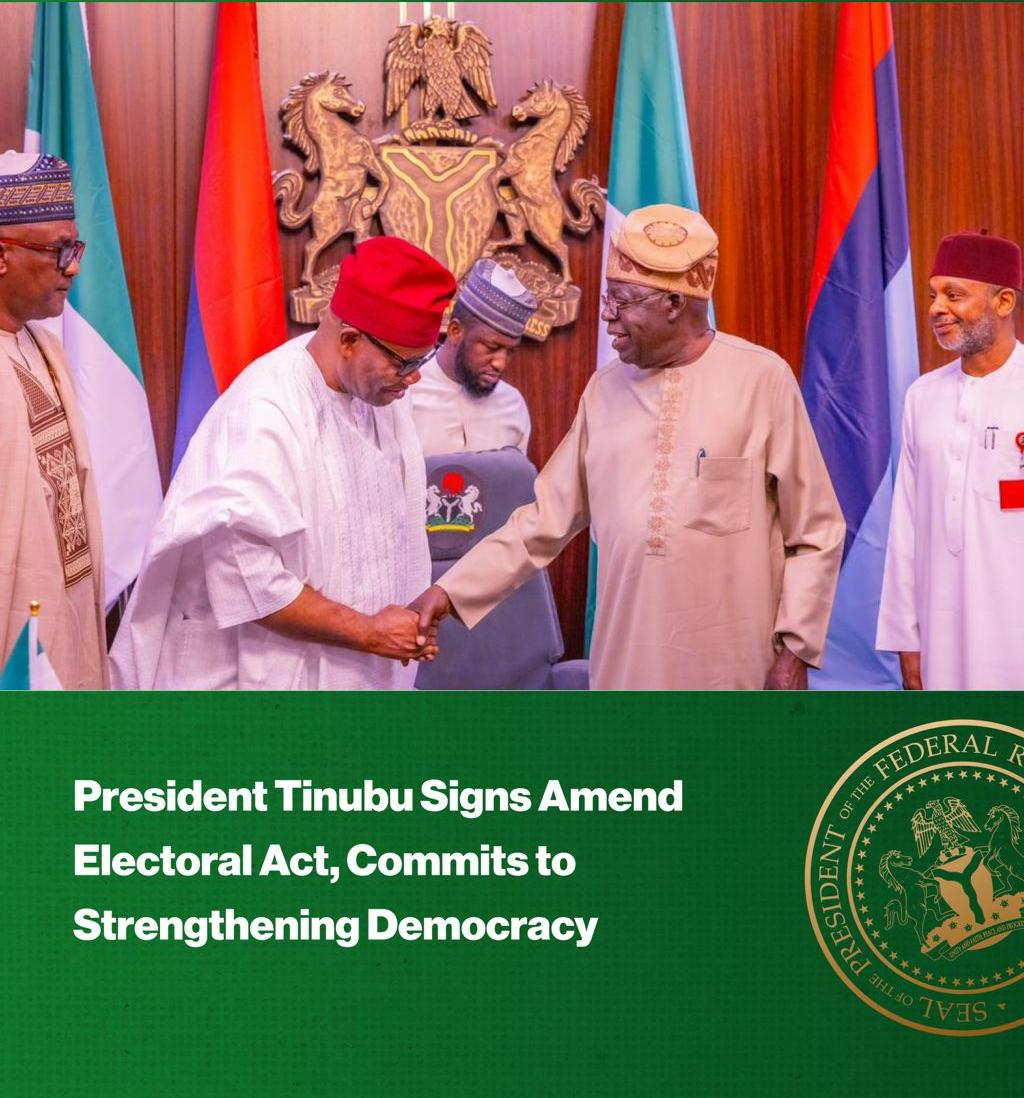
PRESIDENT TINUBU SIGNS AMENDED ELECTORAL ACT, COMMITS TO STRENGTHENING DEMOCRACY
President Tinubu on Wednesday formally signed into law the Electoral Act 2026 (Amendment) the revised legal framework governing Nigeria’s electoral processes after the National Assembly passed the bill earlier this week. The signing took place at the State House, Abuja, with principal officers of both chambers in attendance.This marks the culmination of months of legislative debate and reform efforts aimed at modernising Nigeria’s election laws ahead of the 2027 general elections.
At the ceremony, President Tinubu reiterated his administration’s commitment to strengthening Nigeria’s democracy. He said the Electoral Act amendments are designed to close gaps in the electoral process, build public confidence, and increase the credibility of elections. Tinubu stressed that the reforms are about process, not politics, adding that the goal is to ensure that voters can trust that their votes count and that election results reflect the will of the people. He acknowledged that while technology such as electronic result transmission plays a role, the core of the voting process remains manual ballot casting and collation, emphasising the continued importance of human oversight in electoral results. The amendments were signed just days after the Independent National Electoral Commission (INEC) released the timetable for the 2027 elections, giving electoral authorities clear legal backing for upcoming polls. The updated Electoral Act includes provisions aimed at balancing technological innovations like electronic result transmission with practical realities such as infrastructure limitations in parts of the country.
Lawmakers extended guarantees for improved electoral integrity while allowing flexibility where network or technical challenges exist. Federal Capital Territory Minister Nyesom Wike applauded the swiftness of Tinubu’s assent, praising the action as a demonstration of leadership and decisiveness in deepening democratic processes. According to Wike, signing the bill in under 24 hours after passage by the National Assembly showed a practical commitment to ensuring credible elections.
Similarly, the National Forum of Former Legislators (NFFL) lauded both Tinubu and the National Assembly for the legislation, describing it as a significant step in providing clarity and stability ahead of the 2027 polls. The forum urged relevant institutions like INEC and political parties to uphold the law’s intent in practice.
Some opposition figures and civil society organisations have expressed reservations about the timing and content of the amendments. Critics argue that certain provisions especially on electronic transmission may not go far enough to ensure full transparency in results reporting.
The Labour Party caucus in the House of Representatives described the swift assent as raising questions over whether sufficient public consultation was conducted, expressing concern about potential implications for the upcoming electoral cycle.
The Electoral Act governs how elections are conducted, how results are collated and transmitted, and how electoral disputes are handled making it a cornerstone of democratic governance in Nigeria. With the 2027 general elections approaching, the amendments and their implementation will play a central role in shaping political competition, public confidence, and Nigeria’s democratic trajectory.